
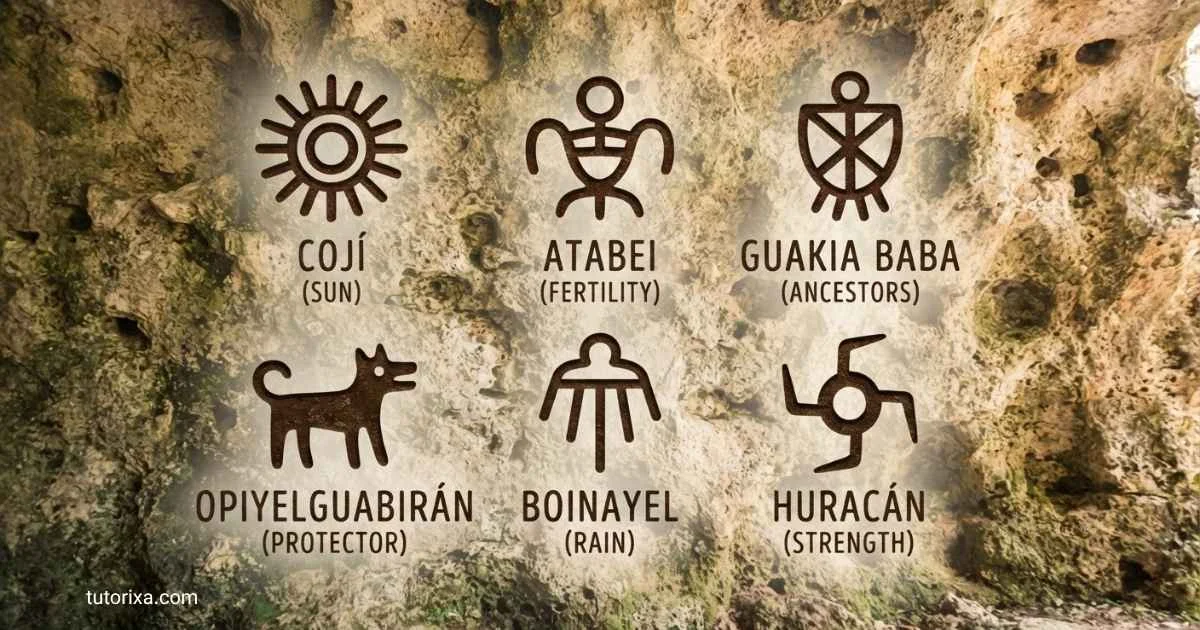
I’ve always found ancient symbols fascinating because a simple design can carry stories, beliefs, identity, and meaning across generations. Warrior Fighter Taino Symbols are especially interesting when you want to understand the symbolism connected with strength, protection, courage, and Taino culture.
If you are exploring these symbols for learning, artwork, or cultural research, I’ll help you look beyond the surface. You can discover what different Taino symbols represent while also understanding the historical and cultural context behind them.
I’ll break the topic down in a simple way so you can quickly understand the meanings, important designs, and symbolism associated with warrior and fighter imagery. My goal is to make this guide practical, clear, and respectful of Taino heritage.
Quick Meaning of Warrior Fighter Taino Symbols
Warrior fighter Taino symbols are best understood as a group of Taíno images and objects that can be connected with leadership, spiritual protection, ancestral power, social authority, and community identity. Taíno art does not provide one confirmed “warrior symbol”; instead, objects such as zemí figures, guaízas, petroglyphs, three-pointed stones, and chiefly regalia carried different meanings depending on their context.
Symbol Overview Table
| Field | Information |
| Symbol Name | Warrior fighter Taíno symbols |
| Primary Meaning | No single fixed meaning; commonly associated today with strength, leadership, protection, ancestry, and resistance |
| Category | Indigenous Caribbean symbolism and visual culture |
| Origin | Greater Antilles and surrounding Caribbean region |
| Culture | Taíno societies and related Indigenous Caribbean communities |
| Historical Period | Especially the centuries before and around European contact |
| Important Symbols | Zemí/cemí figures, guaízas, three-pointed stones, petroglyphs, ceremonial regalia |
| Traditional Context | Religion, ceremony, leadership, ancestry, agriculture, community life, and political authority |
| Modern Meaning | Cultural heritage, Indigenous identity, resilience, ancestry, pride, and resistance |
| Unicode | No specific Unicode character represents a Taíno warrior symbol |
| Emoji Equivalent | No official Taíno warrior emoji exists |
| Related Symbols | Zemí, guaíza, three-pointed stone, Taíno petroglyphs, duho, stone collars, bat imagery |
What Do Warrior Fighter Taino Symbols Mean?
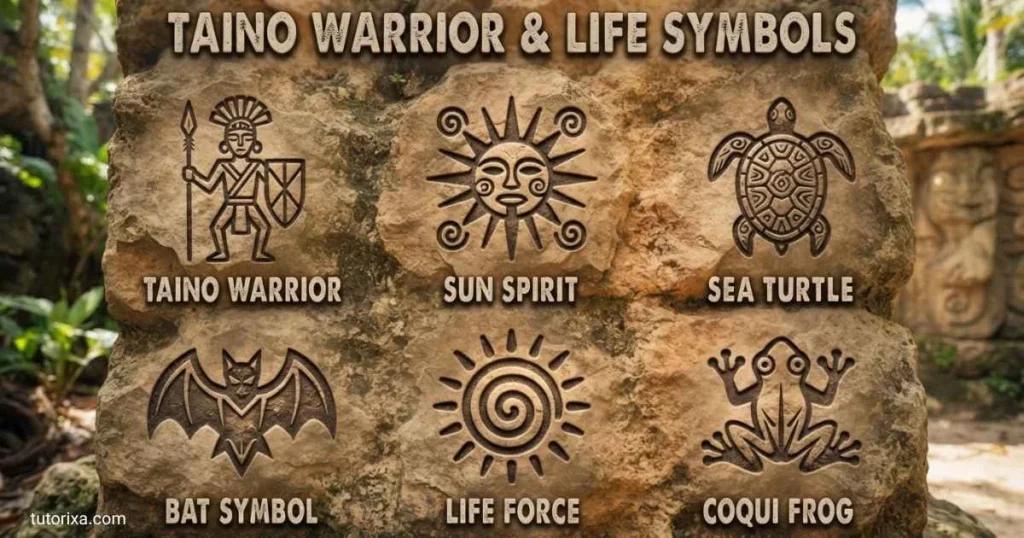
There is no historical evidence for one standardized Taíno “fighter symbol.” Instead, Taíno societies used a rich visual language in which spiritual beings, ancestors, animals, human figures, geometric forms, and ceremonial objects could communicate different ideas.
One of the most important concepts is zemí, also spelled cemí. The term did not originally mean a particular drawing. According to The Metropolitan Museum of Art, zemí referred to an immaterial spiritual and vital force associated with deities and ancestors and present within the Caribbean environment. Zemí representations could therefore appear in sculptures, pendants, ritual objects, and other forms.
This distinction matters because modern designs sometimes turn a Taíno figure into a simple symbol of physical strength. Historically, the meaning could be much broader. A powerful-looking face might relate to a sacred being, ancestor, ritual practice, or political authority rather than warfare alone.
Taíno leaders, known as caciques, held important political and ceremonial roles. Objects associated with leadership could reinforce their authority in public ceremonies. The archaeological record therefore connects Taíno visual culture not only with spirituality but also with hierarchy and political power.
For modern audiences, this creates an important distinction:
- Historical meaning: spiritual power, ancestry, leadership, ceremony, nature, and social authority.
- Modern symbolic interpretation: courage, resilience, strength, Indigenous identity, protection, and cultural pride.
- Unsupported simplification: claiming that every Taíno face or carving specifically represents a warrior.
History and Origin of Taíno Symbols
Taíno societies developed across much of the Greater Antilles, including areas corresponding to present-day Puerto Rico, Hispaniola, Cuba, and nearby Caribbean islands. The Taíno spoke an Arawakan language and developed distinctive artistic, agricultural, ceremonial, and political traditions in the Caribbean.
Archaeologists reconstruct Taíno symbolism through several types of evidence. These include surviving stone sculptures, wooden objects, ceramics, shell ornaments, petroglyphs, ceremonial sites, and early European descriptions.
Written accounts are especially important but must be used carefully. Much of the surviving written information about Taíno religion and ritual comes from Spanish accounts produced around the late fifteenth and sixteenth centuries. Archaeological evidence provides another perspective and can confirm, complicate, or challenge interpretations based on those accounts.
The Role of Zemí Imagery
Zemí imagery is among the most recognizable elements of Taíno art. Zemí figures could be made from stone, wood, shell, cotton, clay, and other materials.
Some sculptures display exaggerated eyes, teeth, facial expressions, crouching bodies, or unusual anatomical features. These forms should not automatically be interpreted as aggressive or warrior-like. The Met explains that some such features reflect the physical effects and ritual context associated with ceremonies involving cohoba, while the sculpture itself represented a sacred spiritual force.
Taíno Petroglyphs
Taíno petroglyphs provide another major source of symbolic imagery. Rock carvings appear in caves, near water, and at ceremonial locations. They include anthropomorphic and zoomorphic forms.
At Reef Bay in the U.S. Virgin Islands, for example, the National Park Service describes petroglyphs as part of a sacred landscape connected with ancestors. This demonstrates why a Taíno image should not automatically be interpreted as a modern emblem or logo: its original significance was connected to particular places, practices, and beliefs.
Symbolism and Interpretation
Strength and Courage
In modern use, Taíno-inspired designs are frequently interpreted as symbols of strength and courage. This interpretation can make sense as a contemporary cultural reading, particularly when people use ancestral imagery to express resilience.
However, it should be described as a modern interpretation rather than automatically presented as an ancient Taíno definition.
Leadership and Authority
Leadership has stronger archaeological support. Taíno chiefs used ceremonial objects and regalia that helped establish political authority.
Stone collars, pendants, headdresses, and other prestigious objects were associated with elite identity and public ceremony. The Met notes that certain stone collars probably formed part of regalia used to affirm and project the political power of caciques.
Spiritual Protection
Protection is another common modern interpretation. Historical evidence does show that Taíno spiritual objects could be connected with powerful beings and ritual practices.
The National Park Service describes zemí-related traditions involving protection from dangers such as illness and environmental threats. This provides a historical basis for discussing spiritual protection, although the meaning of every individual artifact cannot be assumed to be identical.
Ancestry and Identity
Ancestry is particularly important in modern discussions of Taíno imagery. Contemporary Taíno-descendant and Indigenous identity movements have used ancestral symbols as expressions of cultural continuity and heritage.
The Smithsonian has documented the continuing significance of Taíno material culture and the ways contemporary communities use ancestral traditions to discuss identity, heritage, and resistance.
Psychological Interpretation
A person today may look at a fierce facial expression and associate it with determination, courage, or protection. That is a personal or modern symbolic interpretation.
It should not be confused with archaeological evidence. Historical symbolism depends on context, material, location, associated objects, and cultural practice rather than simply on how an image looks to a modern viewer.
Cultural Significance of Taíno Warrior Symbols
Taíno symbolism is inseparable from the wider culture of the Caribbean. Spiritual beliefs, political organization, agriculture, ceremony, art, and relationships with the natural environment were interconnected.
The Taíno world included caciques, religious specialists, farmers, artisans, traders, and community members who participated in ceremonies and public gatherings. Ceremonial spaces known as bateyes could serve as locations for games, dances, storytelling, music, and ritual activities.
Puerto Rico
Puerto Rico, historically known in Taíno contexts as Borikén/Borinquen, contains some of the most important archaeological evidence for Taíno visual culture.
The Caguana site in central Puerto Rico includes stone-lined bateyes, ceremonial areas, petroglyphs, and a structure associated with chiefly activity. The National Park Service describes it as one of the largest ceremonial sites of its type in the West Indies.
Hispaniola
Hispaniola, corresponding today to the Dominican Republic and Haiti, is another major center of Taíno archaeological material.
Stone pendants featuring crouching anthropomorphic zemí figures have been identified as Taíno objects from the Dominican Republic. These were associated with leaders and healers rather than being exclusively warrior insignia.
Cuba and Other Caribbean Islands
Taíno cultural traditions and related Indigenous Caribbean traditions extended across several islands. Archaeological objects from Cuba, Puerto Rico, the Dominican Republic, Haiti, and other areas demonstrate both shared visual traditions and regional differences.
For this reason, it is better to speak of Taíno societies and regional traditions than to imagine a single uniform symbol system used identically everywhere.
Religious or Spiritual Meaning
Taíno symbolism has a strong spiritual dimension.
The concept of zemí/cemí was central to Taíno ritual life. Rather than simply referring to an idol, zemí described a spiritual force associated with deities and ancestors. Objects representing zemís could become material embodiments of that power.
Ritual specialists played important roles in communicating with the supernatural world. Some ceremonies involved cohoba, a psychoactive preparation used within ritual contexts. The surviving archaeological objects sometimes preserve visual clues connected with these ceremonies, including enlarged eyes, dramatic facial expressions, and crouching postures.
Taíno spirituality also connected sacred power with the natural world. Trees, stones, caves, water, weather, fertility, and other natural forces could participate in the spiritual landscape.
This helps explain why Taíno symbols cannot always be divided neatly into categories such as “religious,” “warrior,” or “decorative.” A single object could participate in several aspects of community life.
Scientific or Technical Meaning
Taíno warrior symbols have no standardized scientific, mathematical, engineering, or medical meaning.
There is also no official Unicode character representing a Taíno warrior symbol. A modern website, tattoo designer, or digital font may create a Taíno-inspired graphic, but that does not make the design an ancient standardized character.
The closest technical category is archaeological documentation. Researchers analyze the materials, shapes, manufacturing techniques, archaeological locations, and relationships among objects to understand Taíno visual culture.
Rock art is particularly valuable because petroglyphs preserve images directly on the landscape. Archaeologists can examine where these carvings occur and how they relate to caves, water, ceremonial spaces, and settlements.
Where Taíno Symbols Are Used Today
Taíno-inspired imagery appears in many modern settings.
Tattoos
Taíno designs are sometimes used in tattoos representing ancestry, identity, resilience, or connection to Caribbean heritage. Modern tattoo interpretations should be distinguished from documented archaeological meanings.
Jewelry
Zemí-like faces, three-pointed forms, and other motifs appear in contemporary jewelry. Historically, Taíno leaders and ritual specialists did wear symbolic pendants and ornaments.
Art and Sculpture
Artists continue to reinterpret Taíno visual forms through sculpture, ceramics, painting, and mixed media.
Museums and Cultural Education
Museums use Taíno artifacts to teach visitors about Indigenous Caribbean history, spirituality, politics, art, and archaeology.
Cultural Identity
Contemporary communities may use Taíno symbols to express Indigenous heritage and cultural continuity. Smithsonian reporting documents the continuing importance of Taíno heritage in Puerto Rico, the Dominican Republic, Cuba, and Caribbean diasporas.
Logos and Modern Graphics
A stylized Taíno face or petroglyph may appear in modern branding. Such designs are contemporary adaptations and should not automatically be presented as historically authentic symbols.
Common Variations of Taíno Symbols
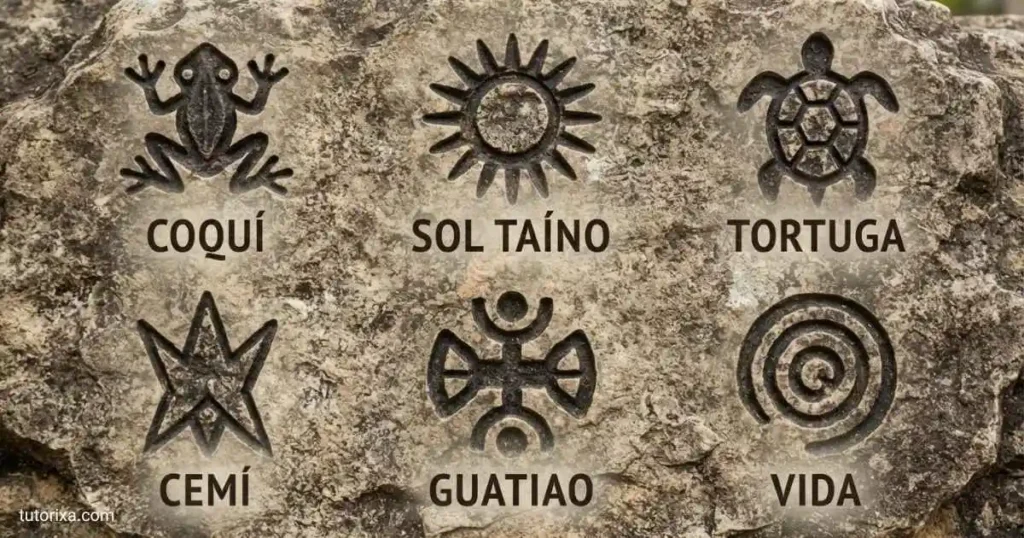
Zemí or Cemí Figures
These can have human, animal, or composite characteristics. Some are highly abstract, while others are recognizable figures.
Guaíza
A guaíza is a category of Taíno object associated with rounded heads and zemí-like faces. Surviving examples can be made from stone, wood, or shell.
Three-Pointed Stones
Known as trigonolitos, these sculptures have three projecting points and occur in different sizes and designs. Spanish chroniclers connected them with cassava or yuca, an important Caribbean crop.
Petroglyphs
Taíno rock art includes human-like faces, animal-related forms, and abstract imagery. Their meanings depended heavily on location and cultural context.
Chiefly Regalia
Stone collars, ceremonial objects, pendants, and other prestigious materials could communicate political authority and social position.
Common Misconceptions About Warrior Fighter Taino Symbols
Misconception 1: There Is One Official Taíno Warrior Symbol
There is no evidence for one universal Taíno character equivalent to a modern “warrior symbol.” Taíno symbolism was diverse and context-dependent.
Misconception 2: Every Fierce Face Represents a Warrior
Large eyes, bared teeth, grimacing mouths, and crouching figures can look aggressive to modern viewers. Archaeological interpretations often connect these features with zemí imagery and ritual contexts rather than warfare alone.
Misconception 3: All Taíno Symbols Have One Fixed Meaning
The meaning of an object can depend on its material, location, form, associated objects, and historical context. Researchers sometimes disagree about interpretations.
Misconception 4: Modern Tattoo Meanings Are Ancient Definitions
A contemporary tattoo may use a Taíno-inspired design to represent “strength” or “fighter spirit.” That can be meaningful today without proving that ancient Taíno people assigned exactly that meaning to the image.
Misconception 5: Taíno Culture Exists Only in the Past
The Smithsonian has documented contemporary interest in Taíno heritage and identity. Discussions of Taíno culture therefore involve both archaeology and living questions of Indigenous identity and cultural continuity.
10 Interesting Facts About Taíno Warrior and Fighter Symbolism
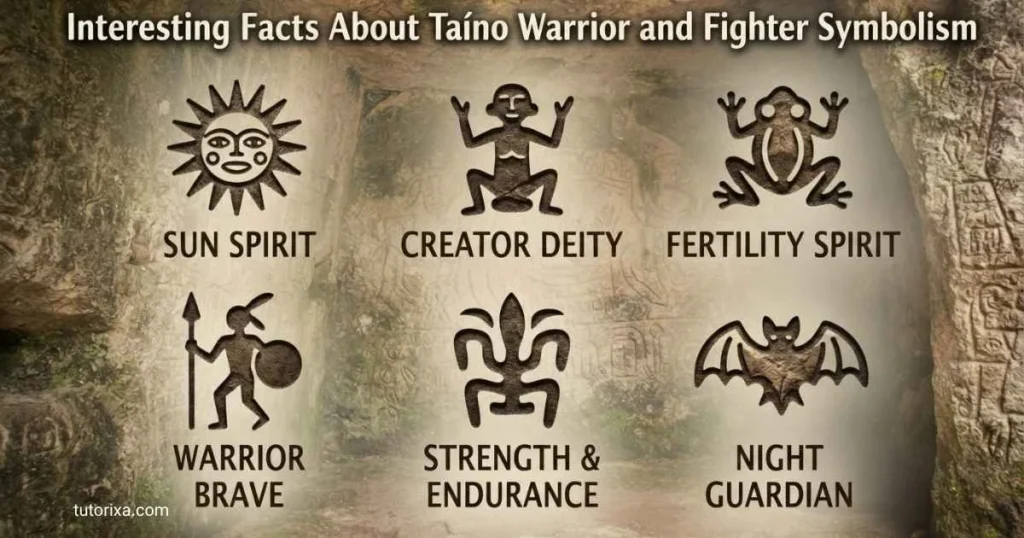
- There is no single ancient Taíno warrior emblem.
Modern searches often group many different designs under the phrase “warrior symbol,” but historical Taíno imagery was much more varied. - Zemí means more than a carved figure.
The word refers to a spiritual and vital force connected with deities and ancestors, not simply to a particular statue. - Some Taíno symbols combined political and spiritual power.
Elite objects could communicate leadership while also connecting a cacique with sacred forces. - Three-pointed stones had agricultural associations.
Historical accounts connected trigonolitos with yuca or cassava, showing that Taíno symbolism was not limited to warfare or combat. - Taíno art includes both human and animal imagery.
Anthropomorphic and zoomorphic forms appear across archaeological materials and petroglyphs. - Some symbols were connected with ancestors.
Petroglyph sites could serve as sacred locations where communities interacted with ancestral traditions. - Guaízas could be worn.
These objects demonstrate how Taíno spiritual imagery could become part of personal adornment and ceremonial identity. - Stone collars were connected with leadership.
Archaeologists interpret certain collars as regalia associated with the political authority of caciques. - Taíno symbolism survives in modern cultural expression.
Contemporary artists and communities continue to engage with Taíno designs and heritage. - Archaeologists do not know the meaning of every design.
Some interpretations remain uncertain, which is why responsible explanations distinguish documented evidence from modern speculation.
Related Taíno Symbols
Zemí or Cemí
The zemí is the most important related concept. It represents spiritual and vital power associated with deities and ancestors and appears in many forms of Taíno art.
Guaíza
Guaízas are rounded-head objects featuring zemí-related facial imagery. They may have served ceremonial or symbolic purposes and could be worn by important individuals.
Three-Pointed Stone
The trigonolito is a three-pointed stone associated in historical accounts with cassava and embedded in broader Taíno ideas of ritual, nature, and rulership.
Taíno Petroglyphs
Petroglyphs are carved rock images that can include human-like, animal-like, and abstract forms. Their locations were often important to Taíno sacred landscapes.
Duho
A duho was a ceremonial seat associated with leaders. Such objects demonstrate how material culture could communicate rank, authority, and participation in ritual life.
Stone Collars
Stone collars formed part of elite regalia and have been interpreted as objects associated with political authority and zemí-related symbolism.
Bat-Related Imagery
Bat imagery occurs in Taíno and broader Caribbean archaeological contexts and has been connected by researchers with ancestral and chiefly symbolism in particular contexts. The interpretation should remain tied to the archaeological setting rather than generalized to every bat image.
Frequently Asked Questions
What is the Taíno symbol for a warrior?
There is no single historically verified Taíno symbol that universally means “warrior.” Modern sources may use zemí faces, petroglyphs, or other Taíno-inspired imagery to represent strength and courage. Historically, however, these images had more specific religious, political, ancestral, or ceremonial meanings.
What does a Taíno warrior symbol mean?
Today, a Taíno-inspired warrior design may represent courage, resilience, strength, protection, ancestry, or Indigenous identity. Historically, Taíno symbols did not have one universal “fighter” meaning. Zemí imagery, for example, was connected with spiritual and ancestral power rather than simply physical combat.
What is the most important Taíno symbol?
The zemí or cemí is among the most important concepts in Taíno visual culture. It represented a spiritual and vital force associated with deities and ancestors. However, calling it the single “most important symbol” can oversimplify a diverse symbolic tradition containing many different forms and regional practices.
Did Taíno people have symbols for protection?
Taíno spiritual traditions included powerful beings and objects associated with protection and ritual. Some zemí-related objects were treated as spiritually significant. However, individual artifacts should not automatically be labeled “protection symbols” without considering their archaeological and cultural context.
What does the Taíno three-pointed symbol mean?
Three-pointed stones, or trigonolitos, have been associated in historical accounts with cassava or yuca, an important Caribbean crop. They appear in different forms and sizes and were part of a wider world of Taíno ritual and symbolic objects. Their meaning should not be reduced to a modern idea such as “warrior strength.”
Are Taíno symbols used in tattoos?
Yes. Taíno-inspired imagery is used in contemporary tattoos, jewelry, artwork, and cultural designs. These modern uses may express ancestry, Caribbean heritage, resilience, or identity. A tattoo’s modern interpretation should be distinguished from the documented historical meaning of the archaeological image being reproduced.
What does a Taíno face symbol represent?
A Taíno face can represent different things depending on the artifact. Some faces are associated with zemí imagery, ancestors, ritual traditions, or other symbolic forms. Facial features such as large eyes or bared teeth do not automatically mean “warrior” or “fighter.”
Were Taíno symbols religious?
Many Taíno symbols had religious or spiritual dimensions. Zemí concepts were closely connected with deities, ancestors, ritual specialists, and sacred landscapes. At the same time, Taíno symbolism also expressed political authority, social hierarchy, agriculture, identity, and community relationships.
Where did Taíno symbols originate?
Taíno visual traditions developed across the Caribbean, especially the Greater Antilles. Important archaeological evidence comes from Puerto Rico, Hispaniola, Cuba, and surrounding islands. Regional differences existed, so “Taíno symbolism” should not be treated as a completely uniform system.
Do Taíno symbols have official Unicode characters?
No. There is no standardized Unicode character specifically representing a Taíno warrior, zemí, or general Taíno symbol. Digital versions found online are typically images, illustrations, fonts, or contemporary graphic designs rather than Unicode characters.
Key Takeaways
- Warrior fighter Taino symbols do not refer to one universally documented ancient emblem.
- Taíno symbolism included zemí/cemí figures, guaízas, petroglyphs, three-pointed stones, ceremonial seats, collars, and other objects.
- Zemí referred to spiritual and vital power connected with deities and ancestors.
- Taíno visual culture linked spirituality, ancestry, leadership, nature, ceremony, and political authority.
- Some objects were associated with caciques and elite status.
- Petroglyphs were part of sacred landscapes and could contain anthropomorphic and zoomorphic imagery.
- Modern interpretations often connect Taíno imagery with strength, courage, resilience, protection, ancestry, and cultural pride.
- Modern meanings should not automatically be presented as ancient historical definitions.
- There is no official Unicode emoji or character for a Taíno warrior symbol.
- Authentic interpretation requires attention to archaeological evidence, regional context, and the difference between historical evidence and modern symbolism.
Conclusion
Warrior fighter Taino symbols are best understood not as one ancient emblem but as a modern search phrase covering a much richer tradition of Taíno visual culture. The historical record points toward a symbolic world in which spiritual power, ancestors, nature, political authority, ceremony, and community were closely connected.
Zemí figures, guaízas, three-pointed stones, petroglyphs, ceremonial objects, and chiefly regalia each provide different windows into that world. Some can reasonably inspire modern ideas of courage, resilience, protection, leadership, and cultural identity, but those modern meanings should remain separate from claims about what an ancient symbol definitively meant.
The most responsible way to use Taíno-inspired imagery is therefore to recognize both its historical complexity and its continuing cultural significance. Rather than reducing every striking face or carving to a “warrior symbol,” understanding its archaeological context gives the imagery greater meaning and respect.

I’m Ellis Montgomery, a British writer interested in the powerful language of symbols. I explore everything from traditional emblems and cultural signs to contemporary symbols found in modern life. My aim is to explain their meanings clearly while revealing the stories and ideas behind them, making symbolism fascinating and accessible to everyone.
Books:
- The Complete Book of Symbols
- Hidden Messages in Everyday Symbols
 Rowan Whitaker