
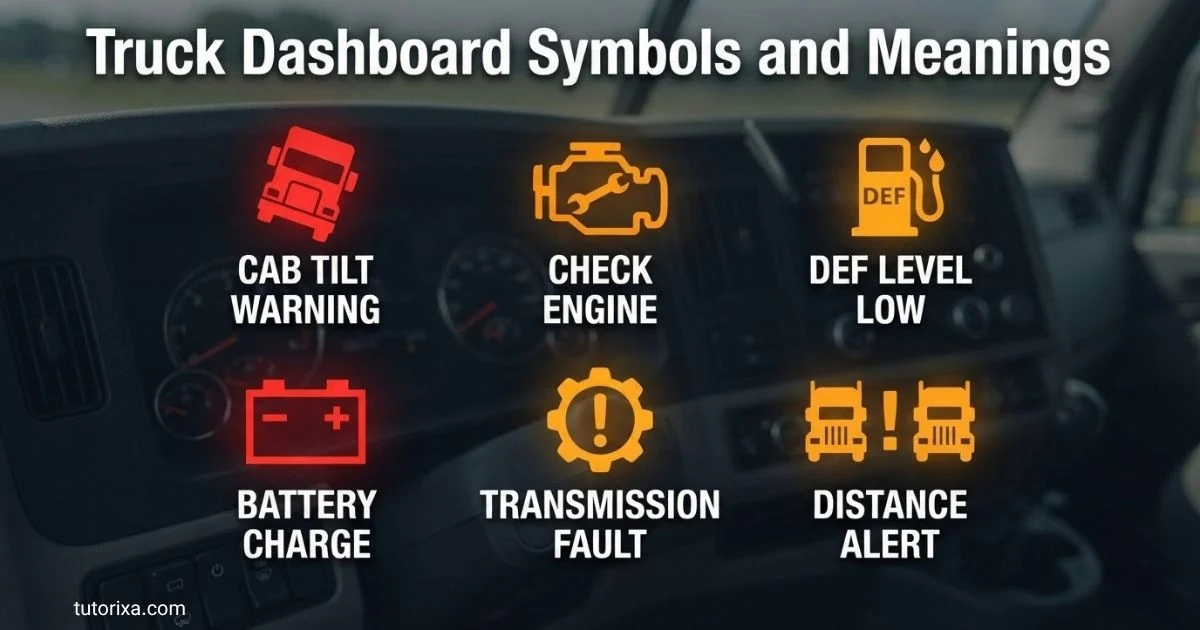
Have you ever noticed a strange warning light on your truck’s dashboard and wondered what it means? I know how confusing those symbols can feel, especially when you’re driving and need to make a quick decision.
Understanding truck dashboard symbols and meanings can help you recognize potential problems, understand your truck’s condition, and make safer decisions on the road. You don’t need to be a mechanic to learn what these important warning lights and indicators are trying to tell you.
In this guide, I’ll walk you through common truck dashboard symbols, their meanings, and the actions you should consider when they appear. Whether you’re a new truck driver or an experienced professional, you’ll find practical information to help you drive with greater confidence.
Quick Meaning of Truck Dashboard Symbols
Truck dashboard symbols are visual indicators that communicate information about a truck’s engine, brakes, electrical system, tires, safety features, and operating conditions. Green and blue lights commonly indicate active functions, amber or yellow lights often signal a warning or maintenance need, and red lights generally indicate urgent problems. Always consult the vehicle’s owner’s manual for the exact meaning.
Truck Dashboard Symbols and Meanings: Overview Table
The following table summarizes common dashboard warning lights found in pickup trucks, diesel trucks, semi-trucks, and other commercial vehicles. Symbols and recommended actions can vary by manufacturer, engine type, and model year.
| Dashboard Symbol or Indicator | Primary Meaning | Category | Typical Color |
| Oil can | Low engine oil pressure | Engine | Red |
| Thermometer over waves | High engine coolant temperature | Cooling system | Red |
| Battery | Charging system problem | Electrical | Red |
| Engine outline | Engine or emissions fault | Engine | Amber |
| Exclamation mark inside a circle | Brake system warning | Brakes | Red |
| ABS letters inside a circle | Anti-lock braking system fault | Brakes | Amber |
| Horseshoe with an exclamation mark | Low tire pressure | Tires | Amber |
| Fuel pump | Low fuel level | Fuel system | Amber |
| Coil-shaped symbol | Diesel glow plug preheating | Diesel engine | Amber |
| DEF or fluid symbol | Low diesel exhaust fluid | Emissions | Amber or red |
| DPF or exhaust symbol | Diesel particulate filter warning | Exhaust system | Amber |
| Truck with wavy lines | Traction control or stability control | Safety | Amber or green |
| Steering wheel with an exclamation mark | Power steering system warning | Steering | Red or amber |
| Seat belt figure | Seat belt not fastened | Safety | Red |
| Headlight symbol with straight beams | Headlights or high beams active | Lighting | Green or blue |
| Circular arrow around A | Automatic engine stop-start function | Engine operation | Green or amber |
| Thermometer or transmission temperature symbol | Transmission overheating | Transmission | Red or amber |
| Air pressure gauge or air-brake warning | Low air pressure in the braking system | Air brakes | Red |
| Water droplet in a fuel filter | Water in diesel fuel | Fuel system | Amber |
| Exhaust with heat waves | High exhaust temperature | Exhaust system | Amber |
| Triangle with an exclamation mark | General warning or system alert | Multiple systems | Amber or red |
What Do Truck Dashboard Symbols Mean?
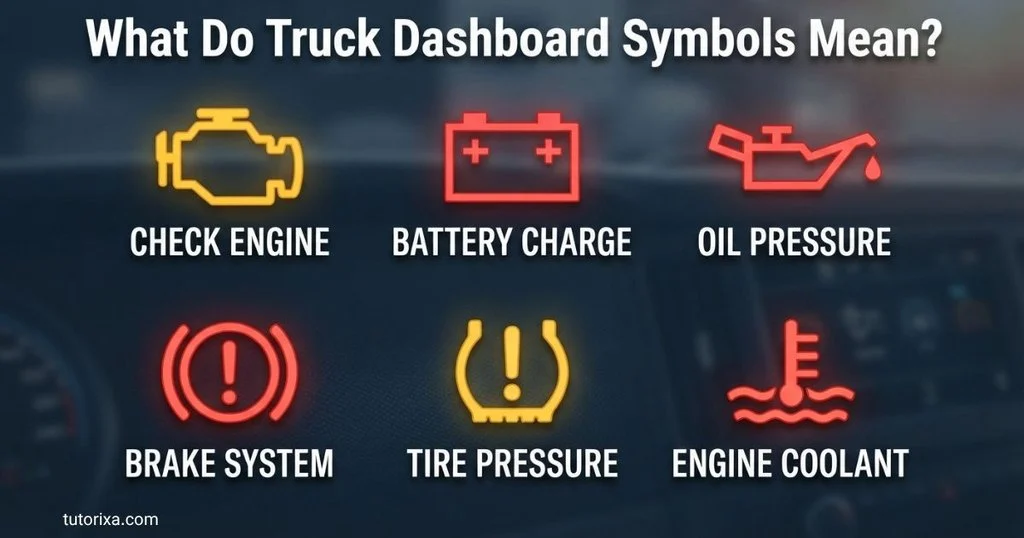
Truck dashboard symbols communicate the condition of vehicle systems through standardized-looking pictures, letters, and illuminated indicators. Their purpose is to help drivers identify problems quickly without reading lengthy diagnostic messages while driving.
Some symbols indicate normal operation. For example, a green turn signal confirms that a directional indicator is active, while a blue headlight symbol commonly indicates that high-beam headlights are switched on. Other symbols warn about mechanical faults, maintenance needs, or conditions that could affect safety.
The meaning of a symbol depends on more than its appearance. Its color, whether it flashes or stays illuminated, and any accompanying dashboard message can change the appropriate response.
A warning light that appears briefly when the ignition is switched on may be part of the instrument cluster’s self-check. However, a light that stays on after the engine starts, appears while driving, or flashes unexpectedly may require attention.
Red Dashboard Warning Lights
Red dashboard lights generally indicate a serious condition that may require immediate action. Common examples include low engine oil pressure, engine overheating, brake system problems, and critically low air pressure in trucks equipped with air brakes.
When a red warning appears, check the accompanying message and follow the truck manufacturer’s instructions. If the warning indicates a serious fault, safely move out of traffic and stop as directed. Do not continue driving simply because the truck still seems to operate normally.
Amber or Yellow Dashboard Warning Lights
Amber and yellow lights commonly indicate a malfunction, a maintenance requirement, or a condition that needs attention. Examples include the check engine light, anti-lock braking system warning, tire pressure warning, and diesel particulate filter indicator.
An amber warning does not always mean that a truck must stop immediately. However, some amber indicators require prompt action, especially when they flash or appear alongside a loss of power or another warning.
Green, Blue, and White Indicators
Green and blue indicators commonly show that a feature is operating, such as turn signals, cruise control, or high-beam headlights. White indicators may display system status or driver-assistance availability.
These colors do not automatically guarantee that every vehicle system is functioning correctly. Read any accompanying message and consult the owner’s manual when the meaning is unclear.
History and Origin of Truck Dashboard Symbols
Truck dashboard symbols developed alongside automotive instrument panels and electrical warning systems. Early vehicles relied heavily on physical gauges, mechanical controls, and direct observation. As trucks became more complex, manufacturers added indicator lamps to communicate information about engine operation, electrical charging, lubrication, temperature, and braking.
Diesel engine development and increasingly sophisticated commercial vehicles created a need for additional warnings. Modern trucks may monitor exhaust aftertreatment, electronic engine controls, transmission temperature, tire pressure, stability systems, and driver-assistance technology.
Over time, recognizable shapes and colors helped drivers identify common functions across different vehicle types. International vehicle regulations and industry standards have contributed to more consistent indicator designs, although manufacturers may still use model-specific symbols.
Today’s dashboard may combine traditional illuminated icons with digital displays, diagnostic messages, and electronic fault codes. A single warning symbol can therefore be accompanied by more detailed information on a truck’s instrument screen.
Important Truck Warning Lights and Their Meanings
Understanding the most common warning lights helps drivers distinguish routine indicators from potentially serious problems.
1. Engine Oil Pressure Warning Light
The oil pressure symbol usually resembles an oil can with a drop falling from its spout. It warns that engine oil pressure may be too low to lubricate moving components properly.
Low oil pressure can result from insufficient oil, a lubrication system problem, or a mechanical fault. If this warning illuminates while the engine is running, safely stop the truck and switch off the engine as instructed in the owner’s manual. Continuing to operate the engine can cause severe damage.
2. Engine Coolant Temperature Warning
This symbol commonly shows a thermometer above wavy lines representing coolant. It indicates that the engine may be overheating or that the cooling system has a problem.
Possible causes include coolant loss, restricted airflow, a malfunctioning fan, or a cooling system fault. Stop in a safe location and follow the manufacturer’s shutdown instructions. Never open a hot pressurized cooling system, because escaping steam or coolant can cause serious burns.
3. Check Engine Light
The check engine light resembles an engine outline and is also called the malfunction indicator lamp. It can indicate an emissions control problem, a sensor fault, or another issue detected by the engine management system.
A steady light generally calls for diagnosis and servicing. A flashing light can indicate a more urgent fault, depending on the truck. If the engine runs roughly, loses power, overheats, or displays a stop-engine warning, pull over safely and follow the vehicle’s instructions.
4. Battery or Charging System Warning
The battery symbol generally indicates a charging system issue when it remains illuminated while the engine is running. Possible causes include a faulty alternator, a damaged belt, wiring problems, or battery-related electrical faults.
The warning does not necessarily mean the battery itself is defective. Depending on the fault, the truck may eventually lose electrical power or experience additional system failures. Arrange a prompt inspection and avoid unnecessary electrical loads if advised by the manufacturer.
5. Brake System Warning Light
A red exclamation mark inside a circle, sometimes surrounded by parentheses, commonly indicates a brake system warning. It may appear when the parking brake is engaged, brake fluid is low, or the braking system has detected a fault.
If the parking brake is fully released and the warning remains on, stop when safe and investigate according to the manual. Do not continue operating a truck if braking performance is reduced or a serious brake warning remains active.
6. Anti-Lock Braking System (ABS) Warning
The ABS symbol typically displays the letters ABS inside a circle. It indicates a problem with the anti-lock braking system when it remains illuminated after the normal startup check.
A conventional braking system may continue functioning when ABS has a fault, but anti-lock protection may be unavailable. Heavy trucks may also have separate tractor and trailer ABS indicators. Follow the relevant vehicle and trailer instructions, arrange servicing, and use extra caution.
7. Low Tire Pressure Warning
This symbol resembles a cross-section of a tire with an exclamation mark in the middle. It usually indicates that one or more monitored tires have pressure below the recommended level.
Check tire pressures using the manufacturer’s specified values and inspect for visible damage. Heavy commercial trucks may use tire pressure monitoring systems, but equipment varies by vehicle. Do not rely solely on the dashboard indicator to assess tire condition.
8. Low Fuel Warning
The fuel pump symbol indicates that the fuel level is approaching the vehicle’s reserve threshold. Refuel as soon as practical, especially before entering remote areas or beginning a long commercial route.
The remaining driving distance depends on fuel consumption, tank capacity, terrain, load, traffic, and operating conditions. The symbol is a reminder to refuel rather than a precise measurement of how far the truck can travel.
9. Diesel Glow Plug Indicator
The glow plug indicator usually looks like a small coil or spiral. It appears in many diesel trucks to show that the engine’s preheating system is operating.
In cold conditions, the system helps prepare the engine for starting. Drivers should wait for the indicator to go out when the manufacturer’s starting procedure requires it. If the light flashes or stays illuminated abnormally, consult the owner’s manual for the correct next step.
10. Diesel Particulate Filter (DPF) Warning
The DPF indicator relates to the exhaust filter that captures soot from a diesel engine. Depending on the truck, the warning may indicate that regeneration is needed or that the filter requires attention.
Some trucks perform regeneration automatically, while others may provide instructions for a stationary regeneration procedure. Follow the exact operating instructions, including any restrictions involving parking locations and exhaust temperature. A flashing warning, reduced engine power, or a separate stop-engine light requires particular attention.
11. Diesel Exhaust Fluid (DEF) Warning
The DEF warning indicates low diesel exhaust fluid or a problem with the selective catalytic reduction emissions system. DEF is used by equipped diesel vehicles to help reduce nitrogen oxide emissions.
Refill with the specified fluid when required and check the dashboard message. A system malfunction may need professional diagnosis. Depending on the truck, very low fluid levels or an emissions system fault can eventually limit engine performance or prevent a restart.
12. Low Air Pressure Warning
Heavy trucks with air brakes may have a low-air-pressure warning lamp, buzzer, or gauge alert. It indicates that air pressure in the braking system has dropped below the required threshold.
Air pressure is essential for the proper operation of air brakes. If the warning appears while driving, bring the truck to a safe stop according to the manufacturer’s procedure. Do not continue a journey with an unresolved low-air-pressure warning.
13. Water in Fuel Warning
This warning commonly appears as a water droplet or filter-related symbol. It indicates that the fuel-water separator has detected a significant amount of water in the diesel fuel system.
Water contamination can affect engine operation and damage fuel system components. Follow the truck manufacturer’s draining and servicing instructions, or arrange professional assistance if you are unfamiliar with the system.
14. Transmission Temperature Warning
A transmission temperature warning indicates that the transmission may be operating above its normal temperature range. Heavy loads, steep grades, towing, inadequate cooling, or mechanical problems can contribute to excessive heat.
Follow the truck’s instructions for reducing load or stopping safely. Do not assume that the warning will disappear without consequences, particularly if the transmission slips, shifts abnormally, or loses power.
15. Traction Control and Stability Control Indicator
This indicator often depicts a vehicle with curved skid marks beneath its tires. It may flash when traction or stability control is actively intervening to help maintain control.
If the indicator remains on, the system may have been switched off or may require servicing. Heavy trucks can have additional stability control systems designed for their vehicle configuration. Check the manual to distinguish normal system activity from a malfunction.
Cultural and Technical Significance of Truck Dashboard Symbols
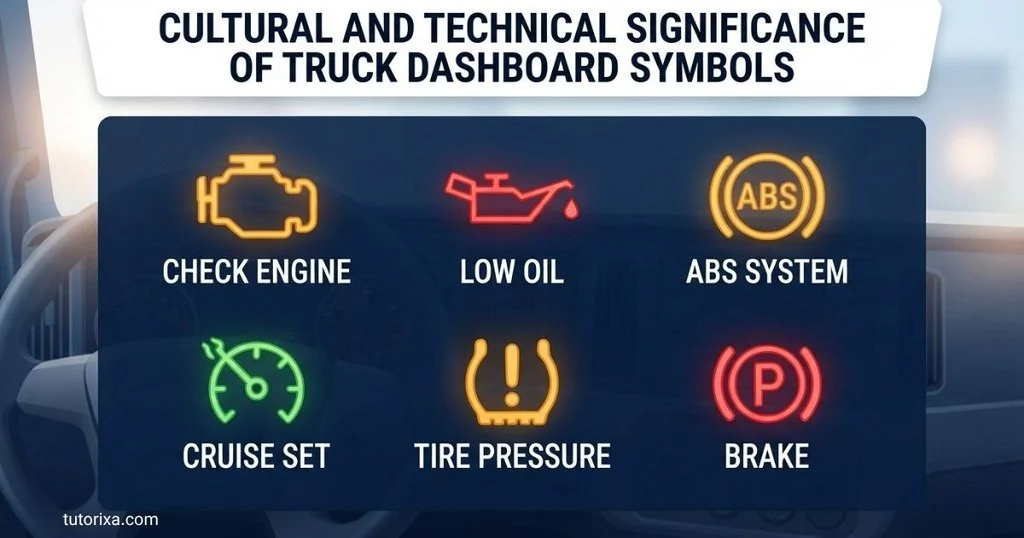
Truck dashboard symbols are primarily technical communication tools rather than cultural or religious symbols. Their purpose is to communicate a vehicle’s status quickly, using recognizable shapes, colors, and abbreviations instead of lengthy written instructions.
Why Dashboard Symbols Look Similar Across Vehicles
Many dashboard indicators use familiar visual conventions. An oil can represents lubrication, a battery represents electrical power, and a thermometer represents temperature. These pictures create a visual connection between the warning and the system involved.
Standardization also helps drivers recognize familiar indicators when switching between vehicles. However, similar-looking symbols can represent different conditions on different trucks, particularly when advanced features or manufacturer-specific systems are involved.
How Heavy-Duty Trucks Differ From Pickup Trucks
Pickup trucks often display familiar indicators for engine performance, tire pressure, airbags, traction control, and four-wheel drive. Heavy-duty trucks may include additional warning lights for air brakes, trailer ABS, diesel exhaust aftertreatment, exhaust temperature, engine protection, and air suspension.
Commercial vehicles can also use separate amber warning and red stop-engine lamps. These indicators may communicate different levels of urgency, so drivers should understand the instructions specific to their truck’s engine and instrument cluster.
Common Variations in Truck Dashboard Symbols
Dashboard symbols vary according to the vehicle’s manufacturer, model year, powertrain, equipment, and intended use.
| Variation | What It May Look Like | What to Check |
| Manufacturer-specific engine warning | Engine outline or text message | Owner’s manual and diagnostic information |
| Four-wheel-drive indicator | Axle, drivetrain, or vehicle outline | Selected drivetrain mode |
| Trailer ABS warning | ABS letters or trailer icon | Trailer braking system and connections |
| Diesel exhaust warning | Filter, exhaust, or DEF symbol | Regeneration status and emissions messages |
| Air suspension indicator | Truck or suspension-related symbol | Suspension status and fault messages |
| Lane assistance indicator | Vehicle between lane markings | System availability and operating conditions |
| Tire monitoring warning | Tire outline with an exclamation mark | Tire pressure and monitoring system status |
| Parking brake indicator | Letter P or brake symbol | Whether the parking brake is applied |
Two symbols that appear almost identical may have different meanings. For example, an amber ABS indicator and a red brake warning are not interchangeable. Likewise, an illuminated diesel exhaust indicator may mean regeneration is required rather than that the engine itself has failed.
The truck’s make, model, and year are essential when identifying an unfamiliar symbol accurately.
Common Misconceptions About Truck Dashboard Warning Lights
Several misunderstandings can lead to unnecessary repairs or unsafe decisions.
Misconception 1: Every warning light means the truck must stop immediately.
Not all dashboard indicators signal an emergency. Some indicate that a feature is active, while others recommend servicing. However, serious red warnings, abnormal braking, overheating, and low oil pressure require prompt action.
Misconception 2: An amber light is always safe to ignore.
Amber lights often indicate faults that need attention. Some problems can worsen or trigger reduced engine power if ignored. Follow the specific warning instructions rather than relying on color alone.
Misconception 3: Turning off the engine always resets the warning.
Restarting may temporarily clear some indicators, but it does not necessarily resolve the underlying problem. A warning may return when the system detects the fault again.
Misconception 4: A check engine light always means an expensive repair.
The light can indicate a range of issues, from relatively minor sensor faults to more serious engine or emissions problems. A diagnostic scan and appropriate inspection help identify the actual cause.
Misconception 5: All trucks use exactly the same dashboard symbols.
Symbol designs and operating procedures vary. Pickup trucks, diesel delivery vehicles, semis, and specialized work trucks may have different warning systems and equipment.
Misconception 6: If the truck drives normally, the warning is unimportant.
Some serious faults do not immediately cause obvious changes in handling or performance. A warning light should be interpreted according to the manufacturer’s instructions, not solely by how the truck feels.
10 Interesting Facts About Truck Dashboard Symbols
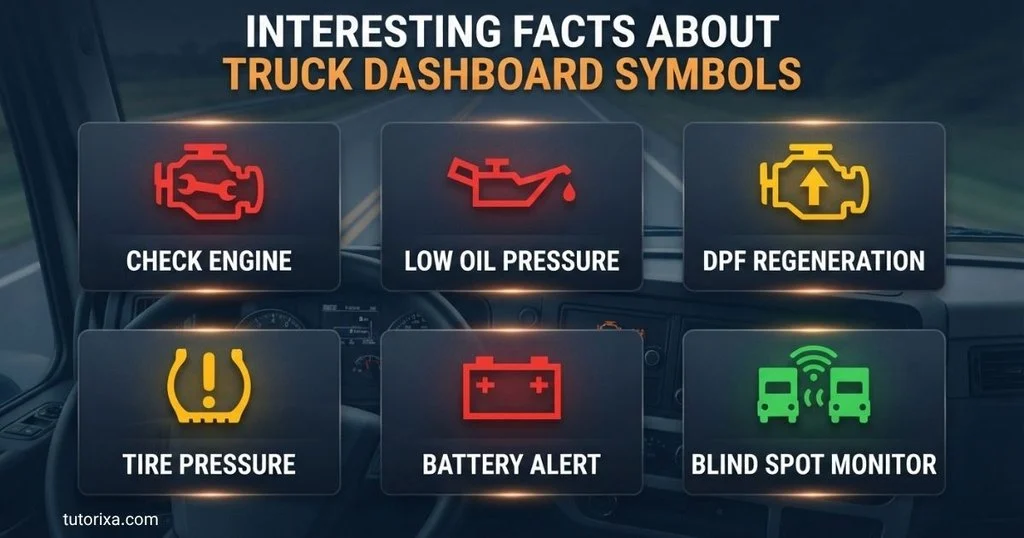
1. Dashboard lights can perform a self-check. Many trucks illuminate selected indicators when the ignition is switched on. This helps verify that warning lamps and related systems can signal a problem.
2. Color provides a useful first clue. Red often signals a condition requiring immediate attention, amber indicates caution or a fault, and green or blue commonly identifies an active function. The exact meaning still depends on the vehicle.
3. Heavy-duty trucks may have separate engine warning levels. Some commercial diesel systems distinguish an amber warning from a red stop-engine condition. The red warning can indicate a fault serious enough to require shutdown.
4. A truck may display both a warning light and a written message. Digital instrument clusters can provide additional information that a small symbol alone cannot communicate.
5. Diesel trucks can display several exhaust-related indicators. DEF, DPF regeneration, and high exhaust temperature warnings refer to different aspects of the emissions system.
6. Air brakes introduce warnings not found in many passenger vehicles. Low-air-pressure indicators are especially important because heavy vehicles depend on adequate air pressure for proper brake operation.
7. Some indicators flash during normal operation. Turn signals, traction control activity, and certain regeneration indicators may flash for different reasons. Flashing does not always mean the same thing across systems.
8. Trailer systems can have their own warning lights. A tractor’s dashboard may identify a problem associated with the trailer’s ABS rather than the truck’s own braking electronics.
9. Dashboard symbols have evolved with emissions regulations. Modern diesel vehicles use more sophisticated emissions monitoring and aftertreatment systems, creating a need for additional indicators.
10. A warning light cannot always identify the exact failed part. An icon usually identifies a system or condition, not a definitive component diagnosis. Further inspection or diagnostic testing may be necessary.
Related Truck Dashboard Indicators
Several other dashboard symbols are worth recognizing because they relate to safety, visibility, or vehicle operation.
- Seat belt indicator: Reminds the driver or passenger to fasten a seat belt.
- Airbag warning: Indicates a possible fault in the supplemental restraint system.
- Turn signal arrows: Show that the left or right directional indicator is active.
- High-beam indicator: Usually a blue headlight symbol showing that high-beam headlights are on.
- Cruise control indicator: Shows that cruise control is enabled or controlling speed, depending on the vehicle.
- Four-wheel-drive indicator: Shows the selected drivetrain mode or a related system status.
- Lane departure warning: Indicates lane-monitoring activity, system unavailability, or a related fault.
- Low washer fluid indicator: Signals that windshield washer fluid needs replenishing.
- Water temperature gauge: Displays engine coolant temperature and may accompany an overheating warning.
- Fuel filter warning: On some diesel trucks, indicates a fuel filtration issue or water accumulation.
These indicators are not all emergency warnings. Their meaning depends on whether they simply show that a feature is active or indicate a malfunction.
Frequently Asked Questions About Truck Dashboard Symbols and Meanings
1. What are the most common truck dashboard symbols?
Common truck dashboard symbols include the check engine light, oil pressure warning, coolant temperature warning, battery indicator, brake warning, ABS light, low tire pressure symbol, and low fuel indicator. Diesel trucks may also display glow plug, DEF, DPF, water-in-fuel, and low air pressure warnings. The available symbols depend on the truck’s equipment.
2. What does a red warning light mean on a truck dashboard?
A red warning light generally indicates a serious condition that requires immediate attention. Examples include low engine oil pressure, overheating, and certain brake system faults. Safely stop the truck when instructed and follow the manufacturer’s guidance. Some red indicators, such as a parking brake light, may have a different explanation.
3. What does an amber engine light mean on a truck?
An amber engine light usually indicates that the engine management or emissions control system has detected a fault. The cause could involve a sensor, fuel system, exhaust aftertreatment, or another component. Check for accompanying messages and arrange diagnosis. If the light flashes or the truck loses power, follow the manual’s more urgent instructions.
4. Why does my truck dashboard show a battery symbol?
A battery symbol that remains illuminated while the engine is running commonly indicates a charging system problem. The alternator, drive belt, electrical connections, or battery-related components may need inspection. The symbol does not automatically mean the battery itself has failed. Arrange an appropriate inspection before electrical problems leave the vehicle unable to operate.
5. What does the DPF light mean on a diesel truck?
The diesel particulate filter light indicates that the exhaust filter requires attention, often because accumulated soot has reached a level that requires regeneration. Depending on the truck, regeneration may happen automatically or require a specific procedure. Read the dashboard message and follow the manufacturer’s instructions, especially if the light flashes or engine power decreases.
6. What does the ABS light mean on a heavy-duty truck?
An ABS warning indicates a possible malfunction in the anti-lock braking system. The conventional brakes may continue working, but anti-lock protection may not be available. Heavy trucks can also have separate trailer ABS indicators. Follow the truck and trailer manuals, drive cautiously when appropriate, and arrange prompt servicing to identify the fault.
7. What does a low air pressure warning mean on a semi-truck?
A low air pressure warning means that the air-brake system pressure has dropped below its required operating threshold. This condition can affect braking safety and must not be ignored. Follow the truck manufacturer’s stopping procedure and do not continue driving with an unresolved warning. A qualified technician should inspect persistent pressure problems.
8. Why do dashboard warning lights appear when starting a truck?
Many trucks illuminate dashboard warning lamps briefly during startup as part of a self-check. This allows the instrument cluster to show that selected indicators can illuminate. Some lights should go out once the engine starts and the relevant systems pass their checks. A light that remains on or returns while driving needs further attention.
9. Can I drive my truck with the check engine light on?
Whether you can continue driving depends on the warning’s behavior and the truck’s condition. A steady amber light may permit cautious travel to a suitable service facility under the manufacturer’s guidance. A flashing light, red stop-engine warning, overheating, low oil pressure, or unusual braking requires more urgent action.
10. Where can I find the exact meaning of my truck’s dashboard symbols?
The owner’s manual is the primary reference for identifying dashboard symbols on a particular truck. Look for the instrument cluster, warning lamps, or telltale indicators section. The manufacturer’s official online manual may also help. If a warning remains unclear, provide the truck’s make, model, year, and symbol description to a qualified service professional.
Key Takeaways
- Truck dashboard symbols communicate vehicle status, system operation, maintenance needs, and potential faults.
- Red warning lights generally indicate serious conditions that require immediate attention.
- Amber or yellow indicators commonly signal faults or maintenance needs that should not be ignored.
- Green and blue lights usually identify active vehicle functions.
- Oil pressure, coolant temperature, brake, and low air pressure warnings deserve particular attention.
- Diesel trucks may display additional DPF, DEF, glow plug, exhaust temperature, and water-in-fuel indicators.
- Similar symbols can have different meanings depending on the truck’s manufacturer, model, and equipment.
- A warning light does not always identify the exact component causing a problem.
- Never rely on color alone; check accompanying messages and the owner’s manual.
- When a warning indicates a serious fault, prioritize safety and follow the manufacturer’s instructions.
Conclusion
Understanding truck dashboard symbols and meanings helps drivers recognize potential problems, respond to warnings appropriately, and maintain their vehicles more effectively. From familiar indicators such as the check engine light and battery symbol to specialized diesel warnings for DPF regeneration, DEF levels, and air-brake pressure, each indicator communicates information about a particular system or operating condition.
The most important habit is to distinguish normal status indicators from warnings that require action. Pay attention to the symbol’s color, whether it flashes or remains illuminated, and any message displayed alongside it. When a serious warning appears, stop safely if required and follow the manufacturer’s instructions rather than guessing at the cause.
Because dashboard layouts differ between pickup trucks, heavy-duty trucks, and semi-trucks, the owner’s manual remains the most reliable reference for identifying an unfamiliar indicator. Knowing what these symbols mean can help you make informed decisions, protect your vehicle, and travel more safely.

I’m Ellis Montgomery, a British writer interested in the powerful language of symbols. I explore everything from traditional emblems and cultural signs to contemporary symbols found in modern life. My aim is to explain their meanings clearly while revealing the stories and ideas behind them, making symbolism fascinating and accessible to everyone.
Books:
- The Complete Book of Symbols
- Hidden Messages in Everyday Symbols
 Rowan Whitaker