
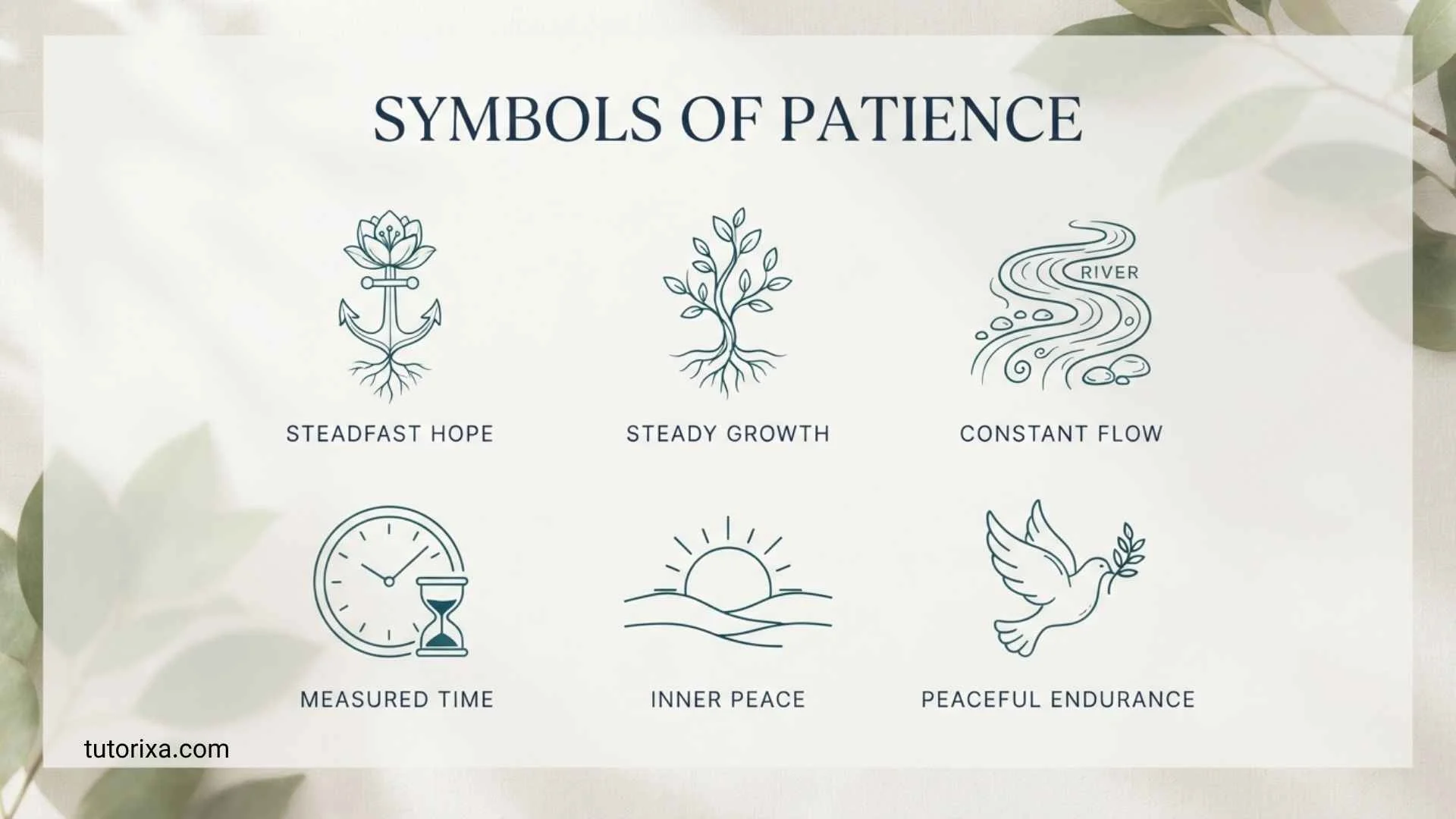
Symbols of Patience reveal the quiet power behind waiting, endurance, and inner strength. I believe these symbols help you see patience in a deeper way and remind you that true growth often takes time.
You may find patience hidden in nature, cultures, religions, and everyday life. When you explore these meanings, you can discover powerful lessons about staying calm and trusting the journey.
I invite you to explore these meaningful symbols with me and learn how they represent hope, resilience, wisdom, and emotional balance. These timeless signs can inspire you to build greater patience in your own life.
Quick Meaning
Symbols of patience are images, objects, animals, plants, or signs that represent endurance, calmness, perseverance, and the ability to accept time and challenges with balance. Common examples include the turtle, lotus flower, bamboo, hourglass, mountain, olive branch, and tree, each carrying unique cultural meanings.
Symbol Overview Table
| Symbol Name | Primary Meaning | Category | Origin / Association | Civilization or Culture | Common Usage | Modern Meaning |
| Turtle | Slow progress, endurance, wisdom | Animal Symbol | Ancient traditions worldwide | Chinese, Native American, Hindu, Greek traditions | Art, tattoos, stories | Steady growth and persistence |
| Lotus Flower | Spiritual growth, patience, purity | Plant Symbol | Ancient Egypt and India | Hinduism, Buddhism, Egyptian culture | Religion, jewelry, artwork | Personal transformation |
| Bamboo | Flexibility and long-term growth | Plant Symbol | East Asia | Chinese and Japanese cultures | Art, architecture | Resilience and adaptability |
| Hourglass | Time, waiting, acceptance | Object Symbol | Medieval Europe | European traditions | Decorations, logos | Respect for time |
| Mountain | Stability and endurance | Nature Symbol | Global | Many indigenous and spiritual traditions | Art, literature | Strength through challenges |
| Tree | Growth, wisdom, longevity | Nature Symbol | Ancient civilizations | Celtic, Norse, Asian cultures | Religious and cultural art | Long-term development |
| Olive Branch | Peace and calm resolution | Plant Symbol | Ancient Mediterranean | Greek and Roman cultures | Art, diplomacy | Harmony and patience |
What Does the Symbol Mean?
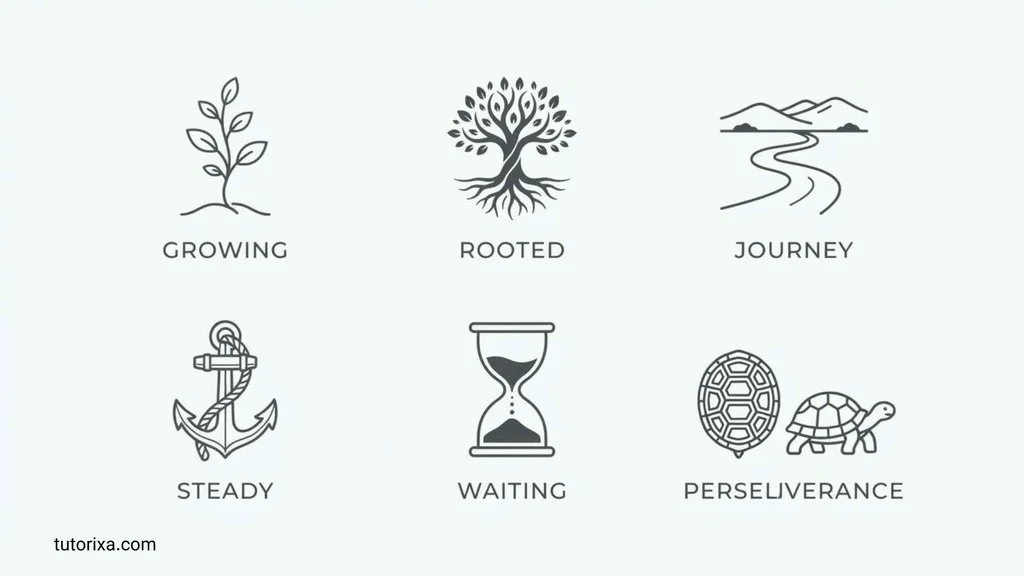
The meaning of patience symbols centers around the idea that valuable things often require time. These symbols teach that progress does not always happen quickly, and lasting achievements usually develop through consistent effort.
Unlike symbols of speed or immediate success, patience symbols focus on the journey. They represent emotional control, acceptance, and trust in natural processes.
For example, the turtle does not represent weakness because it moves slowly. Instead, it represents determination because it continues moving despite its pace. The lotus flower represents patience because it grows through challenging conditions before producing a beautiful bloom.
Many patience symbols share three major ideas:
- Time: Understanding that meaningful change cannot always be rushed.
- Endurance: Continuing despite obstacles or delays.
- Inner peace: Remaining calm during uncertain situations.
These meanings appear in personal development, spiritual teachings, traditional stories, and modern motivational messages.
History and Origin
The idea of patience as a virtue is ancient. Human societies have always depended on waiting, planning, and endurance for survival. Farming, hunting, construction, and spiritual practices all required people to understand natural cycles and accept delayed rewards.
Ancient Egypt
The lotus flower was an important symbol in ancient Egyptian culture. It was associated with creation, renewal, and the cycle of life. Because the flower appeared from water and opened with sunlight, Egyptians connected it with transformation and spiritual awakening.
Although the lotus was not exclusively a patience symbol, its connection with gradual emergence and renewal later influenced interpretations of patience and personal growth.
Ancient China
Chinese philosophy strongly valued patience, discipline, and harmony. The turtle became a respected symbol because of its long lifespan and steady movement. In Chinese traditions, the turtle represented wisdom, stability, and endurance.
Bamboo also became associated with patience because it grows slowly underground before rapidly rising above the surface. This natural process became a metaphor for hidden preparation and delayed success.
Ancient India
In Indian traditions, patience is closely connected with spiritual discipline. The lotus flower became one of the most recognized symbols in Hinduism and Buddhism. It represents rising above difficulties while maintaining purity and balance.
The lotus teaches that difficult conditions can become part of personal growth rather than barriers to it.
Classical Mediterranean Cultures
Greek and Roman traditions used natural symbols such as olive branches to represent peace and reconciliation. Patience was often connected with diplomacy, wisdom, and the ability to avoid unnecessary conflict.
Over centuries, patience symbols developed beyond religious meanings and became universal representations of emotional strength.
Symbolism and Interpretation
Traditional Meanings
Traditionally, patience symbols represented:
- Wisdom gained through experience
- Acceptance of natural timing
- Emotional discipline
- Perseverance through hardship
- Hope for future rewards
Many ancient societies viewed patience as a sign of maturity. A patient person was often considered someone who understood life’s deeper patterns.
Modern Meanings
Today, patience symbols are used in personal development, mental wellness, education, and creative fields. People use them to express ideas such as:
- “Keep going.”
- “Growth takes time.”
- “Trust the process.”
- “Stay calm during challenges.”
A turtle tattoo, for example, may represent someone’s personal journey rather than simply the animal itself.
Positive Symbolism
Patience symbols commonly represent:
- Strength
- Self-control
- Confidence
- Long-term success
- Emotional balance
- Hope
Negative Symbolism
Some symbols can have different interpretations depending on context. Patience may sometimes be misunderstood as passiveness, hesitation, or accepting unfair situations without action.
A healthy interpretation of patience is not doing nothing. It means making thoughtful decisions while allowing time for proper development.
Psychological Interpretation
From a psychological perspective, patience is linked with emotional regulation, delayed gratification, and resilience. Symbols of patience can serve as visual reminders to slow down, manage stress, and focus on long-term goals.
Cultural Significance
Different cultures interpret patience symbols through their own histories, environments, and beliefs.
Chinese Culture
The turtle and bamboo are strongly connected with longevity, wisdom, and perseverance. Bamboo especially represents flexibility because it bends during storms but does not easily break.
Japanese Culture
Japanese traditions often value patience through concepts such as discipline, craftsmanship, and gradual improvement. Bamboo gardens, bonsai trees, and natural landscapes reflect appreciation for slow development.
Buddhist Traditions
The lotus flower is deeply connected with enlightenment and spiritual growth. It represents the journey from difficulty toward awareness and peace.
Native American Traditions
Some Native American traditions view the turtle as a symbol connected with creation stories, stability, and connection to the Earth. Meanings vary between nations and should be understood within specific cultural contexts.
Western Culture
In Western societies, the hourglass, mountain, and tree are commonly associated with patience. They appear in literature and art as reminders of time, endurance, and personal growth.
Religious or Spiritual Meaning
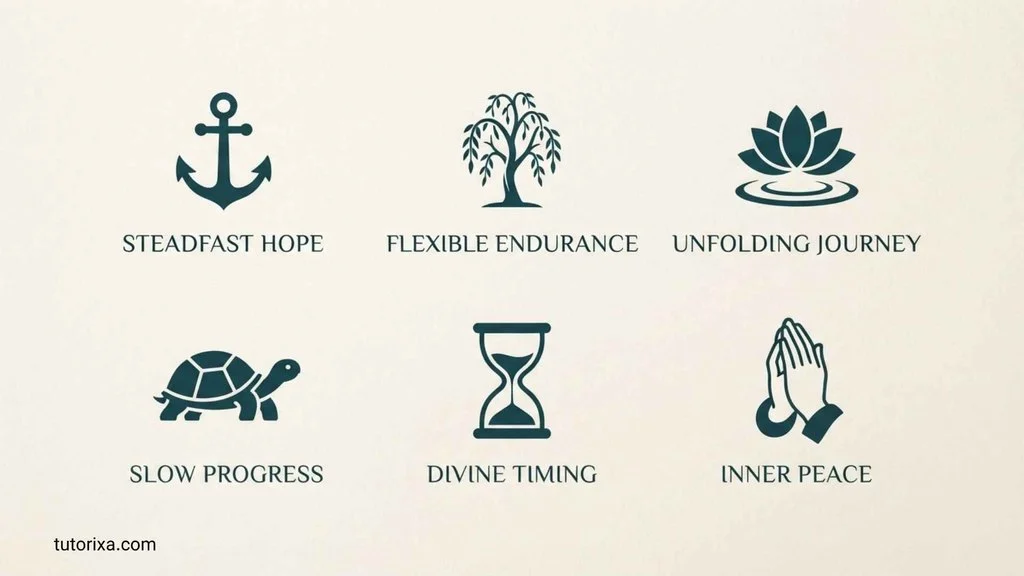
Patience has a significant role in many spiritual traditions, and several symbols represent this quality.
Buddhism
The lotus flower is one of the most important Buddhist symbols. It represents spiritual development, purity, and the ability to rise above suffering. The slow process of the lotus growing from muddy water reflects the gradual path toward wisdom.
Hinduism
In Hindu traditions, the lotus is associated with spiritual awakening, divine beauty, and creation. It represents maintaining inner purity despite external challenges.
Christianity
While Christianity does not have one single official patience symbol, certain images such as olive branches, crosses, and waiting-related biblical imagery are often connected with peace, faith, endurance, and trust.
Islam
Patience, known as “sabr” in Islamic tradition, is considered an important virtue. Symbols associated with patience may vary, but concepts of endurance, faith, and perseverance are emphasized in spiritual teachings.
Where the Symbol Is Used
Symbols of patience appear in many areas of human expression.
Books and Literature
Writers often use turtles, trees, mountains, and seasons as metaphors for patience and personal growth.
Jewelry
Patience symbols are commonly placed on necklaces, bracelets, and rings. People often wear them as personal reminders of strength and calmness.
Tattoos
Popular patience tattoos include:
- Turtle designs
- Lotus flowers
- Hourglasses
- Trees
- Mountains
- Bamboo
Each design can carry a personal meaning connected with life experiences.
Architecture and Art
Gardens, temples, sculptures, and paintings frequently use natural patience symbols to represent harmony and balance.
Technology and Logos
Modern brands sometimes use trees, circles, or natural imagery to communicate reliability, sustainability, and long-term vision.
Education and Personal Development
Teachers and motivational speakers often use patience symbols to encourage persistence and continuous learning.
Common Variations
Patience symbols appear in many different forms.
Turtle Variations
A turtle may be shown alone, carrying a shell design, or combined with natural elements such as water and earth. In some cultures, it represents wisdom, while in others it represents stability.
Lotus Variations
The lotus may appear with different numbers of petals, colors, and artistic styles. In spiritual artwork, each design may carry different meanings.
Tree Variations
Different trees represent different aspects of patience:
- Oak tree: strength and endurance
- Olive tree: peace and longevity
- Bamboo: flexibility and resilience
Modern Adaptations
Today, patience symbols are often combined with quotes, minimalist designs, digital artwork, and personal branding.
Common Misconceptions
Patience Means Doing Nothing
A common misunderstanding is that patience means inactivity. True patience involves continuing meaningful action while allowing results to develop naturally.
Slow Means Failure
Many patience symbols challenge the idea that speed equals success. Slow progress can still lead to important achievements.
All Cultures Share Identical Meanings
A symbol may have different meanings depending on cultural background. The turtle, lotus, and tree can represent different ideas in different societies.
Patience Means Accepting Everything
Patience does not require accepting harmful situations. It involves thoughtful responses rather than rushed reactions.
Interesting Facts About Patience Symbols
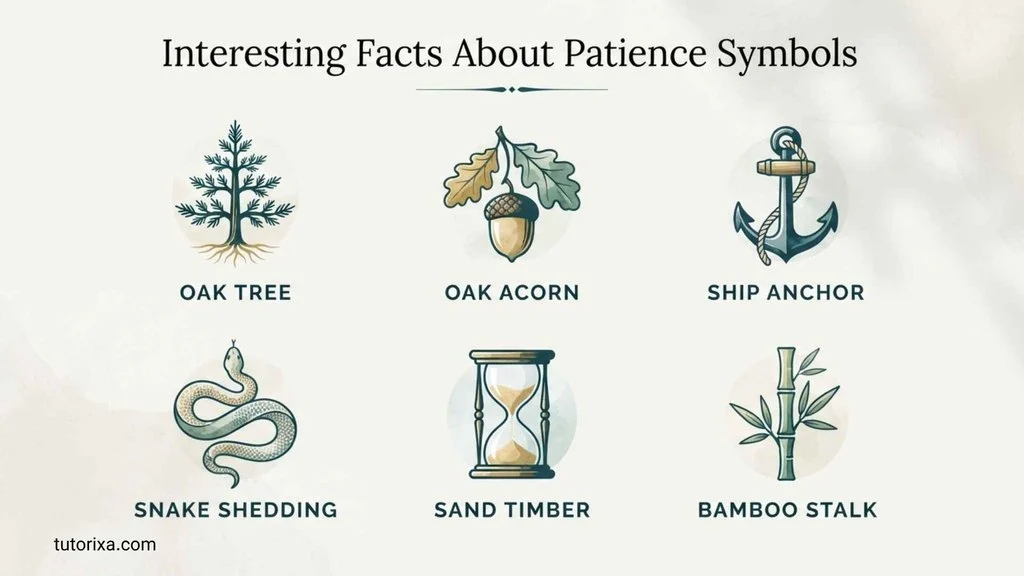
- The turtle is one of the oldest patience-related symbols.
Its long lifespan and steady movement made it a natural representation of endurance. - Bamboo can remain hidden for years before rapid growth appears.
This natural pattern inspired ideas about preparation and delayed success. - The lotus grows in challenging environments.
Its ability to bloom from muddy water made it a powerful symbol of transformation. - The hourglass changed how people viewed waiting.
It transformed time from an invisible concept into something people could observe. - Trees are universal patience symbols.
Their slow growth connects them with wisdom, generations, and lasting strength. - Mountain symbolism appears worldwide.
Many cultures see mountains as examples of stability and endurance. - Patience symbols often come from nature.
Animals, plants, and landscapes naturally demonstrate gradual change. - Many patience symbols are connected with spirituality.
Religious traditions often use them to explain personal development and inner peace. - Patience symbols are popular in modern tattoos.
People often choose them to represent personal challenges and achievements. - Patience is viewed as a strength in many philosophies.
Ancient and modern thinkers often connect patience with wisdom and self-control.
Related Symbols
Perseverance Symbols
The phoenix represents rebirth and overcoming hardship. Unlike patience symbols, it focuses more on recovery and transformation after difficulty.
Strength Symbols
The lion and oak tree often represent power and courage. Patience symbols focus more on endurance and steady progress.
Peace Symbols
The olive branch represents harmony and peaceful solutions, which often require patience and understanding.
Growth Symbols
The seed represents potential and future development. Like the lotus and tree, it shows that meaningful results require time.
Frequently Asked Questions
What is the most common symbol of patience?
The turtle is one of the most recognized symbols of patience because its slow movement represents steady progress, endurance, and determination. Many cultures interpret the turtle as a reminder that success does not always require speed.
What flower represents patience?
The lotus flower is often associated with patience because it represents gradual growth, transformation, and spiritual development. Its journey from muddy water to a beautiful bloom symbolizes overcoming challenges with time and perseverance.
What animal symbolizes patience?
The turtle is the animal most commonly connected with patience. Its slow but consistent movement represents endurance, wisdom, and the importance of continuing forward despite obstacles.
What color represents patience?
Colors associated with patience often include blue, green, and earthy tones. Blue may represent calmness, green may represent growth and balance, and earth colors may symbolize stability and connection with nature.
Is a lotus a symbol of patience?
Yes, the lotus can represent patience because it reflects slow transformation and the ability to develop beauty despite difficult conditions. Its meaning is especially important in Buddhist and Hindu traditions.
What symbol represents waiting?
The hourglass is a common symbol of waiting because it visually represents the passage of time. It reminds people that some outcomes require natural timing and cannot be rushed.
Why is the turtle a symbol of patience?
The turtle represents patience because it moves slowly but continues toward its destination. Many traditions view this steady movement as a lesson about persistence, wisdom, and long-term success.
Are patience symbols used in tattoos?
Yes, many people choose patience symbols for tattoos. Turtle, lotus, tree, mountain, and hourglass designs are popular because they can represent personal journeys, resilience, and important life lessons.
What is the spiritual meaning of patience symbols?
Spiritually, patience symbols often represent faith, inner peace, growth, and acceptance of life’s timing. They encourage people to remain balanced while moving through challenges.
Do patience symbols have the same meaning everywhere?
No. Symbol meanings change between cultures and historical periods. A symbol may represent patience in one tradition while carrying additional meanings such as wisdom, spirituality, or protection in another.
Key Takeaways
- Symbols of patience represent endurance, calmness, and long-term growth.
- The turtle, lotus flower, bamboo, hourglass, and tree are among the most recognized patience symbols.
- Many patience symbols originate from observations of nature.
- Different cultures interpret patience symbols in unique ways.
- Patience represents active perseverance, not simply waiting.
- Religious traditions often connect patience with spiritual development.
- Modern uses include tattoos, jewelry, art, education, and personal reminders.
Conclusion
Symbols of patience reveal a universal human understanding: meaningful growth takes time. From the steady turtle to the blooming lotus, these symbols remind people that progress does not always happen quickly, but persistence can create lasting results. Across cultures, religions, and generations, patience has remained a powerful quality connected with wisdom, strength, and inner balance.
Whether found in ancient artwork, spiritual traditions, personal jewelry, or modern designs, patience symbols continue to inspire people to slow down, remain focused, and trust the process of growth.

I’m Rowan Whitaker, a British writer fascinated by the symbols surrounding us every day. I explore their meanings, origins, cultural significance, and changing interpretations. From ancient marks to modern signs, I enjoy making symbolism easier to understand. My writing helps curious readers discover the hidden messages behind familiar shapes, images, and signs.
Books:
- The Meaning Behind Symbols
- A Modern Guide to Symbolism
 Ellis Montgomery
 Freddie Beaumont