
Have you ever looked at a laundry care label and wondered what those little dryer symbols actually mean? You’re not alone. Understanding these symbols can feel confusing, especially when you want to keep your favorite clothes looking their best.
I created this guide to help you understand dryer symbols meaning in simple, everyday language. From tumble drying and low heat to air drying and do not tumble dry symbols, you’ll learn what each icon means and how to use that information when doing laundry.
Once you understand these symbols, you can make smarter drying decisions and avoid common laundry mistakes. You’ll know which drying settings to choose, which clothes need extra care, and how to protect your fabrics from unnecessary damage.
Quick Meaning of Dryer Symbols
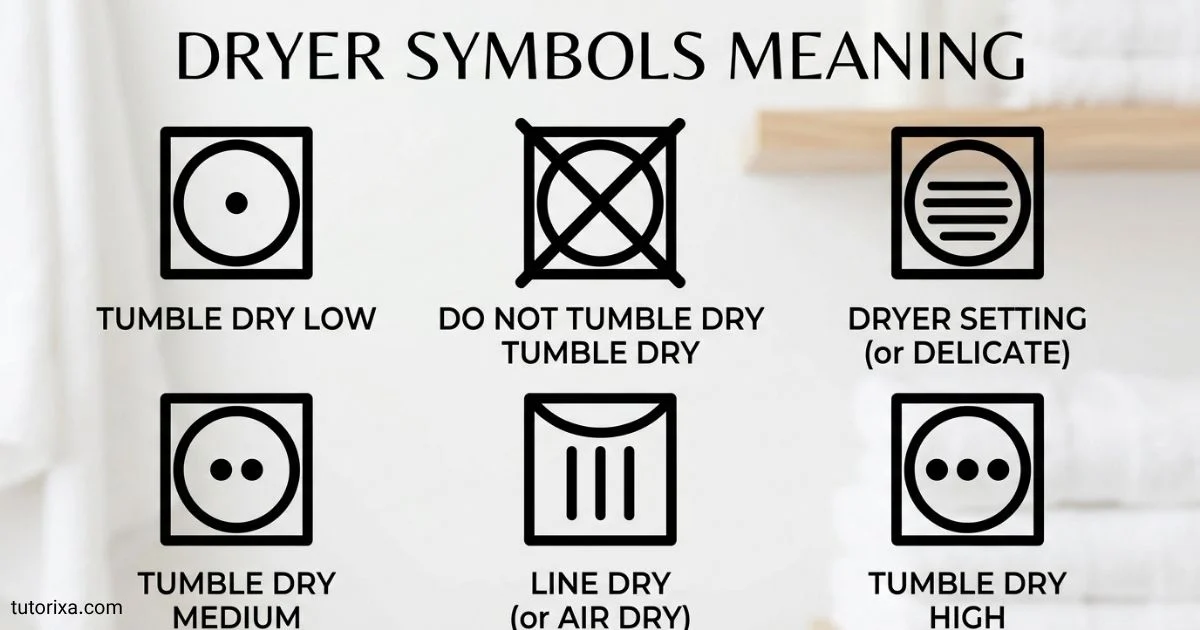
Dryer symbols are pictograms on clothing care labels that explain how a garment should be dried. A square containing a circle means tumble drying is permitted, while a cross through that symbol means tumble drying is prohibited. Dots inside the circle indicate heat settings, and other square designs represent methods such as line drying, flat drying, or drip drying.
Dryer Symbols Meaning: Symbol Overview Table
The easiest way to identify a dryer symbol is to look at its shape first, then check for dots, lines, or a cross. In the widely used international care-label system, the square represents drying, and the circle inside it identifies tumble drying.
| Dryer symbol or design | Primary meaning | Recommended action |
| Square with a circle | Tumble dry allowed | Use a suitable dryer setting |
| Square with a circle and one dot | Tumble dry, low heat | Choose a low-temperature setting |
| Square with a circle and two dots | Tumble dry, medium heat | Use moderate heat |
| Square with a circle and three dots | Tumble dry, high heat | Use a high-temperature setting only when appropriate |
| Crossed-out square with a circle | Do not tumble dry | Choose an alternative drying method |
| Square with a circle and a horizontal line underneath | Tumble dry, permanent press | Select the permanent-press cycle |
| Square with a circle and two horizontal lines underneath | Tumble dry, gentle or delicate cycle | Use a gentle dryer program |
| Square with a curved line at the top | Line dry | Hang the garment to dry |
| Square with three vertical lines | Drip dry | Hang without wringing |
| Square with a horizontal line | Dry flat | Place the garment on a flat surface |
| Square with diagonal lines in the corner | Dry in the shade | Keep the garment out of direct sunlight |
| Crossed-out square with a circle | Tumble drying prohibited | Air-dry or follow another permitted method |
Important: Care-label systems and dryer symbols can vary by country and manufacturer. Follow the garment’s complete care label and your dryer’s instruction manual rather than assuming every machine uses identical settings.
What Do Dryer Symbols Mean?
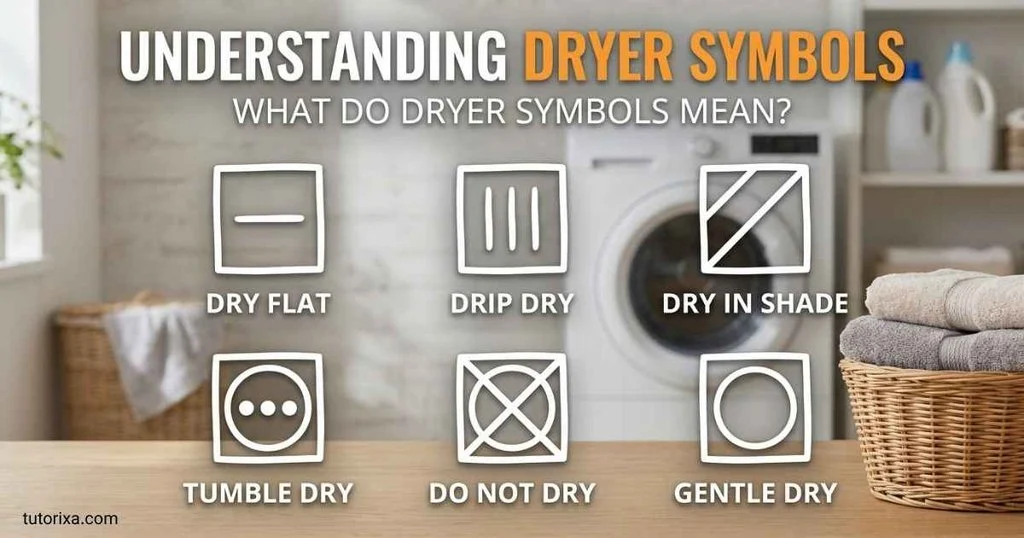
Dryer symbols communicate the drying method and the level of heat or gentleness that a garment can tolerate. Each marking provides a practical instruction intended to reduce the risk of fabric damage.
1. Tumble Dry Symbol
Symbol description: A square containing a circle.
The tumble dry symbol means a garment may be dried in a machine dryer, provided you follow any additional restrictions on the label.
The circle represents the rotating drum of the dryer. The surrounding square identifies the general drying category.
You might find this symbol on cotton T-shirts, towels, sheets, and other garments suitable for machine drying. However, the basic symbol does not necessarily mean that every temperature setting is safe.
What to do: Check for dots inside the circle or additional markings underneath it. These details can indicate the appropriate heat level or cycle.
2. Low Heat Dryer Symbol
Symbol description: A square with a circle containing one dot.
One dot generally means tumble dry on low heat. This setting reduces exposure to high temperatures and can help protect heat-sensitive fabrics.
Low heat is often useful for synthetic blends, delicate clothing, and garments whose labels specifically require a lower drying temperature.
Do not assume that low heat makes every delicate item dryer-safe. Some garments, including certain wool or silk products, may require air drying or professional care.
What to do: Select your machine’s low-heat or delicate drying option and remove the garment when it reaches the desired dryness.
3. Medium Heat Dryer Symbol
Symbol description: A square with a circle containing two dots.
Two dots generally indicate medium-heat tumble drying. This setting offers a balance between drying speed and temperature control.
Depending on the garment’s material and construction, medium heat may be suitable for some everyday clothing and household textiles.
The symbol does not guarantee that every cotton or blended garment can tolerate medium heat. Fabric treatments, elastic components, prints, and garment construction can affect the appropriate setting.
What to do: Use medium heat only when the label permits it, and avoid over-drying the item.
4. High Heat Dryer Symbol
Symbol description: A square with a circle containing three dots.
Three dots generally indicate high-heat tumble drying. High heat can speed up drying, particularly for suitable heavy fabrics, but it also increases the risk of shrinkage, damage to elastic, and deterioration of heat-sensitive materials.
A high-heat symbol is permission for a particular garment, not a recommendation to use the hottest setting for every load.
What to do: Choose high heat only when the care label allows it. Separate garments with different temperature requirements instead of drying everything together on one setting.
5. Do Not Tumble Dry Symbol
Symbol description: A square containing a circle with a cross over the entire design.
A crossed-out tumble dry symbol means you should not place the garment in a tumble dryer. Heat, tumbling, or both may damage the fabric or garment construction.
Possible problems include shrinking, stretching, distortion, damage to decorative elements, and deterioration of special finishes.
Some wool garments, delicate knits, and structured clothing carry this warning, although the correct treatment depends on the individual item.
What to do: Look for other drying instructions on the label. The garment may need to dry flat, hang on a line, or receive professional care.
6. Permanent Press Dryer Symbol
Symbol description: A square containing a circle with one horizontal line underneath.
A horizontal line beneath the tumble-dry symbol indicates a permanent-press drying treatment in common care-label systems. This generally means you should select a cycle designed to reduce wrinkling.
Permanent-press cycles often combine controlled heat with a cooling phase or other cycle adjustments. The exact operation varies by dryer.
This setting can be helpful for suitable wrinkle-resistant shirts, trousers, and synthetic blends.
What to do: Choose the permanent-press setting when available. If your machine does not have one, consult its manual for the closest suitable cycle.
7. Gentle or Delicate Dryer Symbol
Symbol description: A square containing a circle with two horizontal lines underneath.
Two horizontal lines beneath the tumble-dry symbol indicate a gentle or delicate drying process in the common international system.
This instruction concerns the gentleness of the drying treatment, not simply the temperature. The cycle may reduce mechanical action and use more careful heat control.
It is useful for certain delicate fabrics and garments that need gentler handling, but it does not override a prohibition against tumble drying.
What to do: Select a delicate or gentle cycle and check the manufacturer’s recommendations if the garment is particularly fragile.
8. Line Dry Symbol
Symbol description: A square with a curved line across the top.
The line dry symbol means you should hang the garment to dry rather than place it in a tumble dryer.
A clothesline, drying rack, or suitable hanger may work, depending on the garment’s shape and construction.
Line drying can reduce exposure to dryer heat and mechanical movement. However, direct sunlight may affect some colors, so check whether the label also includes a shade-drying instruction.
9. Drip Dry Symbol
Symbol description: A square containing three vertical lines.
Drip dry means the garment should hang and dry without being wrung out. Excess water is allowed to drip away naturally.
This method can be appropriate for certain delicate fabrics or items that may become distorted by twisting and squeezing.
Hang the garment in a place where dripping water will not cause damage. Use a suitable hanger or support to help preserve its shape.
10. Dry Flat Symbol
Symbol description: A square containing one horizontal line.
The dry flat symbol means the garment should be placed on a flat surface to dry.
This is particularly important for some knitted garments because their weight can pull the fabric out of shape when wet. A flat drying rack or clean, dry towel can provide support.
Reshape the garment gently and allow air to circulate. Avoid placing it on a surface that traps moisture for long periods.
11. Dry in the Shade Symbol
Symbol description: A square with diagonal lines in its upper corner.
The shade-drying symbol indicates that the garment should dry away from direct sunlight.
Direct sunlight can fade some dyes and may affect certain delicate materials. Shade drying is especially useful when the label specifically calls for it.
This symbol can accompany line drying, drip drying, or flat drying instructions. Read the combined markings to understand both the drying method and the location.
History and Origin of Dryer Symbols
Modern dryer symbols developed from efforts to make garment-care instructions understandable across languages and markets. Rather than relying entirely on written directions, manufacturers use standardized pictograms to communicate washing, bleaching, drying, ironing, and professional-care requirements.
The international care-label system is associated with the work of the International Organization for Standardization (ISO). ISO 3758 establishes a system of graphic symbols for textile care labelling, helping manufacturers communicate recommended treatments consistently.
How the System Developed
As clothing production and international trade expanded, garments increasingly moved between countries where consumers spoke different languages. Text-only instructions were not always practical, particularly for products sold in multiple markets.
Pictograms provided a compact alternative. A small symbol could communicate an instruction without requiring a full sentence in every language.
Over time, textile-care symbols became familiar features of clothing labels. The square-based drying category distinguishes drying instructions from washing, bleaching, and ironing symbols.
Why Dryer Symbols Have Different Markings
Each part of a dryer symbol communicates a different detail:
- Square: Identifies the general drying category.
- Circle inside the square: Indicates tumble drying.
- Dots: Communicate the permitted heat level.
- Horizontal lines underneath: Indicate a gentler or permanent-press treatment.
- Cross: Indicates that the represented treatment should not be used.
- Other square designs: Communicate alternative drying methods.
These visual conventions make care labels easier to interpret, although local standards and manufacturer-specific displays can differ.
Dryer Symbolism and Interpretation in Everyday Life
Unlike ancient cultural symbols, dryer symbols do not usually represent abstract ideas such as wisdom, power, or spirituality. Their meaning is primarily practical: they communicate how to care for a textile.
Still, people can interpret them in useful ways.
The Positive Meaning of Dryer Symbols
A permitted tumble-dry symbol gives you a clear indication that machine drying is acceptable under the specified conditions. Heat-level markings provide additional guidance, helping you choose a suitable cycle.
These instructions can save time, reduce guesswork, and help preserve clothing.
The Warning Meaning of Dryer Symbols
A crossed-out symbol is a warning against a particular drying treatment. It is not merely a suggestion to be ignored when you are in a hurry.
Similarly, a low-heat or delicate instruction signals that the garment requires more careful handling than an item rated for higher heat.
Why Interpretation Matters
Two garments that look similar may have different care requirements because their fibers, dyes, finishes, or construction differ.
For example, a cotton shirt and a polyester-blend shirt might appear equally durable but react differently to heat. Reading the label is more reliable than judging by appearance alone.
Cultural Significance of Dryer Symbols
Dryer symbols have practical significance across cultures because they help people care for clothing regardless of their native language. Their purpose is largely standardized communication rather than cultural or religious expression.
United States and Canada
In North America, clothing labels commonly use tumble-drying symbols alongside written instructions such as “Tumble Dry Low” or “Do Not Tumble Dry.” Consumers may also encounter text-based care instructions and machine settings that use terms such as delicate, permanent press, and air dry.
The exact label format can depend on the product, market, and applicable regulations.
Europe and Other International Markets
Many European and international garment labels use the square-and-circle pictogram system associated with ISO textile-care symbols. These labels may combine tumble-drying instructions with symbols for line drying, drip drying, and flat drying.
Consumers should not assume that a similar-looking machine setting always has the same temperature or operating characteristics across brands.
Why a Common Visual Language Matters
A standardized symbol can communicate the same general care instruction to people who speak different languages. However, pictograms do not eliminate every ambiguity. Manufacturer guidance, local labelling conventions, and the full set of care instructions still matter.
There is no widely recognized religious or spiritual meaning associated with ordinary dryer symbols. Their significance lies in household care, textile preservation, and clear communication.
Scientific and Technical Meaning of Dryer Symbols
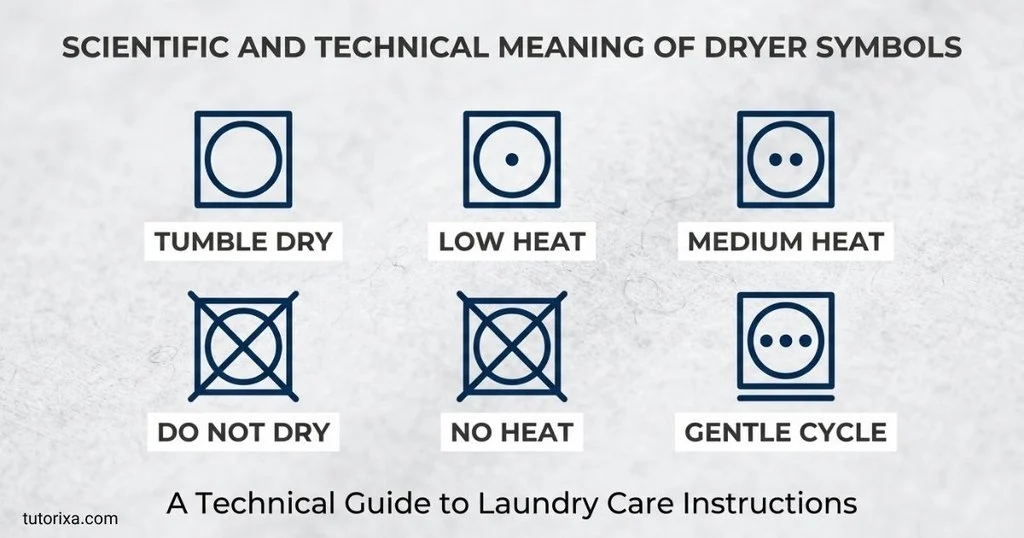
Dryer symbols have a direct connection to textile science because drying involves heat transfer, moisture removal, airflow, and mechanical movement.
How Heat Affects Fabrics
Heat can accelerate water evaporation, but excessive temperature may damage some fibers, finishes, dyes, and garment components.
Natural and manufactured fibers do not all respond identically. Cotton may shrink under certain washing and drying conditions, while elastane-containing garments can be sensitive to excessive heat. Some synthetic fabrics can soften, deform, or suffer damage if exposed to unsuitable temperatures.
A care label helps you choose a drying method appropriate for the finished garment.
Why Tumble Drying Is Different From Air Drying
A tumble dryer removes moisture through a combination of warm air and movement inside a rotating drum. Air drying usually relies on natural or mechanically circulated air without the same tumbling action.
Tumble drying can be convenient, but its heat and movement may be unsuitable for certain garments. Air drying avoids tumble-dryer exposure, although wet garments can still stretch or lose their shape if they are hung incorrectly.
What Heat Dots Actually Mean
Dots communicate relative heat categories rather than a universal temperature in degrees. A one-dot instruction does not necessarily correspond to the same exact temperature on every dryer.
The machine’s sensor system, cycle design, load size, and manufacturer settings influence how the dryer operates.
For that reason, choose the indicated heat category rather than trying to convert dots into an exact temperature.
Energy and Fabric Care
Using an appropriate drying method can reduce unnecessary heat exposure and help clothes last longer. Air drying may also reduce electricity consumption compared with electric tumble drying, although actual energy use depends on the equipment and circumstances.
Drying symbols do not directly indicate a garment’s carbon footprint, energy rating, or environmental impact. They tell you which drying treatments are suitable.
Where Dryer Symbols Are Used
Dryer symbols appear on textile products and in resources that explain garment care.
- Clothing labels: Shirts, trousers, dresses, jackets, underwear, and children’s clothing.
- Household textiles: Bed sheets, pillowcases, towels, blankets, and some curtains.
- Laundry guides: Printed charts, clothing-care websites, and educational materials.
- Appliance manuals: Explanations of suitable cycles and care recommendations.
- Retail product descriptions: Online clothing listings may reproduce care-label instructions.
- Laundry applications: Digital tools may help users identify symbols or organize garment-care instructions.
- Commercial laundry facilities: Staff use care instructions to select suitable handling and drying procedures.
Not every textile product includes every drying symbol. Some labels use only the instructions relevant to the item, while others combine multiple symbols into a complete care guide.
Common Dryer Symbol Variations
Dryer symbols can vary in appearance depending on the standard, the market, and how the information is reproduced.
Dots Versus Written Temperature Settings
Some clothing labels use dots to communicate heat categories. Dryer control panels may instead display text such as low, medium, high, or delicate.
These descriptions are related, but the exact temperature and cycle behavior depend on the appliance. Use the garment’s care label together with the machine’s manual.
Permanent Press Versus Delicate
Permanent press and delicate are not interchangeable terms.
A permanent-press cycle is generally designed to help reduce wrinkling, while a delicate cycle focuses on gentler treatment. The precise temperature and movement depend on the machine.
Dryer Symbols Versus Drying Instructions on the Machine
A garment label describes the care treatment recommended for the garment. A dryer control panel describes the programs available on the appliance.
For example, an appliance’s air-fluff setting may use unheated air to move clothing around. That does not mean every garment carrying a no-tumble-dry symbol should automatically be placed in that cycle. Follow the garment’s instructions and the appliance manufacturer’s guidance.
Similar-Looking Symbols
The square with a circle means tumble drying, while a plain square with a horizontal line represents flat drying in the common international system.
Because both symbols contain a square, checking for the circle is important. A crossed-out tumble-dry symbol also differs from a symbol that simply instructs you to air-dry the garment.
Common Misconceptions About Dryer Symbols
Several common misunderstandings can lead to damaged clothing or unnecessary confusion.
Misconception 1: One dot means the dryer must use a specific temperature.
One dot indicates a low-heat category, not a universal temperature shared by every appliance.
Misconception 2: Every cotton garment can be dried on high heat.
Cotton garments vary in construction, finishes, and shrinkage risk. The care label should determine the appropriate treatment.
Misconception 3: A crossed-out tumble-dry symbol means the garment cannot get wet.
The symbol prohibits tumble drying. It does not prohibit washing or all forms of drying.
Misconception 4: Air drying is always the same as line drying.
Air drying is a broad description. Line drying, drip drying, and flat drying specify different ways to support the garment during drying.
Misconception 5: Permanent press and delicate mean exactly the same thing.
These settings have different purposes. Permanent press commonly focuses on wrinkle reduction, while delicate generally provides gentler handling.
Misconception 6: A garment without a dryer symbol is automatically safe to tumble dry.
An absent symbol is not permission to use a dryer. Check the complete label, product instructions, or manufacturer’s care guidance.
10 Interesting Facts About Dryer Symbols
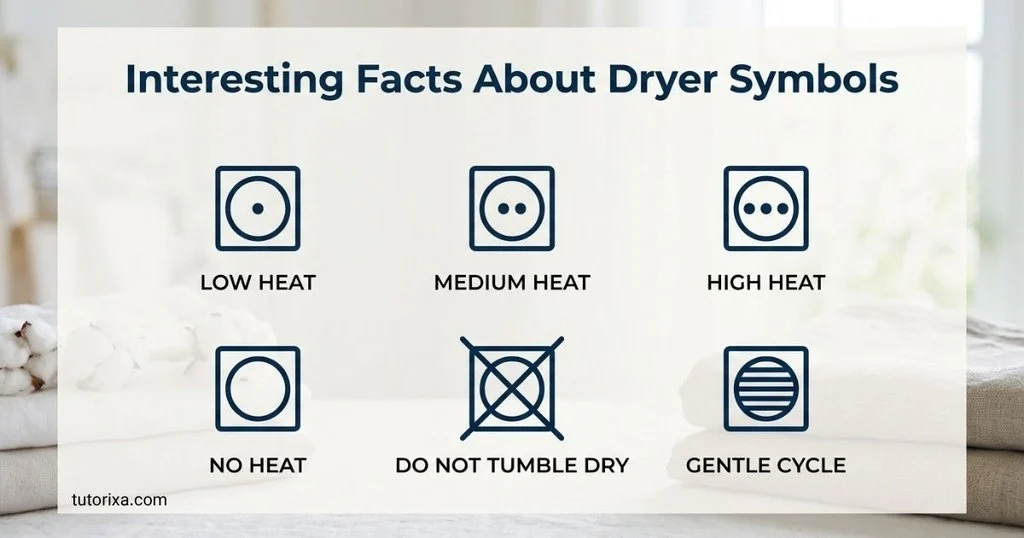
1. The square is the key to the drying category. It separates drying instructions from other garment-care symbols, such as the wash tub for washing and the iron for ironing.
2. A circle changes the meaning of the square. A circle inside the square indicates tumble drying rather than flat or line drying.
3. Dots indicate relative heat levels. They communicate a category of permitted heat, not a precise temperature shared by every dryer.
4. A cross changes an instruction into a prohibition. When a symbol is crossed out, the represented treatment should not be used.
5. Drying symbols can reduce language barriers. Pictograms help communicate garment-care instructions across international markets without relying entirely on written text.
6. Different fabrics can need different cycles. The same load may contain garments that require low heat, a delicate treatment, or air drying.
7. Drying method and drying location are separate details. A label can specify line drying while also indicating that the garment should remain in the shade.
8. Flat drying can help preserve garment shape. Supporting certain wet knits horizontally reduces the risk of stretching under their own weight.
9. Dryer settings are not identical across brands. Two machines may use similar cycle names but differ in temperature control, airflow, and cycle duration.
10. A care label describes the finished garment. Fiber content alone does not always determine the recommended treatment because construction, dyes, and finishes also affect care requirements.
Related Symbols and Their Meanings
Dryer symbols are part of a broader textile-care system. Understanding the related symbols helps you interpret the entire label rather than focusing on drying alone.
| Related symbol | What it represents | How it differs from dryer symbols |
| Wash tub | Washing method and restrictions | Explains how to wash the garment |
| Triangle | Bleaching instructions | Indicates whether bleaching is permitted |
| Iron | Ironing temperature and restrictions | Explains how to press the garment |
| Circle | Professional textile-care instructions | Indicates suitable professional cleaning treatments when marked appropriately |
| Square with a curved top line | Line drying | Specifies hanging rather than tumble drying |
| Square with a horizontal line | Flat drying | Indicates that the garment should dry on a flat surface |
| Square with vertical lines | Drip drying | Indicates hanging without wringing |
These symbols work together. A garment may permit washing in a machine but prohibit tumble drying, for example. Another may allow tumble drying on low heat but require a particular washing or ironing treatment.
Always interpret the label as a complete set of instructions.
Frequently Asked Questions About Dryer Symbols Meaning
1. What does the dryer symbol look like?
The standard tumble-dry symbol is a square containing a circle. Additional markings may appear inside or underneath the circle to indicate heat settings or cycle requirements. A cross through the symbol means tumble drying is prohibited. Other square-based designs represent methods such as line drying, drip drying, and flat drying.
2. What does one dot inside a dryer symbol mean?
One dot generally means tumble dry on low heat. It indicates that the garment requires a lower-heat drying treatment than items marked with two or three dots. The symbol does not specify one universal temperature. Check your dryer’s manual to identify the appropriate low-heat cycle for your appliance.
3. What does two dots on a dryer symbol mean?
Two dots generally indicate medium-heat tumble drying in the common international textile-care system. This setting may suit garments that tolerate moderate heat, provided the rest of the label allows machine drying. Always consider the fabric, garment construction, and any additional restrictions before choosing a cycle.
4. What does a crossed-out dryer symbol mean?
A crossed-out square containing a circle means do not tumble dry. Heat or mechanical movement may damage the garment, so you should follow another drying method permitted by its care label. Depending on the item, this may involve line drying, drip drying, or drying flat.
5. What does a square with a circle and a line underneath mean?
In the common international system, one horizontal line underneath the tumble-dry symbol indicates permanent-press drying. It generally directs you toward a cycle designed to reduce wrinkling. Two lines underneath indicate a gentler or delicate drying treatment. Always check the complete label and the cycle descriptions on your appliance.
6. Can I put clothes in the dryer if the label has no dryer symbol?
Do not assume that the absence of a dryer symbol means tumble drying is safe. Look for written instructions, check the manufacturer’s guidance, and consider the garment’s construction. If the correct method remains unclear, a conservative air-drying approach may reduce exposure to tumble-dryer heat and movement.
7. What is the difference between tumble dry low and delicate?
Tumble dry low refers to a low-heat category, while delicate generally indicates a gentler drying treatment. Depending on the appliance, a delicate cycle may also adjust drum movement or cycle behavior. The terms are not universally interchangeable, so follow the garment’s symbol and your dryer’s instructions.
8. What does the line dry symbol mean?
A square with a curved line across the top indicates line drying. It means you should hang the garment to dry instead of using a tumble dryer. A clothesline or suitable drying rack can work, provided the garment is supported appropriately. Check for additional shade-drying instructions when protecting colors is important.
9. What does the dry flat symbol mean?
A square containing one horizontal line means the garment should dry flat. Lay the item on a clean, suitable surface and reshape it gently while it dries. This method is useful for some knitted garments that could stretch under their own weight when hung while wet. Ensure adequate airflow to help moisture evaporate.
10. Are dryer symbols the same in every country?
Many countries use internationally standardized textile-care pictograms, including symbols based on ISO 3758. However, labels, regulations, written instructions, and appliance settings may differ by market and manufacturer. The general meanings are widely recognizable, but consumers should consult the full garment label and appliance manual whenever an instruction is unclear.
Key Takeaways
- The square with a circle means tumble drying is permitted under the specified conditions.
- One dot generally indicates low heat, two dots medium heat, and three dots high heat.
- A crossed-out tumble-dry symbol means you should not use a tumble dryer.
- One horizontal line underneath the tumble-dry symbol indicates permanent press; two lines indicate a gentle or delicate treatment.
- A curved line at the top of a square means line dry.
- A horizontal line inside a plain square means dry flat.
- Three vertical lines inside a square indicate drip drying.
- Diagonal lines in the corner of a drying square indicate drying in the shade.
- Dryer symbols communicate care instructions, not exact temperatures or universal machine settings.
- Always read the complete care label and follow the manufacturer’s recommendations.
Conclusion
Understanding dryer symbols meaning helps you make better laundry decisions and protect your clothes from unnecessary heat, shrinking, stretching, and other damage. Once you recognize the square, circle, dots, lines, and crossed-out markings, you can identify the recommended drying method more confidently.
Remember that the correct setting depends on the garment, not simply on how thick or durable it looks. A low-heat instruction, a delicate-cycle marking, or a warning against tumble drying can make an important difference in how well your clothes hold their shape and appearance.
Before starting your next laundry load, take a moment to check the care labels. Choosing the right drying method can make clothing care simpler and help your favorite garments last longer.

I’m Rowan Whitaker, a British writer fascinated by the symbols surrounding us every day. I explore their meanings, origins, cultural significance, and changing interpretations. From ancient marks to modern signs, I enjoy making symbolism easier to understand. My writing helps curious readers discover the hidden messages behind familiar shapes, images, and signs.
Books:
- The Meaning Behind Symbols
- A Modern Guide to Symbolism
 Ellis Montgomery
 Freddie Beaumont