
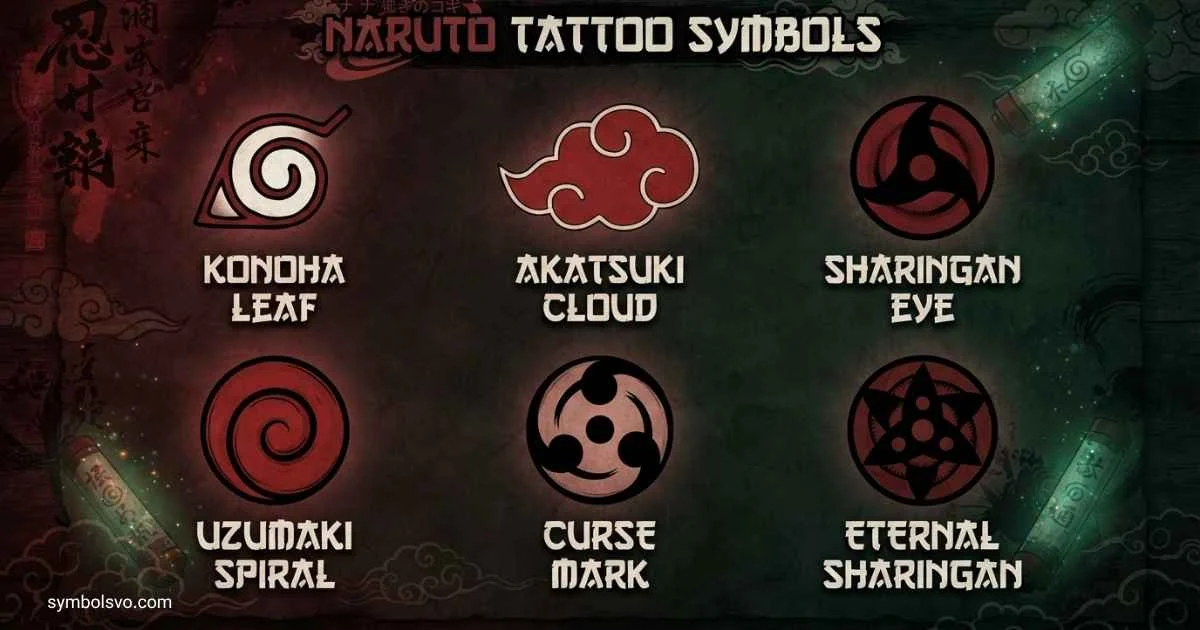
I know a Naruto tattoo can be much more than a cool anime design—it can represent loyalty, strength, friendship, sacrifice, or a personal journey. Every symbol can carry a story that connects you to the world of Naruto.
You may recognize famous symbols from the series, but their deeper meanings can make your tattoo feel even more personal. I’ll help you understand what different Naruto tattoo symbols represent and why fans choose them.
Whether you want a subtle symbol or a meaningful Naruto-inspired design, you can explore the history, characters, and ideas behind these symbols before making your choice.
Quick Meaning
Naruto tattoo symbols are visual marks from the Naruto universe that represent clans, villages, characters, organizations, techniques, or major themes. The Uzumaki spiral commonly represents Naruto’s clan and its connection to the Land of Whirlpools, while the Konoha leaf represents the Hidden Leaf Village. Other symbols can represent the Uchiha, Akatsuki, Hyūga, or individual characters.
Naruto Tattoo Symbol Overview
| Symbol | Primary Meaning | Category | Origin | Common Tattoo Interpretation |
| Uzumaki Spiral | Clan identity, heritage, connection | Clan symbol | Uzumaki clan / Uzushiogakure | Resilience, identity, heritage |
| Konoha Leaf | Hidden Leaf Village | Village symbol | Konohagakure | Loyalty, belonging, perseverance |
| Uchiha Fan | Uchiha clan | Clan symbol | Uchiha clan | Family, power, complicated heritage |
| Akatsuki Cloud | Akatsuki organization | Organization symbol | Akatsuki | Change, rebellion, ambition |
| Sharingan | Uchiha dōjutsu | Eye symbol | Uchiha clan | Perception, determination, power |
| Hyūga Symbol | Hyūga clan | Clan symbol | Hyūga clan | Family, discipline, tradition |
| ANBU Mask | ANBU Black Ops | Military symbol | Konohagakure and other villages | Duty, secrecy, sacrifice |
| Gaara’s 愛 | Love | Character marking | Gaara | Personal transformation and emotional history |
| Jashin Symbol | Jashin faith | Religious/fictional symbol | Hidan’s fictional religion | Character-specific religious identity |
| Sage of Six Paths Motifs | Six Paths legacy | Mythological motif | Naruto’s shinobi mythology | Spiritual legacy and destiny |
Note: These are fictional symbols from the Naruto universe. They should not be confused with historical Japanese religious, governmental, or clan symbols unless a separate historical connection is specifically established.
What Do Naruto Tattoo Symbols Mean?
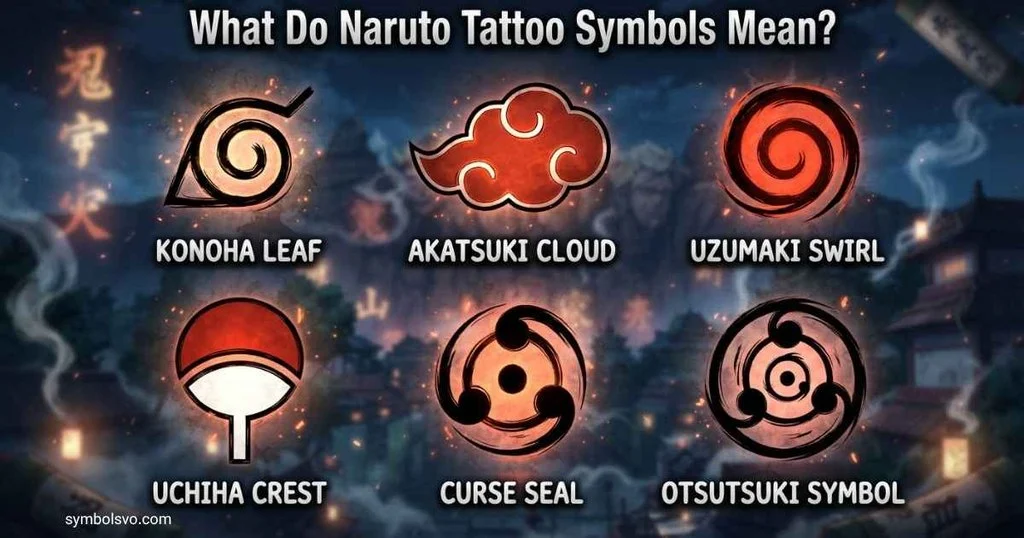
Naruto tattoo symbols generally represent identity, loyalty, family, perseverance, conflict, transformation, or belonging. The exact meaning depends on the symbol selected.
For example, the Uzumaki spiral is particularly meaningful because Naruto’s surname is Uzumaki. The fictional Uzumaki clan originated in the Land of Whirlpools and became closely associated with sealing techniques. The clan’s emblem later appeared on Konoha shinobi clothing as a symbol of the relationship between the Uzumaki and Senju.
The Konoha leaf has a different emphasis. It identifies Konohagakure, the Hidden Leaf Village, and therefore can symbolize community, home, comradeship, and the shinobi way.
The Uchiha fan is connected to the Uchiha clan and can carry several layers of meaning. Depending on the person choosing it, it may represent family, ambition, talent, tragedy, loyalty, or the complicated relationship between personal identity and inherited history.
This is why choosing a Naruto symbol based only on appearance can miss much of its significance.
History and Origin of Naruto Symbols
Naruto tattoo symbols originate in Masashi Kishimoto’s fictional shinobi world, rather than from ancient Japanese civilization. The manga introduced a visual language in which villages, clans, organizations, and characters could be recognized through distinctive marks.
The series draws inspiration from Japanese language, clothing, mythology, martial traditions, Buddhist and Shinto-associated imagery, and broader East Asian visual ideas. However, a fictional Naruto emblem should not automatically be described as an authentic historical Japanese symbol.
The Uzumaki Spiral
The Uzumaki symbol has an especially important history. The Uzumaki clan was associated with Uzushiogakure, the Hidden Whirlpool Village, in the Land of Whirlpools. The word uzumaki refers to a whirlpool or spiral.
The Uzumaki and Senju clans maintained close relationships. After Konohagakure was established, the Uzumaki emblem was incorporated into Konoha flak jackets as a representation of that relationship.
This gives the spiral a meaning beyond Naruto himself: it connects Naruto, Kushina, the Uzumaki clan, Uzushiogakure, sealing techniques, and Konoha’s history.
Konoha’s Leaf Symbol
The Leaf symbol identifies Konohagakure. It appears prominently on shinobi forehead protectors and throughout the village’s visual identity.
For many characters, the symbol represents their home and their commitment to protecting their village.
Clan Symbols
Other clan symbols perform a similar function. They establish identity quickly and visually.
The Uchiha fan, Hyūga-related markings, Aburame imagery, and other clan-associated designs help distinguish families and their histories within the larger shinobi world.
Naruto Symbolism and Interpretation
Naruto’s visual symbols frequently reflect one of the series’ central ideas: people are shaped by their relationships, choices, and history rather than by labels alone.
Positive Symbolism
Depending on the design, Naruto symbols can represent:
- Perseverance
- Friendship
- Family
- Loyalty
- Courage
- Personal growth
- Identity
- Belonging
- Protection
- Determination
- Overcoming isolation
- Changing one’s destiny
The Uzumaki spiral is particularly suitable for interpretations involving endurance and heritage because Naruto’s story repeatedly connects his identity with the legacy of his family.
Negative or Complex Symbolism
Not every Naruto symbol represents something purely positive.
The Akatsuki cloud, for example, is visually attractive but belongs to an organization whose history includes war, manipulation, violence, and conflicting political goals. A tattoo featuring it can therefore represent rebellion, alienation, transformation, or a character’s complicated worldview rather than simply “being a Naruto fan.”
Likewise, the Sharingan can symbolize power and perception, but its story is closely connected with conflict, grief, and the burdens carried by the Uchiha.
Psychological Interpretation
Psychologically, fictional symbols can function as identity markers. A person may choose a Naruto symbol because a particular character’s journey reminds them of persistence, friendship, family, or personal change.
That interpretation belongs to the tattoo wearer. The fictional canon provides the symbol’s established context, while the wearer gives the design personal significance.
Cultural Significance
Naruto symbols have a strong connection to Japanese popular culture, but they are not all traditional Japanese symbols.
The series uses Japanese names, kanji, clothing concepts, village structures, mythology-inspired ideas, and visual motifs. It combines these elements with an entirely fictional world.
This distinction matters. For example, the Uzumaki spiral may resemble real-world spiral motifs found in different cultures, but the specific Naruto emblem has its own fictional explanation connected to the Uzumaki clan and Land of Whirlpools.
Similarly, the Uchiha fan resembles a Japanese uchiwa, a traditional rigid fan, but its role as the Uchiha clan emblem is part of Naruto’s fictional setting.
Therefore, a Naruto tattoo can be culturally inspired without being an ancient Japanese religious symbol.
Religious or Spiritual Meaning
Most Naruto tattoo symbols are fictional rather than belonging to an actual religion.
The series does, however, contain fictional religious and spiritual concepts. The most obvious example is the Jashin symbol, associated with Hidan’s belief system. Jashin is not a standard historical Japanese deity whose worship is represented by Hidan’s symbol.
The Sage of Six Paths and related imagery also have spiritual and mythological qualities within Naruto’s fictional mythology. These concepts draw on broader ideas associated with Buddhism, folklore, mythology, and spiritual traditions, but the Naruto versions form part of Kishimoto’s fictional world.
A tattoo using such imagery should therefore be described as Naruto-inspired symbolism, not automatically as an authentic religious emblem.
Scientific or Technical Meaning
Naruto tattoo symbols do not have established scientific or mathematical meanings.
Some designs may resemble real-world geometric forms:
- Spirals
- Circles
- Fans
- Clouds
- Eyes
- Lines
- Seals
- Mandala-like arrangements
However, their meaning inside Naruto comes from the fictional story rather than mathematics or science.
The Sharingan, for example, is a fictional dōjutsu. It is not a medically or scientifically recognized eye condition or symbol.
Where Naruto Symbols Are Used
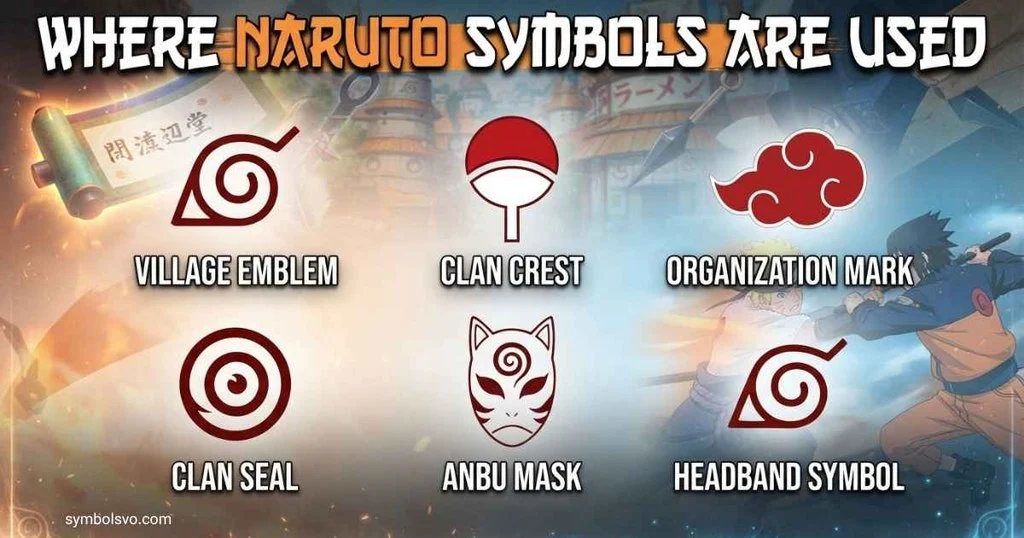
Naruto symbols appear throughout the franchise in different contexts.
Clothing
Clan and village symbols appear on jackets, uniforms, robes, and other clothing. The Uzumaki emblem is particularly recognizable on Konoha shinobi clothing.
Headbands
The forehead protector is one of the most recognizable pieces of Naruto imagery. The engraved emblem identifies the shinobi’s village.
Characters
Some characters carry distinctive markings that immediately identify them or their affiliations.
Weapons and Equipment
Certain ninja equipment incorporates village or organization imagery.
Architecture
Villages, temples, compounds, and other fictional locations may contain symbols associated with their inhabitants.
Jewelry and Accessories
Rings, necklaces, pendants, and other objects can feature organizational or character-associated symbols.
Tattoos
Naruto-inspired tattoo concepts commonly focus on:
- Uzumaki spirals
- Konoha leaves
- Uchiha fans
- Akatsuki clouds
- Sharingan
- Mangekyō Sharingan-inspired designs
- Character markings
- ANBU masks
- Sage imagery
- Small clan emblems
Common Naruto Tattoo Symbol Variations
Naruto symbols can be adapted into many different visual styles.
Minimalist Designs
A simple outline of the Konoha leaf or Uzumaki spiral can preserve the recognizable identity without reproducing a detailed scene.
Black-and-White Designs
Many symbols work naturally as monochrome line art. This can emphasize the shape rather than the original anime colors.
Color Designs
Color can make symbols more closely resemble their on-screen appearance. The red Uzumaki emblem and red-and-white Uchiha fan are particularly recognizable examples.
Character Combinations
Fans sometimes combine a symbol with a character reference. For example, an Uzumaki spiral may be paired with Naruto imagery, while an Uchiha symbol may be paired with Sasuke or Itachi-inspired elements.
Japanese Text
Some designs incorporate Japanese words or kanji. Extra care is important here because decorative Japanese characters can be mistranslated or used out of context.
A symbol can be meaningful on its own without adding Japanese writing.
Common Misconceptions About Naruto Tattoo Symbols
The Uzumaki Symbol Is Not Simply a Ramen Symbol
The spiral resembles the decorative swirl associated with narutomaki, the spiral-patterned fish cake often served with ramen. That visual resemblance has helped create a memorable connection between Naruto’s name, ramen, and the spiral motif.
However, within the story, the red spiral on Naruto’s clothing is associated with the Uzumaki clan and its heritage, not merely ramen.
Every Spiral in Naruto Does Not Mean the Same Thing
Spiral imagery appears repeatedly throughout the franchise, but context matters. A particular spiral may have a specific narrative purpose.
Naruto Symbols Are Not Automatically Historical Japanese Symbols
A Naruto emblem may be inspired by Japanese visual culture without being a historical Japanese emblem.
The Akatsuki Cloud Does Not Mean Peace
The red cloud is associated with the Akatsuki. Although clouds can have peaceful associations in other contexts, the Akatsuki’s cloud is primarily an organizational symbol within Naruto.
The Sharingan Is Not a Real Eye Symbol
The Sharingan is fictional. Its abilities and transformations belong to the Naruto universe.
10 Interesting Facts About Naruto Tattoo Symbols
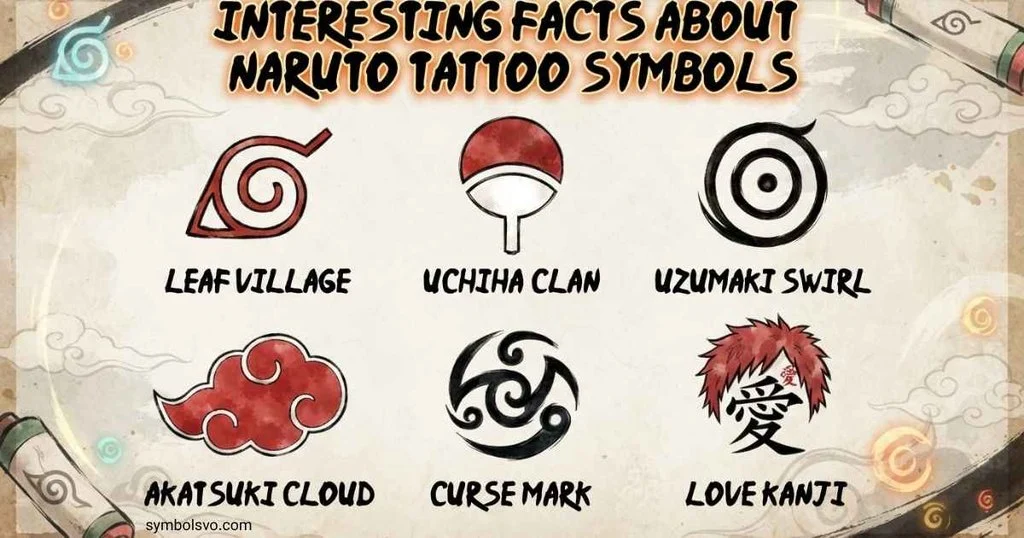
- Uzumaki means “whirlpool.”
The name directly reinforces the spiral imagery associated with Naruto’s clan. - The Uzumaki symbol has a story beyond Naruto.
It represents the broader clan and its connection to Uzushiogakure. - Konoha adopted the Uzumaki emblem on shinobi clothing.
This visually reflected the close relationship between the Uzumaki and Senju. - Naruto’s surname carries symbolic weight.
“Uzumaki” connects the protagonist directly to a clan with a distinctive visual identity. - The Uzumaki were famous for sealing techniques.
Their expertise in fūinjutsu is an important part of the clan’s fictional history. - The Land of Whirlpools was connected to the Uzumaki.
Uzushiogakure was located in the fictional Land of Whirlpools, off the coast of the Land of Fire. - A clan symbol can communicate an entire backstory.
The Uchiha fan immediately evokes the history of one of Naruto’s most important families. - Some Naruto symbols have meanings that change with context.
A symbol representing a group may feel different when associated with a particular character. - Naruto’s official branding continues to use recognizable motifs.
The official franchise has used Naruto characters alongside Japanese regional landmarks and motifs in later promotional designs. - The symbols help create visual world-building.
Viewers can often identify a character’s village, clan, or organization before the story explicitly explains it.
Related Naruto Symbols
Konoha Leaf
The Leaf symbol represents Konohagakure and is one of the strongest choices for someone interested in the themes of home, community, and shinobi identity.
Uchiha Fan
The Uchiha fan represents the Uchiha clan. It can evoke family heritage, ambition, conflict, loyalty, and the complicated history surrounding Sasuke and Itachi.
Akatsuki Cloud
The red cloud identifies the Akatsuki. Its meaning is strongly connected with the organization’s history, ideology, and individual members.
Sharingan
The Sharingan represents one of the Uchiha clan’s defining abilities. It is associated with perception, copying techniques, and powerful visual abilities within the fictional world.
Hyūga Symbolism
Hyūga-associated designs can represent the clan’s traditions, family structure, discipline, and Byakugan heritage.
ANBU Mask
The ANBU mask represents the secretive elite shinobi units. It can symbolize duty, anonymity, service, and the hidden side of village life.
Gaara’s Love Mark
Gaara’s forehead marking is closely tied to his personal history and transformation. Unlike a clan emblem, it is a character-specific mark with strong narrative significance.
Frequently Asked Questions
What is the most popular Naruto tattoo symbol?
The Uzumaki spiral and Konoha leaf are among the most recognizable Naruto symbols. The Uzumaki spiral is especially significant because it connects directly to Naruto’s surname, family, and clan heritage. The Konoha leaf instead represents the Hidden Leaf Village and the broader themes of belonging, loyalty, friendship, and protecting one’s community.
What does the Uzumaki tattoo symbol mean?
The Uzumaki symbol represents the fictional Uzumaki clan and its connection to the Land of Whirlpools. The word uzumaki means whirlpool or spiral. In Naruto, the emblem also represents the historical relationship between the Uzumaki and Konoha. For a tattoo, it can additionally represent resilience, heritage, family, or connection to Naruto.
What does the Konoha symbol mean?
The Konoha symbol identifies Konohagakure, the Hidden Leaf Village. Within the story, it represents a character’s village affiliation and shinobi identity. As a personal tattoo, fans may interpret it as a symbol of home, friendship, loyalty, community, or perseverance. Its exact personal meaning depends on why the wearer connects with the Naruto story.
What does the Akatsuki cloud tattoo mean?
The Akatsuki cloud is the symbol associated with the Akatsuki organization. In the story, it does not represent a simple positive concept such as peace. It is connected to war, political conflict, ambition, rebellion, and the organization’s changing history. A tattoo may therefore represent an appreciation for the Akatsuki’s characters or its darker themes.
What does the Uchiha fan symbolize?
The Uchiha fan represents the Uchiha clan. Its design resembles a traditional Japanese fan, but its specific meaning comes from Naruto’s fictional world. It can represent family heritage, talent, ambition, loyalty, conflict, and the burden of clan history. Fans often associate it particularly with characters such as Sasuke and Itachi.
Is the Naruto spiral a Japanese symbol?
The Naruto Uzumaki spiral is a fictional symbol created for the series, although it uses visual ideas familiar in Japanese culture. It should not automatically be described as an ancient Japanese religious or cultural emblem. Its specific Naruto meaning comes from the Uzumaki clan, the Land of Whirlpools, and the fictional history of the shinobi world.
What Naruto symbol represents perseverance?
The Uzumaki spiral is a strong choice for representing perseverance because the Uzumaki clan is associated with powerful life force, longevity, and survival despite the destruction of Uzushiogakure. Naruto’s own character arc also emphasizes persistence and refusing to abandon his goals. The perseverance interpretation is therefore a reasonable personal reading of the symbol.
What does the Sharingan symbolize?
Within Naruto, the Sharingan is a fictional dōjutsu associated primarily with the Uchiha clan. It represents extraordinary perception and powerful visual abilities. Symbolically, fans may connect it with determination, power, observation, or the Uchiha legacy. However, its deeper story also involves conflict, grief, responsibility, and the consequences of power.
Are Naruto tattoo symbols religious?
Most Naruto tattoo symbols are not religious symbols. They belong to a fictional universe. Some story elements have spiritual or mythological inspiration, while Hidan’s Jashin belief system is fictional. Therefore, a Naruto symbol should generally be described according to its role in the franchise rather than labeled as a real-world religious emblem.
Which Naruto symbol is best for a tattoo?
There is no universally best Naruto symbol. The strongest choice depends on the meaning a person wants the design to communicate. The Uzumaki spiral suits themes of heritage and perseverance, the Konoha leaf suits home and loyalty, the Uchiha fan suits family and complicated legacy, and the Akatsuki cloud suits darker or rebellious themes.
Key Takeaways
- Naruto tattoo symbols come from the fictional world created by Masashi Kishimoto.
- The Uzumaki spiral represents the Uzumaki clan and its connection to the Land of Whirlpools.
- The Konoha leaf identifies the Hidden Leaf Village.
- The Uchiha fan represents the Uchiha clan.
- The Akatsuki cloud identifies the Akatsuki organization.
- The Sharingan is a fictional dōjutsu associated with the Uchiha.
- Naruto symbols can represent family, identity, loyalty, perseverance, conflict, or transformation.
- A fictional Naruto emblem should not automatically be presented as an authentic ancient Japanese symbol.
- Personal tattoo meaning can extend beyond the symbol’s established meaning in the story.
- Context matters because the same visual theme can carry different meanings for different characters.
Conclusion
Naruto tattoo symbols are powerful because a small visual mark can carry an entire fictional history. The Uzumaki spiral connects Naruto to his family and the forgotten Land of Whirlpools, while the Konoha leaf represents his village and the relationships that shape his shinobi journey. Other designs, including the Uchiha fan, Akatsuki cloud, Sharingan, and ANBU mask, connect directly to different characters, clans, and conflicts.
The most meaningful choice is therefore not necessarily the most recognizable design. It is the symbol whose story matches the idea you want it to represent. Understanding the original Naruto context makes that choice more informed and gives the symbol a deeper meaning beyond simply being an anime reference.

I’m Rowan Whitaker, a British writer fascinated by the symbols surrounding us every day. I explore their meanings, origins, cultural significance, and changing interpretations. From ancient marks to modern signs, I enjoy making symbolism easier to understand. My writing helps curious readers discover the hidden messages behind familiar shapes, images, and signs.
Books:
- The Meaning Behind Symbols
- A Modern Guide to Symbolism
 Ellis Montgomery
 Freddie Beaumont