
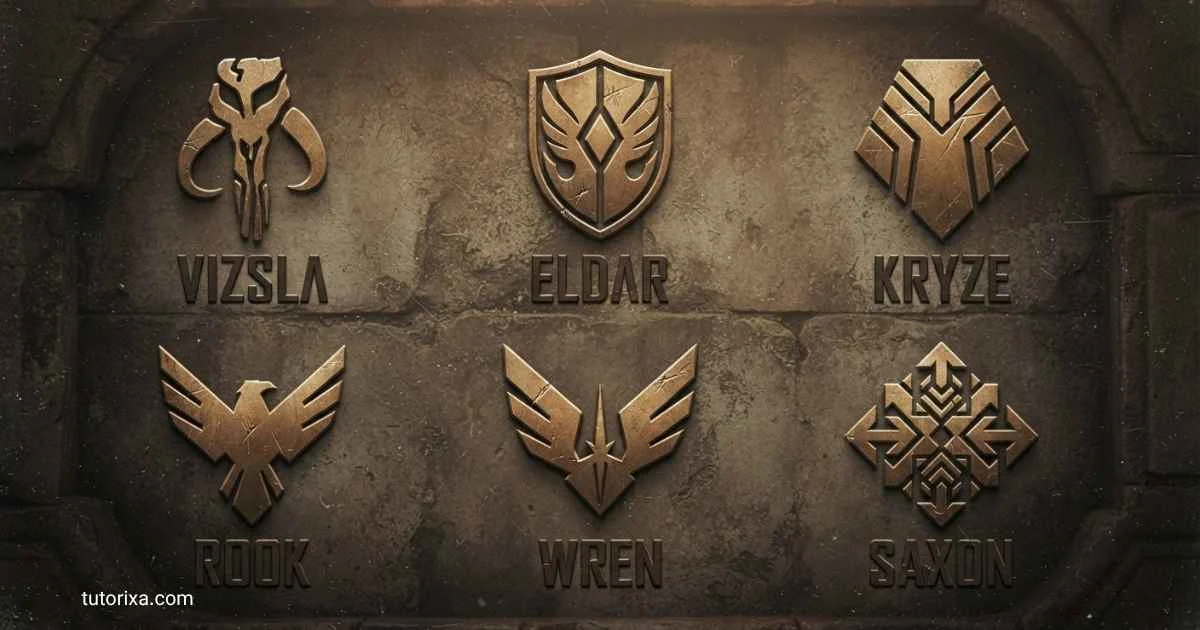
Mandalorian clan symbols are more than striking designs from the Star Wars universe—they can represent identity, heritage, loyalty, and belonging. When I explore these symbols, I discover how each design can reveal something about a clan’s story.
If you are curious about what these symbols mean, you’re in the right place. You’ll discover the history, visual details, and significance behind the most fascinating Mandalorian clan symbols.
I’ll break down the most important symbols in a simple way, helping you understand what they represent and why they remain an intriguing part of Mandalorian lore.
Quick Meaning
Mandalorian clan symbols are distinctive signs used to express identity, family affiliation, heritage, loyalty, or personal history. In canon, Mandalorian families are organized into clans, and clans can have recognizable armor designs and signets. The Mudhorn represents Din Djarin and Grogu’s Clan of Two, while the Mythosaur represents an ancient and powerful symbol of Mandalorian heritage.
Mandalorian Clan Symbols Overview
| Symbol or Mark | Primary Meaning | Category | Associated With | Common Use |
| Mythosaur | Ancient Mandalorian heritage and cultural identity | Creature/signet | Mandalorian people; later Bo-Katan’s armor | Armor, pauldrons, imagery |
| Mudhorn | Clan of Two and a shared achievement | Clan signet | Din Djarin and Grogu | Armor and rondels |
| Owl | Association with Bo-Katan Kryze and her warrior group | Clan/faction imagery | Bo-Katan and Nite Owls | Helmet and armor |
| Clan Wren markings | Family identity and Mandalorian heritage | Clan symbol/armor | Clan Wren | Armor |
| Clan Kryze imagery | Family and political/warrior affiliation | Clan identity | Bo-Katan Kryze and Clan Kryze | Armor and related imagery |
| Clan Vizsla imagery | Heritage of House Vizsla and its clans | House/clan identity | Clan Vizsla, Pre Vizsla, Paz Vizsla | Armor and insignia |
| Imperial cog | Imperial allegiance rather than traditional clan identity | Political insignia | Imperial Mandalorian forces | Armor |
| Darksaber | Leadership and unity of Mandalore | Ceremonial weapon/symbol | Mandalorian leadership | Weapon and cultural tradition |
Not every visual marking on Mandalorian armor is a formal clan signet. Color, decoration, helmet design, and political insignia can communicate different kinds of affiliation.
What Do Mandalorian Clan Symbols Mean?
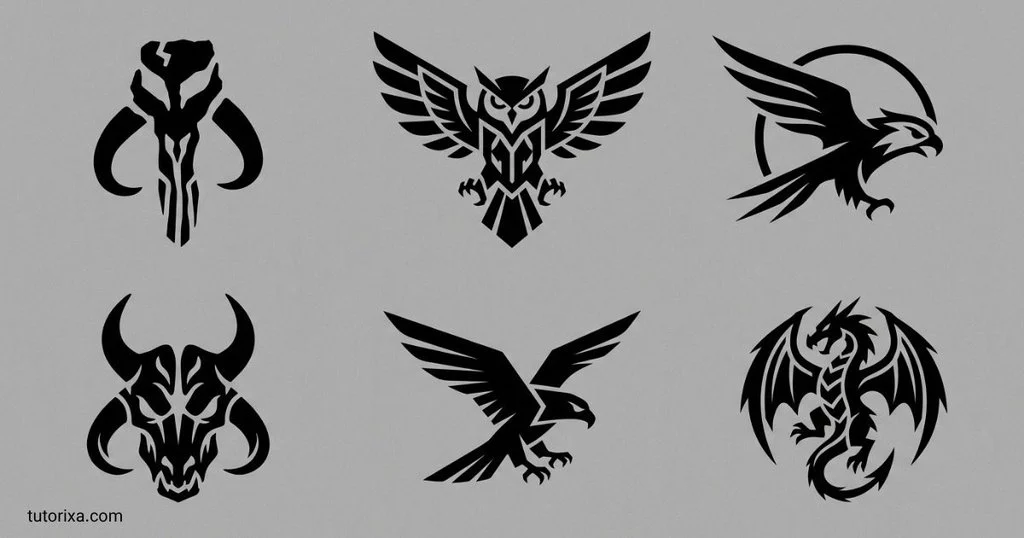
Mandalorian clan symbols primarily communicate identity and belonging. Mandalorian society is organized around Houses and Clans, and armor traditionally reflects the history and affiliations of its wearer. Official Star Wars material explains that Mandalorian families are referred to as clans and that clans can have their own signets incorporated into armor.
A signet is especially important because it can turn armor into a visual record of personal or collective history. Din Djarin’s Mudhorn signet is a particularly clear example. After Din and Grogu formed a close bond, they were recognized as a Clan of Two, and the Mudhorn became their signet because of Din’s encounter with the creature on Arvala-7.
This means that a Mandalorian symbol does not necessarily translate simply as “this person belongs to this family.” Depending on the symbol, it may communicate:
- Family or clan affiliation
- Connection to a larger Mandalorian House
- Allegiance to a faction
- A significant personal achievement
- Respect for Mandalorian history
- Leadership
- Cultural heritage
- A connection to a particular creature or legend
The distinction matters because Mandalorian armor is highly individualized. The same person can change political allegiances while retaining elements of family heritage, making the armor a layered form of visual storytelling.
History and Origin of Mandalorian Clan Symbols
Mandalorian clan symbolism developed alongside the society of Mandalore itself. Mandalore is an Outer Rim world with a long warrior tradition, and its society has historically been divided into Houses and Clans. Conflicts between different groups shaped Mandalorian politics for centuries.
The Mythosaur is among the oldest and most culturally significant symbols connected with Mandalore. According to Mandalorian legend, Mandalore the Great encountered and tamed a Mythosaur. The creature eventually became a powerful emblem of Mandalorian heritage even after the species was believed to have disappeared.
The Mythosaur therefore differs from an ordinary family insignia. It represents something broader: the historical identity of the Mandalorian people.
Over time, Mandalorian groups developed distinct visual identities. Their armor could differ in color, decoration, and insignia. Official sources specifically identify differences among clans, including Clan Wren’s white armor with yellow details and Clan Eldar’s gray and orange armor. Death Watch also became recognizable through distinctive blue-accented armor during part of its history.
The history became even more complicated during the Clone Wars and Imperial era. Political movements, rival clans, and changing alliances caused Mandalorian armor and symbols to evolve. Maul’s Mandalorian forces, for example, modified their armor with red and black colors and sometimes added horns to reflect their allegiance.
The Mythosaur Symbol
The Mythosaur is arguably the most important traditional symbol in Mandalorian culture. It represents the ancient heritage, legends, and warrior history of Mandalore.
The creature was enormous and became associated with the earliest Mandalorian traditions. Its image appeared on armor and other objects as a sign of respect. Boba Fett’s armor famously includes a Mythosaur image, although the meaning of that particular mark is complicated because Boba does not identify as a Mandalorian in the same way as characters such as Din Djarin.
The Mythosaur also gained renewed significance through Bo-Katan Kryze. After her experience with the Living Waters, she received new armor featuring a Mythosaur signet. This connects an ancient Mandalorian symbol with her changing relationship to Mandalorian tradition.
What does the Mythosaur symbolize?
It can be understood as representing:
- Ancient Mandalorian heritage
- Strength and legendary power
- The history of Mandalore
- Connection to Mandalorian tradition
- The cultural memory of the Mandalorian people
Its meaning is therefore broader than a normal family crest.
The Mudhorn Symbol
The Mudhorn is one of the clearest examples of a modern Mandalorian clan signet.
Din Djarin encounters a Mudhorn while protecting Grogu on Arvala-7. After the event, the Armorer recognizes the significance of the relationship between Din and Grogu and declares them a clan of two. Their signet is the Mudhorn.
The Mudhorn therefore represents shared identity, protection, family-like bonds, and a meaningful achievement.
Its importance is reinforced when Grogu receives armor featuring the Mudhorn signet. Official material describes Grogu’s beskar rondel as carrying the insignia of his Clan of Two.
Unlike the Mythosaur, which carries centuries of cultural significance, the Mudhorn has a much more personal origin. It demonstrates how Mandalorian symbolism can develop from an individual’s experiences.
Clan Wren Symbolism
Clan Wren is one of the best-known Mandalorian warrior families in modern Star Wars storytelling. It belongs to House Vizsla and includes Sabine Wren and Ursa Wren.
Clan Wren’s armor has a recognizable visual identity, including bright white armor with yellow accents in depictions discussed by StarWars.com. Their history also demonstrates that a clan’s political relationships can change without erasing its family identity.
Clan Wren originally aligned with the Empire under pressure but later broke those ties. Sabine and her family ultimately supported Bo-Katan and the effort to restore Mandalore.
This makes Clan Wren especially useful for understanding Mandalorian symbolism: a symbol can represent heritage without permanently defining a person’s political allegiance.
Clan Kryze and the Owl Symbol
Clan Kryze is associated with Bo-Katan Kryze, a major figure in Mandalorian history. The clan became involved in efforts to resist Imperial occupation and restore Mandalore.
Bo-Katan’s armor includes an owl-like design on her helmet, an important visual association with her character and the Nite Owls. StarWars.com specifically notes that her helmet incorporates the face of an owl.
The owl should not automatically be treated as a universal “Clan Kryze crest.” It is more accurate to describe it as imagery strongly associated with Bo-Katan and the Nite Owls.
That distinction prevents one of the most common mistakes when interpreting Mandalorian symbols: assuming every repeated image is a formal clan signet.
Clan Vizsla and House Symbols
Clan Vizsla is connected to House Vizsla, one of the prominent Mandalorian Houses. Tarre Vizsla was particularly important because he became the first Mandalorian accepted into the Jedi Order and created the Darksaber.
Pre Vizsla later became leader of Death Watch during the Clone Wars and wielded the Darksaber. His history connects House Vizsla with both Mandalorian warrior traditions and the political struggle over Mandalore.
Paz Vizsla is another prominent member of this lineage.
The important point is that House, Clan, faction, and symbol are not interchangeable terms. House Vizsla can contain clans, while political groups such as Death Watch can include members from particular Mandalorian families without becoming identical to those families.
The Darksaber as a Mandalorian Symbol
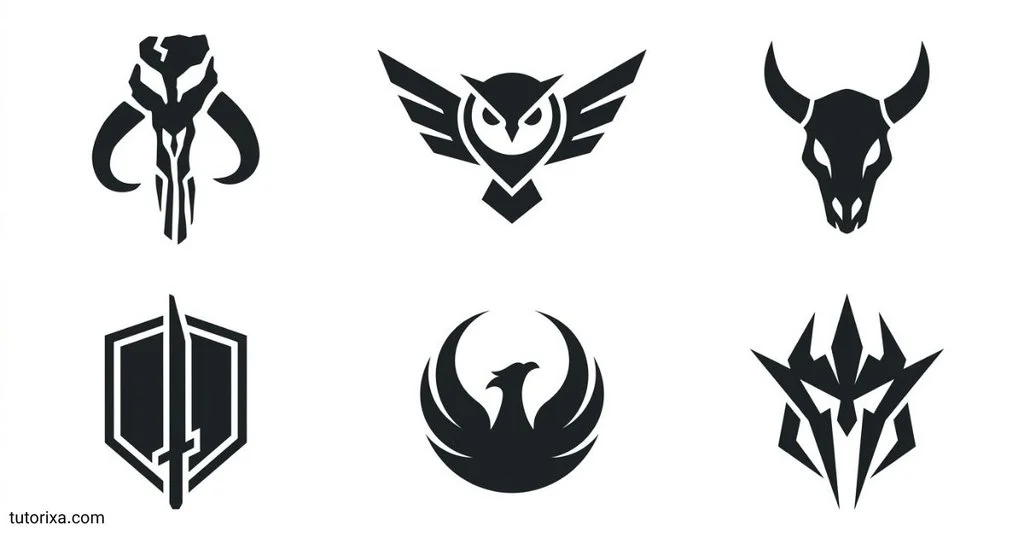
The Darksaber is not a clan signet, but it is one of the most important Mandalorian symbols.
Created by Tarre Vizsla, the first Mandalorian Jedi, the Darksaber eventually became associated with leadership of the Mandalorian people. Its black blade and distinctive shape make it immediately recognizable.
Its symbolism centers on:
- Leadership
- Authority
- Unity
- Mandalorian heritage
- The struggle for control of Mandalore
The Darksaber demonstrates that Mandalorian symbolism exists at several levels. A Mudhorn can represent one small clan, while the Darksaber can symbolize leadership over Mandalore itself.
Symbolism and Interpretation
Mandalorian symbols often have multiple layers of meaning.
At the personal level, a symbol can commemorate something an individual experienced. At the clan level, it can identify family heritage. At the cultural level, it can represent the history of Mandalore.
Positive symbolism
Mandalorian clan imagery commonly evokes:
- Loyalty
- Courage
- Family
- Heritage
- Protection
- Resilience
- Honor
- Community
- Independence
Negative or contested meanings
Not every Mandalorian symbol has a universally positive interpretation. Some imagery is connected with civil wars, authoritarian groups, Imperial occupation, or violent political movements.
For example, Death Watch represented a militant attempt to restore Mandalore’s warrior traditions and opposed the pacifist government of Duchess Satine Kryze. Later developments connected Mandalorian factions with Darth Maul and the Shadow Collective.
Consequently, interpreting a Mandalorian symbol requires looking at who is wearing it, when they are wearing it, and what political group they support.
Cultural Significance
Mandalorian clan symbols function as a kind of visual language.
In a society where armor is deeply connected to identity, a symbol can communicate information without spoken explanation. A viewer may recognize a family, faction, or cultural connection simply by seeing a particular design.
Armor also carries historical memory. StarWars.com describes Mandalorian armor as something that can preserve the legacy of earlier warriors, with individual pieces being reforged and customized while retaining their history.
This explains why armor customization is so important. Colors, helmets, pauldrons, signets, and other details can collectively tell a story about the wearer.
Where Mandalorian Clan Symbols Are Used
Mandalorian symbols appear throughout Star Wars media, particularly in visual depictions of armor and Mandalorian society.
Common locations include:
- Helmet designs
- Shoulder pauldrons
- Chest armor
- Beskar rondels
- Armor plates
- Banners
- Weapons and ceremonial objects
- Character concept art
- Television series
- Animated series
- Films
- Books and reference material
- Collectibles and fan artwork
The most recognizable examples come from The Clone Wars, Star Wars Rebels, The Mandalorian, The Book of Boba Fett, and related Mandalorian stories.
Common Variations of Mandalorian Symbols
Mandalorian symbols are not always reproduced identically. Their appearance can change according to armor design, era, character, and artistic style.
Armor variations
The same cultural idea can appear as an engraved mark, painted emblem, raised metal design, or stylized graphic.
Color variations
Color can communicate factional affiliation or historical period. Death Watch, Maul’s Mandalorian super commandos, Clan Wren, and other groups have had distinct armor palettes.
Personal variations
Mandalorians can customize armor while preserving important symbols. This means an individual design may combine a family identity with personal decoration.
Modern adaptations
Fans frequently adapt Mandalorian symbols for artwork, costumes, gaming, collectibles, and fictional clan designs. These creations should be distinguished from symbols established in official canon.
Common Misconceptions About Mandalorian Clan Symbols
Myth: Every Mandalorian has one universal clan symbol
Fact: Mandalorian clans and families can have different identities and signets. The Mythosaur is a broad cultural symbol, not simply the logo of every individual clan.
Myth: Every animal symbol is a clan crest
Fact: Animals can represent clans, personal achievements, cultural traditions, or factions. The Mudhorn is a particularly personal example.
Myth: The owl is the official symbol of all Mandalorians
Fact: Owl imagery is strongly associated with Bo-Katan and the Nite Owls. It is not a universal Mandalorian emblem.
Myth: The Darksaber is a clan symbol
Fact: The Darksaber is better understood as a symbol of Mandalorian leadership and unity rather than an ordinary clan signet.
Myth: Armor color alone identifies a clan
Fact: Color can provide clues, but Mandalorian armor contains multiple visual elements. Clan affiliation, faction, political allegiance, and personal customization can overlap.
Interesting Facts About Mandalorian Clan Symbols
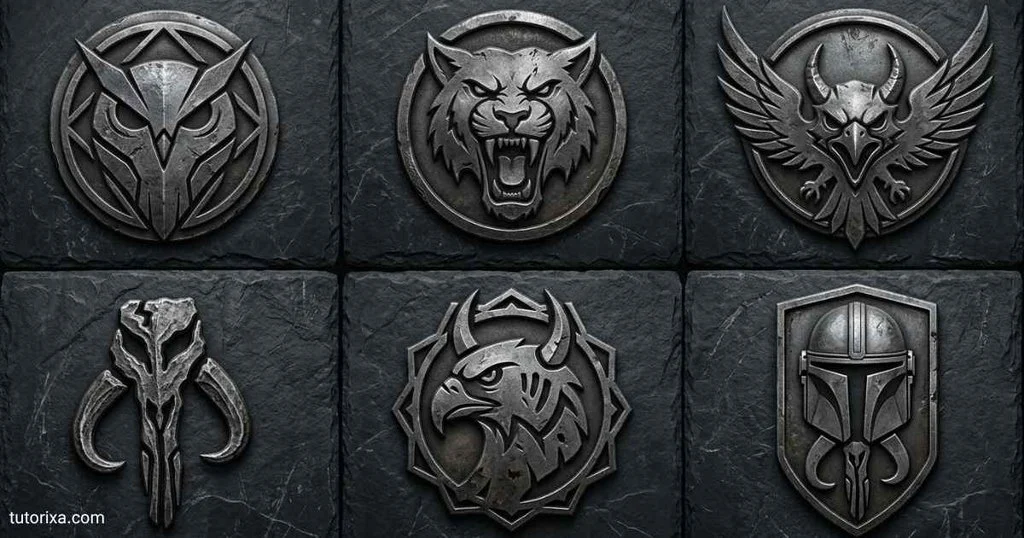
- Mandalorian families are called clans.
This makes the concept of a clan symbol closely connected to family identity rather than simply military rank. - Din Djarin and Grogu form a Clan of Two.
Their relationship created one of the most recognizable modern Mandalorian signets: the Mudhorn. - The Mythosaur predates the modern stories of Mandalore.
Its importance comes from ancient Mandalorian legend and cultural memory. - Armor can preserve personal history.
Mandalorian armor is not merely protective equipment; customization can preserve connections to earlier warriors and events. - Clan symbols can coexist with political symbols.
A Mandalorian can display family heritage while also showing allegiance to a political faction. - The Darksaber has a unique place in Mandalorian symbolism.
Its importance comes from leadership rather than ordinary family affiliation. - Clan Wren belongs to House Vizsla.
This shows why “House” and “Clan” should not automatically be treated as synonyms. - Bo-Katan’s armor carries several layers of meaning.
Her imagery can connect her to Clan Kryze, the Nite Owls, and broader Mandalorian traditions. - Political changes can alter armor symbolism.
Maul’s followers changed their armor to red and black and sometimes added horns to demonstrate allegiance. - Not every famous Mandalorian symbol identifies a family.
Mythosaur imagery, the Mudhorn, and the Darksaber demonstrate three different kinds of symbolism: cultural, clan-specific, and leadership-related.
Related Mandalorian Symbols
Mythosaur
The Mythosaur is the strongest traditional symbol of Mandalorian heritage and ancient history. It represents the legendary creature associated with the earliest Mandalorian traditions.
Mudhorn
The Mudhorn is the personal signet of Din Djarin and Grogu’s Clan of Two. It represents their shared bond and history.
Darksaber
The Darksaber represents Mandalorian leadership and has historically been connected with attempts to unite Mandalore.
Owl
Owl imagery is closely connected with Bo-Katan Kryze and the Nite Owls. It is best understood as factional or character-associated imagery rather than a universal Mandalorian symbol.
Imperial Cog
The Imperial cog can appear on Mandalorian armor when the wearer serves the Empire. Gar Saxon’s armor, for example, included an Imperial cog, showing how political allegiance could be placed directly onto Mandalorian armor.
Frequently Asked Questions
What is the most important Mandalorian symbol?
The Mythosaur is one of the most important traditional Mandalorian symbols because it represents ancient Mandalorian heritage and the legendary history of Mandalore. The Darksaber is also exceptionally important, but its meaning centers more on leadership and authority. The Mudhorn has a more personal significance because it identifies Din Djarin and Grogu as a Clan of Two.
What does the Mudhorn symbol mean?
The Mudhorn represents Din Djarin and Grogu’s Clan of Two. It originated from Din’s encounter with a Mudhorn on Arvala-7 and was given to the pair as their signet after their bond was recognized. The symbol therefore represents shared identity, protection, family-like connection, and an important event in their story.
What does the Mythosaur symbol mean?
The Mythosaur symbolizes ancient Mandalorian heritage and the legendary history of the Mandalorian people. Mandalorian tradition connects the creature with Mandalore the Great, and its image became a respected cultural emblem. It can therefore represent strength, ancestry, tradition, and connection to the ancient roots of Mandalorian civilization.
Is the owl a Mandalorian clan symbol?
The owl is strongly associated with Bo-Katan Kryze and the Nite Owls, and her helmet incorporates an owl-like face. However, calling it the universal symbol of Clan Kryze would be too broad. Mandalorian imagery can identify a character, faction, or group without necessarily being a formal clan signet.
What is Clan Wren’s symbol?
Clan Wren is a Mandalorian warrior family associated with House Vizsla and characters including Sabine and Ursa Wren. Its identity is expressed through distinctive armor and family heritage rather than a single universally defined icon comparable to the Mudhorn. Clan Wren’s history also demonstrates how family identity can continue through major political changes.
What is the symbol of Clan Kryze?
Clan Kryze is associated with Bo-Katan Kryze and her family. There is no need to treat every owl-shaped design connected with Bo-Katan as a formal Clan Kryze crest. The owl imagery is particularly connected with Bo-Katan and the Nite Owls, while Clan Kryze itself represents her family and Mandalorian political heritage.
Is the Darksaber a clan symbol?
No. The Darksaber is more accurately described as a powerful symbol of Mandalorian leadership. It was created by Tarre Vizsla, the first Mandalorian Jedi, and later became associated with leadership of the Mandalorian people. Its significance extends beyond one family or clan and relates to Mandalore as a whole.
Why do Mandalorians have different armor symbols?
Different armor symbols reflect the diversity of Mandalorian society. Families, clans, factions, political movements, and individuals can all influence armor design. Colors and decorative details can also change over time. As a result, Mandalorian armor works almost like a visual history, communicating several layers of identity at once.
What does the Mandalorian helmet symbol mean?
The helmet itself is not a single clan symbol. It is a major part of Mandalorian warrior identity, while its particular markings, colors, shapes, and decorations can provide additional information about the wearer. The T-visor and distinctive armor design help identify Mandalorians broadly, whereas specific signets communicate more individual or group-based information.
Are Mandalorian symbols based on real-world cultures?
Mandalorian symbols belong to the fictional Star Wars universe. Their use of clans, heraldic-looking imagery, warrior traditions, armor, and family insignia can resemble real-world systems of heraldry and cultural symbolism, but the specific meanings of Mythosaurs, Mudhorns, Darksabers, and Mandalorian clans are fictional rather than historical traditions from Earth.
Key Takeaways
- Mandalorian clan symbols communicate identity, heritage, affiliation, or personal history.
- Mandalorian families are commonly described as clans.
- The Mythosaur is a major symbol of ancient Mandalorian heritage.
- The Mudhorn represents Din Djarin and Grogu’s Clan of Two.
- Clan Wren is part of House Vizsla and has a distinctive armor identity.
- Clan Kryze is associated with Bo-Katan Kryze and her family.
- Owl imagery is strongly connected with Bo-Katan and the Nite Owls.
- The Darksaber symbolizes Mandalorian leadership rather than ordinary clan membership.
- Armor colors can reflect factions, political allegiance, or historical periods.
- Not every symbol seen on Mandalorian armor is a formal clan signet.
- Context is essential when interpreting Mandalorian symbols because family, faction, culture, and personal identity can overlap.
Conclusion
Mandalorian clan symbols are more than decorative marks on fictional armor. They form a visual language that connects individuals to families, clans, legends, political movements, and the history of Mandalore. The Mythosaur represents ancient cultural heritage, the Mudhorn records the story of a Clan of Two, and the Darksaber represents leadership and unity.
The most important lesson is that not every Mandalorian symbol means the same thing. Some identify family, some commemorate personal experiences, and others represent broader cultural or political ideas. Understanding those distinctions makes Mandalorian armor easier to read—and reveals how carefully Star Wars uses symbols to tell the history of its characters and societies.

I’m Freddie Beaumont, a British author with a passion for discovering what symbols communicate without words. I write about their history, meanings, and everyday uses in an accessible way. I believe symbols tell fascinating stories about people, cultures, and ideas, and my work helps readers recognise and understand those stories more clearly.
Books:
- Symbols and Their Hidden Meanings
- Understanding Signs and Symbols
 Ellis Montgomery
 Rowan Whitaker