
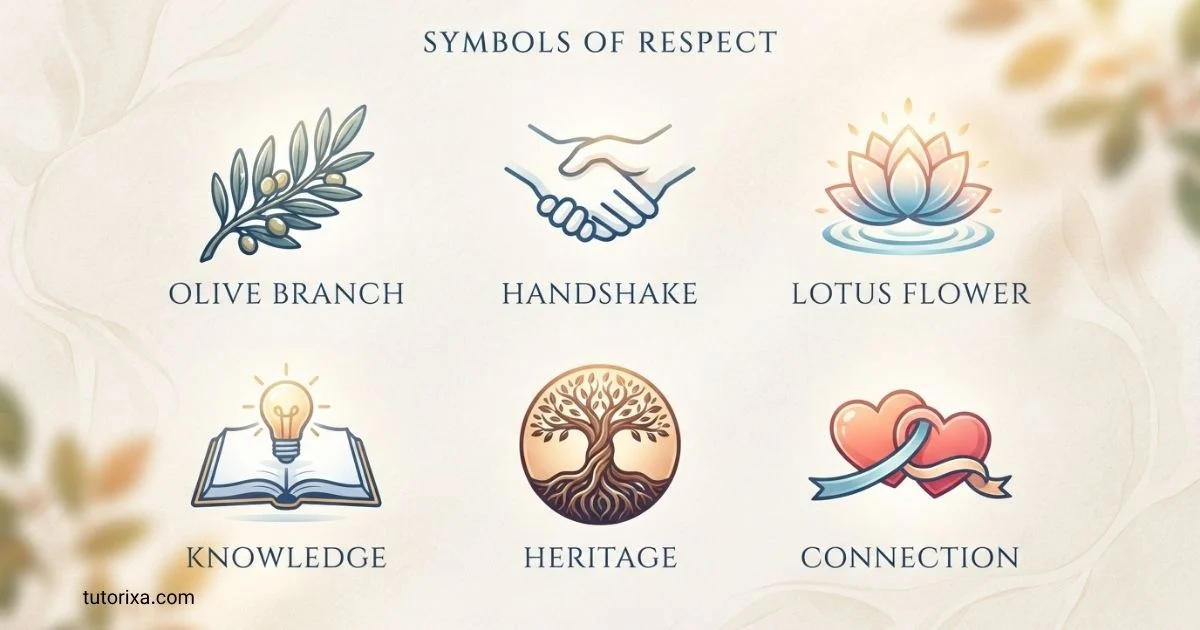
Respect can be expressed without saying a single word, and I find that some of the most meaningful signs are simple symbols we see in everyday life. From gestures and objects to colors and cultural traditions, these symbols can carry powerful messages of honor, appreciation, and dignity.
You may already recognize a few symbols of respect, but their meanings can change across cultures, religions, and traditions. I’ll help you explore these fascinating symbols so you can understand what they represent and why people continue to use them.
Whether you are researching cultural meanings, choosing a meaningful symbol, or simply curious about how respect is represented, you’ll find practical examples and clear explanations here. These symbols show how a simple sign can communicate feelings that words sometimes cannot.
Quick Meaning
Symbols of respect are gestures, objects, signs, and visual forms used to communicate honor, appreciation, humility, recognition, or regard for another person, group, tradition, or institution. Common examples include bows, handshakes, salutes, medals, folded hands, respectful head coverings, flowers, and ceremonial gestures.
Symbol Overview Table
| Symbol or Gesture | Primary Meaning | Category | Cultural or Historical Context | Common Use Today |
| Bow | Respect, humility, acknowledgment | Gesture | East Asia and many ceremonial traditions | Greetings, ceremonies, performances |
| Handshake | Respect, agreement, goodwill | Gesture | Ancient and modern diplomatic traditions | Greetings, introductions, agreements |
| Salute | Honor, recognition, duty | Gesture | Military traditions | Military and ceremonial settings |
| Removing a hat | Respect, courtesy | Gesture | European and Western etiquette traditions | Ceremonies, memorials, formal occasions |
| Namaste / Añjali Mudrā | Respect, greeting, reverence | Gesture | South Asian religious and cultural traditions | Greetings, yoga, spiritual settings |
| Wai | Respect, greeting, courtesy | Gesture | Thailand | Greetings and formal interactions |
| Medal or decoration | Honor, achievement, recognition | Object | Military and civic traditions | Awards and ceremonies |
| Flowers | Honor, remembrance, appreciation | Object | Many cultures | Memorials, ceremonies, gifts |
| Laurel | Victory, honor, achievement | Plant symbol | Ancient Greece and Rome | Awards, heraldry, art |
| 🙏 | Prayer, gratitude, reverence, request | Digital symbol | Modern emoji use influenced by hand gestures | Messages and social media |
| 🤝 | Cooperation, agreement, goodwill | Digital symbol | Modern handshake representation | Communication and business |
What Do Symbols of Respect Mean?
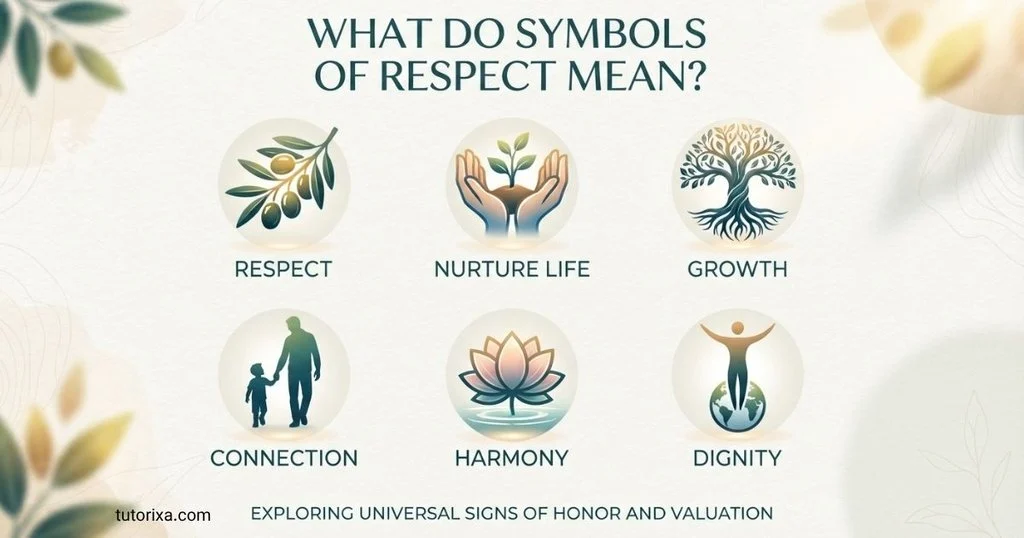
Symbols of respect communicate a positive regard for someone or something without relying entirely on spoken language. They can express honor, courtesy, gratitude, admiration, recognition, humility, loyalty, or reverence.
The important point is that respect does not have one universal symbol. Instead, different societies developed their own gestures and objects to show appropriate behavior toward elders, leaders, teachers, guests, religious figures, veterans, ancestors, or members of another community.
A bow, for example, may communicate respect in one setting, while a handshake may serve that role in another. In a military ceremony, a salute can recognize rank or service. At a memorial, flowers can communicate remembrance and honor.
Symbols also depend on context. A gesture that is respectful in a formal ceremony may seem unnecessary in a casual conversation. Likewise, an object such as a medal represents recognition because an institution or community has assigned that meaning to it.
This is why symbolic respect is best understood as a relationship between an action or object and the cultural meaning attached to it.
History and Origin of Respect Symbols
The history of respect symbols is closely connected to the development of social customs, hierarchy, religion, diplomacy, and ceremonial life. No single civilization invented the concept of using symbols to show respect.
In ancient societies, visible gestures helped communicate relationships between people. Physical posture could indicate deference, acknowledgment, submission, greeting, or honor. Bowing, kneeling, raising the hands, lowering the head, and other movements appear in artistic and written records from different historical periods.
Bowing and Lowering the Head
Bowing is one of the most recognizable respect gestures. Its history extends across several cultures, although its exact meaning differs by place and period.
In East Asian societies, including Japan and Korea, forms of bowing became closely associated with etiquette and social relationships. The depth and circumstances of a bow can communicate different levels of formality or respect.
In European history, bowing and related gestures also appeared in courtly and ceremonial settings. A person might bow before royalty or another high-ranking individual as part of established etiquette.
The lowered head can symbolically communicate humility because it changes the person’s physical posture and directs attention away from asserting personal dominance.
Handshakes
The handshake has a long history, although modern assumptions about its ancient origin should be treated carefully. Historical artwork and archaeological evidence show forms of hand-clasping in ancient Mediterranean contexts, while later European traditions helped develop the handshake as a social greeting.
The open hand has often been interpreted as a sign of peaceful interaction, but there is no single proven explanation that accounts for the handshake’s entire history.
Today, handshakes commonly communicate greeting, professionalism, agreement, welcome, and mutual respect.
Salutes
Saluting became strongly associated with military and naval traditions. Different armed forces developed specific forms of salute, so there is no single worldwide military salute.
The modern military salute generally communicates recognition and respect within an established hierarchy. Similar gestures can also appear in ceremonial settings outside the military.
Symbolism and Interpretation
Symbols of respect can have several layers of meaning.
Honor
Honor is one of the clearest meanings. Medals, monuments, ceremonial guards, wreaths, and formal gestures can recognize people for service, achievement, sacrifice, or leadership.
Humility
Gestures such as bowing or kneeling can represent humility. The person deliberately adopts a posture associated with deference rather than dominance.
However, humility should not automatically be interpreted as inferiority. In many traditions, a respectful gesture is a socially meaningful expression of courtesy rather than a statement that one person has less human worth than another.
Gratitude
Flowers, gifts, written tributes, and gestures of appreciation can express gratitude. Teachers, parents, mentors, community leaders, and guests may receive these forms of recognition.
Reverence
Respect becomes reverence when it is directed toward something regarded as sacred, spiritually important, or deeply honored. Religious bowing, prayer gestures, sacred objects, and ceremonial clothing can therefore communicate more than ordinary social courtesy.
Recognition
Symbols such as medals, certificates, plaques, wreaths, and honorary titles make respect visible. They transform private appreciation into public recognition.
Negative or Ambiguous Interpretations
A respect symbol can sometimes be misunderstood. A gesture intended as humility may be interpreted as submission. A handshake may indicate agreement in one setting but simply function as a greeting in another.
Symbols should therefore be interpreted through culture, context, intention, and social convention, rather than through appearance alone.
Cultural Significance of Symbols of Respect
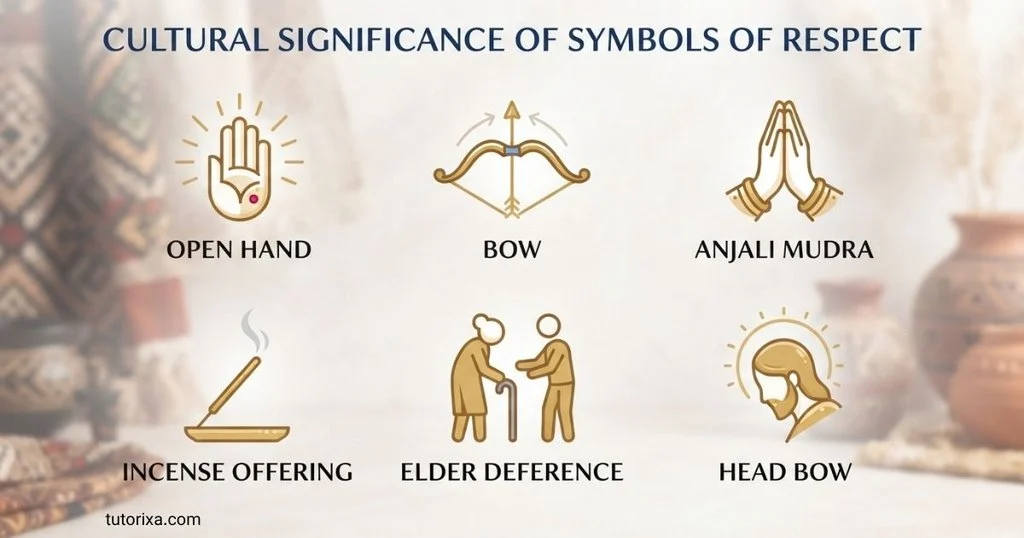
Respect symbols vary substantially around the world.
Japan
In Japan, bowing is an important part of social etiquette. It can be used when greeting, thanking, apologizing, showing respect, or participating in formal interactions. The context and degree of the bow matter.
South Korea
Korean etiquette also includes bowing as an important expression of courtesy and respect. Age and social relationships can influence appropriate forms of interaction.
Thailand
The wai, made by bringing the palms together near the chest or face while making a slight bow, is strongly associated with Thai greetings and respectful interaction. Its form can vary according to social context.
South Asia
The gesture commonly known as namaste or namaskar, involving joined hands, is widely associated with greeting and respect in parts of South Asia. The related Añjali Mudrā also has religious and contemplative significance in Hindu, Buddhist, and Jain traditions, although cultural and religious uses are not identical.
Western Cultures
In many Western societies, handshakes, formal greetings, standing during certain ceremonies, removing hats in particular settings, and giving awards are familiar expressions of respect.
Indigenous and Traditional Communities
Many Indigenous cultures have their own protocols concerning elders, ceremonies, land, ancestors, guests, and community responsibilities. These traditions should not be reduced to a single universal “Indigenous symbol of respect.” Practices vary greatly between peoples and nations.
The broader lesson is simple: respect is universal as a human value, but its symbols are culturally specific.
Religious or Spiritual Meaning
Respect symbols frequently appear in religious life because many faith traditions distinguish between ordinary social courtesy and reverence toward sacred people, places, texts, objects, or divine beings.
In Christianity, kneeling, bowing, removing certain head coverings in appropriate contexts, and other forms of reverent posture may be used during worship. Practices vary among denominations and communities.
In Hindu traditions, gestures such as namaste, prostration, and Añjali Mudrā can express reverence, greeting, devotion, or respect depending on the context.
In Buddhism, bowing and other forms of respectful bodily practice can be directed toward the Buddha, Dharma, Sangha, teachers, or sacred spaces. Their precise meaning depends on the tradition.
In Islam, acts of worship such as sujūd have specific religious meanings and should not simply be categorized as ordinary “respect gestures.” Prostration during prayer is an act of worship directed to God.
This distinction is important: a gesture may visually resemble a general sign of respect while carrying a much more specific theological meaning within a religion.
Where Symbols of Respect Are Used
Symbols of respect appear in many areas of daily and public life.
Ceremonies
Graduations, award ceremonies, funerals, inaugurations, memorials, weddings, and diplomatic events often use formal gestures and objects to communicate honor.
Military Traditions
Salutes, medals, uniforms, ceremonial flags, memorials, and moments of silence can communicate recognition and respect for military service and institutional traditions.
Education
Students may show respect through greetings, formal ceremonies, awards, appreciation gifts, or recognition of teachers and mentors.
Memorials
Flowers, wreaths, candles, ribbons, plaques, and moments of silence are commonly used to honor deceased people or commemorate significant events.
Art and Literature
Artists and writers have long used crowns, laurels, kneeling figures, bowed heads, monuments, ceremonial clothing, and other imagery to represent honor and status.
Architecture
Memorial buildings, statues, monuments, tombs, temples, churches, mosques, and other sacred or civic structures can embody collective respect.
Jewelry
Medallions, commemorative pendants, rings, ribbons, and symbolic charms can represent remembrance, achievement, family honor, or appreciation.
Digital Communication
Modern communication has expanded symbolic respect into emojis and graphic icons. The folded-hands emoji 🙏 is often used to communicate gratitude, prayer, respect, or a request, while 🤝 commonly represents a handshake, cooperation, or agreement.
These digital symbols can be interpreted differently depending on the conversation.
Common Variations
Respect symbols have many visual and regional variations.
A bow may range from a small movement of the head to a formal bend at the waist. A salute differs between military organizations. Flowers can carry different meanings according to species and culture.
Even the same object can communicate different forms of respect. A medal may represent bravery, long service, academic achievement, civic contribution, or another recognized accomplishment.
Laurel is another example. In ancient Greek and Roman traditions, laurel became associated with victory, honor, achievement, and distinction. Modern organizations continue to use laurel imagery in seals, medals, certificates, and logos.
Colors can also modify meaning. White flowers, ribbons, candles, or clothing may have different associations depending on cultural and religious traditions.
Common Misconceptions About Symbols of Respect
There Is No Universal Respect Symbol
People sometimes search for one symbol that universally means respect. No such symbol exists. Cultural context determines much of a symbol’s meaning.
Namaste Does Not Mean Only “Respect”
Namaste is associated with greeting and respect, but its use and interpretation vary across South Asian cultural and religious contexts. It should not be reduced to one literal English translation.
🙏 Does Not Have One Fixed Meaning
The folded-hands emoji can represent prayer, gratitude, appreciation, pleading, or respect depending on context. Its digital meaning is broader than a single dictionary-style definition.
Bowing Does Not Always Mean Submission
A bow may express courtesy, gratitude, greeting, apology, or reverence. Interpreting every bow as submission ignores cultural context.
Medals Are Not Automatically Religious Symbols
Medals and decorations are often civic or military symbols of recognition. Their meaning comes from the institution that awards them and the circumstances in which they are displayed.
A Handshake Is Not Universally Appropriate
Handshakes are common in many places, but cultural, religious, personal, and social circumstances can affect whether a handshake is appropriate. A respectful greeting should follow local etiquette.
Interesting Facts About Symbols of Respect
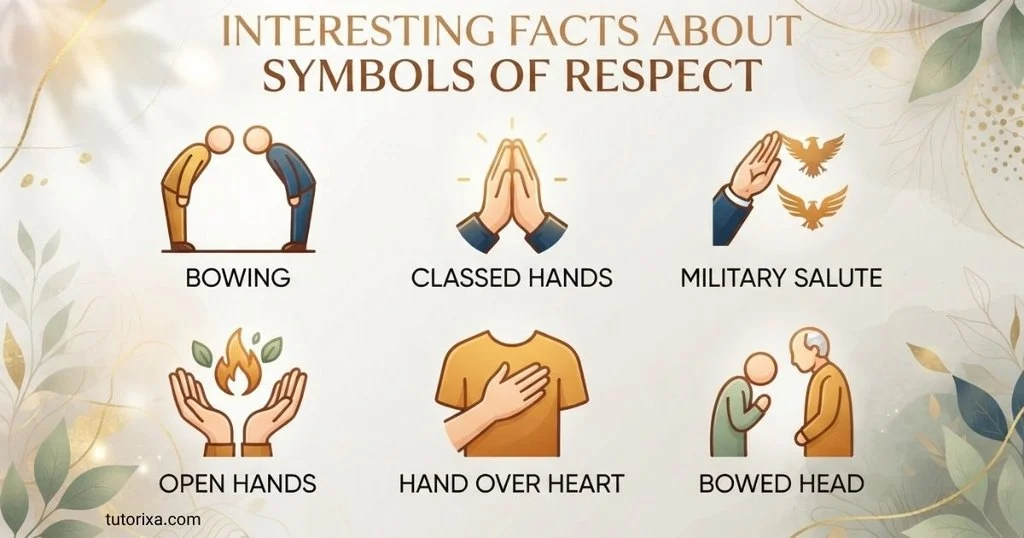
- Respect can be communicated through posture.
Bowing, kneeling, standing, and lowering the head demonstrate how body position can become symbolic language. - The meaning of a gesture can depend on depth.
In traditions where bowing is formalized, a deeper bow may communicate a different level of formality or respect. - Flowers can represent both celebration and remembrance.
Their symbolic role changes according to the occasion, making flowers unusually flexible respect symbols. - Laurel has a long connection with achievement.
Laurel imagery survived from ancient Mediterranean traditions into modern medals, academic designs, logos, and awards. - Military salutes are institutional symbols.
They do not simply mean “hello.” Their meaning is connected to military custom, recognition, and hierarchy. - Respect symbols can become national traditions.
Ceremonial gestures, monuments, flags, and memorial practices can communicate respect at the level of an entire nation or community. - Digital symbols continue older traditions.
Emojis such as 🙏 and 🤝 provide compact digital representations of gestures that existed long before smartphones. - The same gesture can have different meanings.
A hand gesture may indicate greeting in one culture and carry religious or ceremonial meaning in another. - Objects can preserve collective memory.
Medals, monuments, memorial wreaths, and commemorative plaques turn respect into something that can be publicly displayed and remembered. - Respect and reverence are related but not identical.
Respect can describe social courtesy, while reverence often involves a deeper sense of sacred or profound honor.
Related Symbols
Several symbols are closely connected with respect but emphasize different ideas:
- 🙏 Folded Hands: Often communicates gratitude, prayer, appreciation, or respect.
- 🤝 Handshake: Represents greeting, cooperation, agreement, or goodwill.
- 🎖️ Military Medal: Represents recognition, service, or achievement.
- Laurel Wreath: Traditionally associated with victory, honor, and distinction.
- Wreath: Often represents remembrance, honor, or commemoration.
- White Flowers: May express remembrance, sympathy, purity, or ceremonial honor depending on culture.
- Candle: Can represent remembrance, prayer, hope, or solemn reflection.
- Raised Hat: Historically associated with courtesy and acknowledgment in some Western settings.
- Salute: Commonly represents military recognition, respect, and duty.
- Bow: Can communicate greeting, gratitude, courtesy, humility, or reverence.
These symbols overlap, but they should not be treated as interchangeable. Their meanings depend on the culture and situation in which they are used.
Frequently Asked Questions
What is the most common symbol of respect?
There is no single worldwide symbol of respect. Bowing, handshakes, salutes, folded hands, flowers, medals, and respectful forms of address are widely recognized, but their meanings vary. The appropriate symbol depends on cultural traditions, the relationship between people, and whether the situation is social, religious, ceremonial, military, or professional.
What flower symbolizes respect?
Flowers can symbolize respect, honor, remembrance, sympathy, or appreciation, but no single flower has exactly the same meaning everywhere. Chrysanthemums, roses, lilies, carnations, and other flowers can carry different associations by culture and occasion. Before choosing flowers for a formal or memorial event, local customs are more reliable than a universal flower-symbolism chart.
What does a bow symbolize?
A bow can symbolize respect, courtesy, greeting, gratitude, apology, humility, or reverence. Its meaning depends heavily on cultural context. In Japan and Korea, for example, bowing forms an important part of etiquette, while in other societies it may be associated primarily with formal ceremonies or performances.
Does a handshake symbolize respect?
A handshake can symbolize respect, goodwill, greeting, cooperation, or agreement. It is particularly common in many Western professional and social settings. However, it is not universally appropriate in every situation, and cultural or personal preferences should be considered when choosing a greeting.
What symbol represents respect for elders?
Respect for elders does not have one universal symbol. Depending on the culture, it may be communicated through bowing, using honorific language, offering a particular greeting, allowing elders to receive certain ceremonial roles, or showing attentive body language. These practices are cultural traditions rather than universal rules.
What does the folded-hands symbol mean?
The folded-hands emoji 🙏 can communicate several ideas, including prayer, gratitude, appreciation, respect, pleading, or thanks. Its meaning depends on the surrounding message. Although the image resembles familiar religious and cultural gestures, its everyday digital use is broader than any single religious interpretation.
What symbol represents honor?
Symbols of honor include medals, laurel wreaths, ceremonial ribbons, monuments, wreaths, and formal gestures. Their meanings are usually established by a community or institution. A military decoration, for example, can represent officially recognized service or achievement, while a laurel may symbolize honor and victory in a broader historical and artistic sense.
Are symbols of respect the same in every culture?
No. Respect is a widespread human social value, but its outward expression differs considerably. A gesture that is polite in one culture may be unfamiliar or inappropriate in another. Learning the local etiquette surrounding greetings, religious practices, elders, clothing, and ceremonies is therefore more reliable than assuming a gesture has a universal meaning.
What is a symbol of respect in religion?
Religious symbols of respect vary by faith and tradition. They can include bowing, kneeling, prayer gestures, sacred clothing, offerings, ritual objects, or respectful behavior toward holy places and texts. Religious actions should be interpreted according to the beliefs and practices of the specific tradition rather than being assigned a generic meaning.
Can animals symbolize respect?
Yes. Animals can symbolize qualities connected with respect, honor, leadership, loyalty, or wisdom in particular cultures and artistic traditions. Lions, eagles, elephants, horses, and other animals have appeared in heraldry, mythology, literature, and public art. Their meanings are not universal and can change significantly between cultures.
Key Takeaways
- Symbols of respect include gestures, objects, images, and ceremonial practices.
- There is no single symbol that means respect in every culture.
- Bowing can express respect, greeting, gratitude, humility, or reverence.
- Handshakes commonly communicate greeting, goodwill, cooperation, and agreement.
- Military salutes are connected with recognition, duty, and institutional tradition.
- Flowers, wreaths, medals, and monuments can express honor and remembrance.
- Namaste and related hand gestures have cultural and religious contexts that vary.
- The 🙏 emoji can represent prayer, gratitude, appreciation, or respect depending on context.
- Laurel symbolism has historical connections with victory, honor, and achievement.
- Religious gestures should be understood within their specific traditions.
- Cultural context is essential when interpreting a symbol.
- A gesture’s appearance alone does not always reveal its complete meaning.
Conclusion
Symbols of respect show how human beings turn values into visible actions and objects. A bowed head, joined hands, handshake, salute, medal, flower, wreath, or monument can communicate ideas that would otherwise require many words. Yet these symbols do not have fixed meanings everywhere. Their significance develops through history, culture, religion, social customs, and the circumstances in which they are used.
Understanding symbols of respect therefore means looking beyond the symbol itself. The most accurate interpretation considers who is using it, whom it is directed toward, where it appears, and what tradition gives it meaning. That approach helps us appreciate both the shared human desire to show respect and the remarkable cultural diversity in how that respect is expressed.

I’m Ellis Montgomery, a British writer interested in the powerful language of symbols. I explore everything from traditional emblems and cultural signs to contemporary symbols found in modern life. My aim is to explain their meanings clearly while revealing the stories and ideas behind them, making symbolism fascinating and accessible to everyone.
Books:
- The Complete Book of Symbols
- Hidden Messages in Everyday Symbols
 Freddie Beaumont
 Rowan Whitaker