
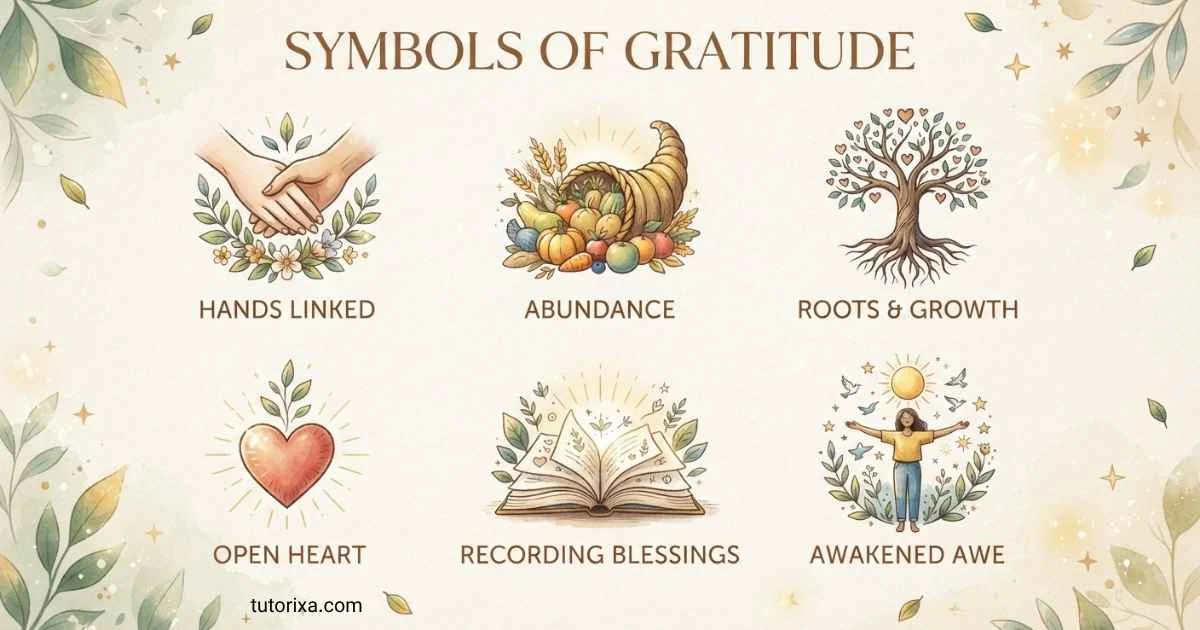
Gratitude can be difficult to put into words, but a simple symbol can express what your heart feels. I believe the right symbol can make appreciation feel more personal, meaningful, and memorable.
When you look at different symbols of gratitude, you may discover meanings connected to kindness, respect, love, friendship, and appreciation. You can use these symbols to understand cultures, choose meaningful gifts, or simply express a sincere thank-you.
I’ll help you explore the most meaningful symbols of gratitude and explain what they represent in a simple way. Whether you are searching for inspiration or a deeper meaning, you’ll find ideas you can connect with and use.
Quick Meaning
Symbols of gratitude are objects, images, gestures, colors, or signs that communicate thankfulness, appreciation, recognition, or goodwill. Common examples include flowers, hearts, gifts, clasped hands, thank-you cards, olive branches, and offerings. Their meanings vary by culture and situation, but they generally express appreciation for kindness, support, generosity, love, or blessings.
Symbol Overview Table
| Symbol | Primary Meaning | Category | Cultural Associations | Common Modern Use |
| 🌸 Flowers | Appreciation and affection | Nature | Many cultures | Gifts, ceremonies, cards |
| ❤️ Heart | Love and heartfelt thanks | Visual symbol | Widely international | Messages, art, social media |
| 🎁 Gift | Generosity and appreciation | Object | Global | Thank-you gifts |
| 🙏 Clasped hands | Thanks, prayer, respect | Gesture | Religious and global | Messages, ceremonies |
| Thank-you card | Direct appreciation | Communication | Modern Western tradition and global use | Notes and gifts |
| Olive branch | Peace and goodwill | Plant symbol | Ancient Mediterranean traditions | Art, diplomacy |
| Open hands | Giving and generosity | Gesture | Cross-cultural | Art, charity, religious settings |
| Candle | Remembrance and appreciation | Object | Religious and cultural traditions | Memorials, ceremonies |
| Sun | Life, warmth, blessing | Natural symbol | Many ancient cultures | Art and spiritual symbolism |
| Laurel | Honor and recognition | Plant | Ancient Greek and Roman traditions | Awards, emblems, art |
| Dove | Peace and goodwill | Animal symbol | Mediterranean and Christian traditions | Art, ceremonies |
| Offering | Thankfulness and devotion | Ritual symbol | Many religious traditions | Worship and ceremonies |
What Do Symbols of Gratitude Mean?
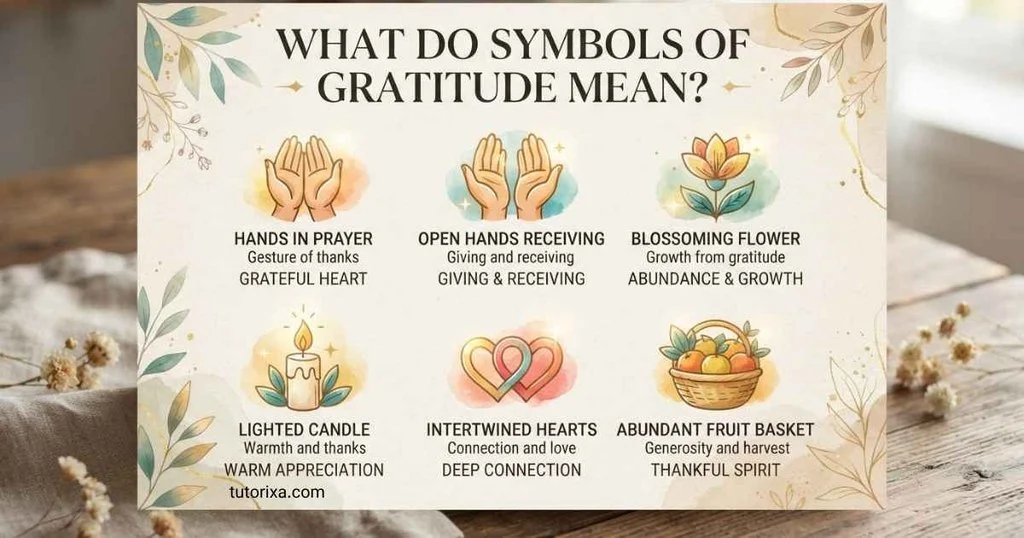
Symbols of gratitude represent thankfulness, appreciation, recognition, generosity, and goodwill. They give visible form to an emotion that is otherwise difficult to see.
The meaning depends on the symbol and context. A bouquet of flowers may communicate personal appreciation, while an offering in a religious ceremony can express gratitude toward a deity or acknowledge blessings. A handwritten note usually has a more direct meaning: the sender intentionally recognizes another person’s kindness.
Gratitude symbols can communicate several related ideas:
- Thankfulness for something received
- Appreciation for someone’s effort or kindness
- Respect toward another person
- Recognition of achievement or service
- Love and affection
- Generosity and reciprocity
- Peace and goodwill
- Spiritual gratitude
- Remembrance
- Blessing and abundance
One important distinction is that no symbol has a universal meaning in every situation. A flower, color, animal, or gesture can carry different associations depending on religion, geography, history, and personal experience.
History and Origin of Gratitude Symbols
Symbols of gratitude do not have a single historical origin because gratitude has been expressed through many independent cultural traditions.
In ancient societies, gratitude was often connected with gifts, offerings, feasts, prayers, sacrifices, and public ceremonies. People expressed appreciation toward family members, rulers, communities, ancestors, nature, or deities through tangible acts.
Ancient Greek and Roman societies used plants, wreaths, monuments, inscriptions, and ceremonial gifts to represent honor and recognition. The laurel wreath, for example, became associated with victory, achievement, and distinction. While it is not exclusively a gratitude symbol, it can represent appreciation and recognition when given to honor someone’s accomplishments.
Plants and food also became important because they represented the fruits of labor and the abundance of nature. Agricultural communities developed ceremonies connected with harvests, giving thanks for food and favorable conditions.
Religious traditions further developed the language of gratitude. Prayers, offerings, charitable acts, sacred meals, candles, flowers, and ritual objects have all been used in different faiths to express thankfulness.
Over time, gratitude moved from primarily ceremonial settings into everyday communication. Greeting cards, bouquets, awards, jewelry, digital emojis, and personalized gifts now allow people to express appreciation in ordinary social situations.
The underlying idea has remained remarkably consistent: something meaningful is received, and the recipient or giver wants to acknowledge its value.
Symbolism and Interpretation
The symbolism of gratitude usually centers on the relationship between receiving, recognizing, and giving.
Flowers as Gratitude
Flowers are among the most common visual expressions of appreciation. Their natural beauty, temporary nature, and association with celebration make them suitable for thank-you gifts.
However, individual flowers do not have one fixed meaning worldwide. Rose colors, for example, have developed different associations in different traditions and commercial contexts. A bouquet is therefore best interpreted according to the occasion rather than assuming that every flower has a universal symbolic definition.
The Heart
The heart represents love, affection, care, and emotional sincerity. When used with a thank-you message, it can turn simple appreciation into a warmer expression of heartfelt gratitude.
The familiar heart shape is a cultural symbol rather than an anatomically accurate representation of the human heart.
Gifts
A gift can symbolize gratitude because it transforms appreciation into an action. The object itself may have little symbolic importance; the meaning comes from the intention behind giving it.
A small gift can communicate, “I value what you did for me,” while a formal award may communicate recognition of significant service or achievement.
Clasped Hands
Clasped hands can represent prayer, respect, gratitude, or supplication. Their interpretation depends heavily on context.
In religious settings, the gesture may signify prayer. In everyday digital communication, the 🙏 emoji can be interpreted as prayer, thanks, gratitude, pleading, or respect. It should therefore not automatically be treated as a single-purpose “gratitude symbol.”
Open Hands
Open hands commonly suggest giving, receiving, generosity, welcome, or openness. When associated with gratitude, they can symbolize the relationship between generosity and appreciation.
Cultural Significance
Gratitude exists across human societies, but the ways people symbolize it differ considerably.
East Asian Traditions
In several East Asian cultures, gratitude is strongly connected with respect, social relationships, reciprocity, and appropriate etiquette. Gift-giving and formal expressions of thanks can communicate appreciation while also reinforcing social bonds.
The meaning of a gift may depend on its presentation, timing, relationship between the people involved, and occasion.
South Asian Traditions
Across South Asia, gratitude may be expressed through hospitality, gifts, food, respectful gestures, religious offerings, flowers, and verbal blessings. In Hindu traditions, offerings known as puja can express devotion and reverence, although their purpose and meaning depend on the specific ritual.
Respectful gestures can also communicate gratitude toward elders, teachers, parents, spiritual figures, and guests.
Mediterranean and European Traditions
Ancient Mediterranean cultures contributed many symbols that later became associated with honor, peace, achievement, and goodwill. Laurel, olive branches, wreaths, and ceremonial offerings appear in historical art and literature.
The olive branch is especially important because the olive tree had major economic, cultural, and religious significance around the Mediterranean. Its symbolism became strongly associated with peace and reconciliation, which can overlap with gratitude and goodwill.
Indigenous Cultures
Indigenous cultures around the world have diverse traditions of gratitude toward community, ancestors, land, animals, and the natural world. It is important not to treat these traditions as one universal system.
Ceremonies, songs, dances, offerings, storytelling, food-sharing, and communal practices can express relationships of respect and reciprocity. Specific meanings must be understood within each community’s own cultural context.
Religious or Spiritual Meaning
Gratitude has an important place in many religious and spiritual traditions.
In Christianity, thanksgiving is closely connected with prayer, worship, praise, and recognition of God’s blessings. The Eucharist itself is historically connected to the Greek word eucharistia, meaning thanksgiving.
In Judaism, blessings and prayers provide structured ways to acknowledge God and express gratitude for daily life, food, religious occasions, and significant events.
In Islam, gratitude is expressed through shukr, which involves recognizing blessings and responding to them appropriately. Gratitude can be expressed through words, worship, ethical conduct, charity, and responsible use of blessings.
In Hindu traditions, gratitude can be expressed through puja, offerings, prayers, and respect for deities, teachers, elders, nature, and sources of knowledge.
In Buddhist traditions, gratitude may be associated with appreciation for teachers, parents, benefactors, the teachings, and the conditions that support spiritual practice.
Although practices differ, many traditions connect gratitude with humility, generosity, ethical behavior, and recognition that individuals benefit from relationships beyond themselves.
Where Are Symbols of Gratitude Used?
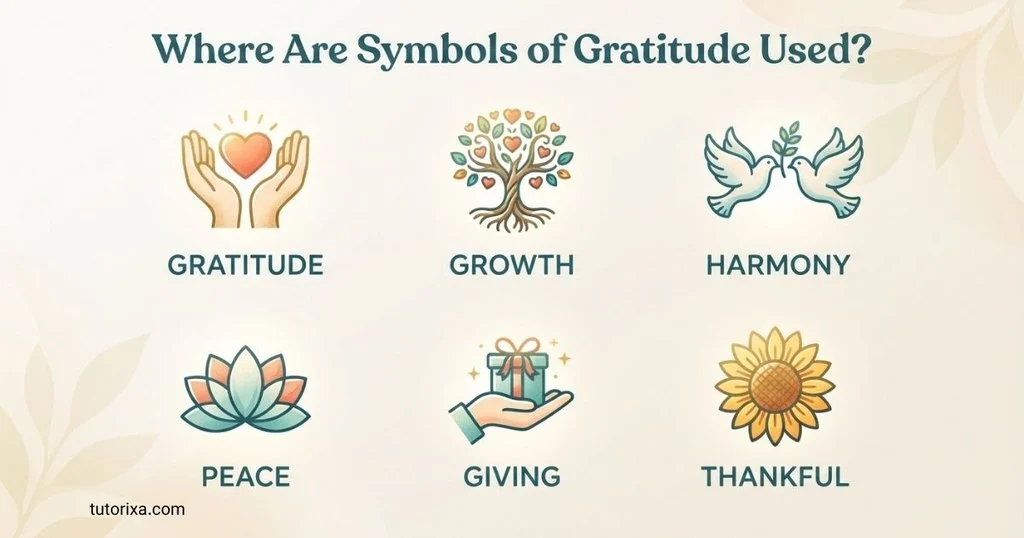
Symbols of gratitude appear in both formal and everyday settings.
Books and Literature
Writers use flowers, gifts, candles, seasons, light, and natural imagery to communicate appreciation without directly stating it. Gratitude can also be represented through recurring motifs and metaphors.
Jewelry
Hearts, infinity symbols, flowers, religious symbols, birthstones, and engraved messages may be used in gratitude-themed jewelry. Their meaning usually comes from the personal story attached to the item.
Art
Artists can represent gratitude through hands, light, harvests, flowers, gifts, embraces, or people gathered together. Religious art often gives these themes additional spiritual meaning.
Cards and Messages
Thank-you cards are among the clearest modern gratitude symbols. Flowers, hearts, stars, and decorative typography frequently reinforce the written message.
Awards and Recognition
Medals, trophies, certificates, plaques, and wreaths can symbolize appreciation for achievement or service. Here, gratitude overlaps with honor and public recognition.
Architecture and Monuments
Buildings, statues, memorials, and plaques can be created to honor individuals or commemorate contributions. These structures transform gratitude into a lasting public record.
Digital Communication
Emojis such as ❤️, 🙏, 💐, and 🎁 can communicate appreciation in texts and social media. Their meanings are flexible, and interpretation depends on the surrounding conversation.
Common Variations of Gratitude Symbols
There is no single standard design for a gratitude symbol.
A heart may be plain, decorated with flowers, combined with words, or incorporated into a logo. Flowers can be represented realistically or abstractly. Hands may be open, clasped, raised, or holding an object.
Modern designers frequently combine symbols. A common example is a heart surrounded by flowers, which combines affection with appreciation. Another is hands holding a heart, suggesting care, generosity, and sincere feeling.
Color also changes interpretation. Gold can suggest honor or value, green can evoke growth and renewal, white may suggest peace or purity, and red commonly communicates strong emotion. These associations are not universal rules, however.
Common Misconceptions
There Is No Universal Gratitude Symbol
People sometimes search for one ancient symbol that universally means “thank you.” No such symbol exists across all cultures and historical periods.
Every Flower Does Not Have a Fixed Meaning
Popular flower-language charts can be useful for modern gift-giving, but they should not be treated as universal historical facts. Flower symbolism varies by culture and period.
The 🙏 Emoji Does Not Exclusively Mean Gratitude
The clasped-hands emoji can represent prayer, gratitude, pleading, respect, or a request. Context determines the intended meaning.
The Heart Is Not an Ancient Universal Sign for Thanks
The heart is widely recognized today as a symbol of love and affection, but using it specifically for gratitude is a modern communicative practice rather than a universal ancient tradition.
Religious Offerings Are Not Simply Gifts
An offering can express gratitude, devotion, worship, obligation, remembrance, or other religious meanings. Its purpose should be understood within the particular tradition.
Interesting Facts About Symbols of Gratitude
- Gratitude symbols often involve giving. Gifts, flowers, food, offerings, and open hands all connect appreciation with generosity and reciprocity.
- The heart is anatomically inaccurate. The familiar heart shape is a cultural graphic symbol rather than a realistic drawing of the human organ.
- Laurel has an older meaning than modern thank-you gifts. Laurel was strongly associated with achievement and honor in ancient Greek and Roman contexts.
- The olive branch has multiple layers of meaning. It can represent peace, reconciliation, prosperity, and goodwill rather than gratitude alone.
- Flowers can communicate without words. Their color, type, arrangement, and occasion can influence how a bouquet is interpreted.
- Gratitude and recognition overlap. Awards and medals may express appreciation while simultaneously recognizing achievement, courage, service, or excellence.
- The meaning of 🙏 depends on context. A person may use it to mean “thank you,” while another may use it specifically as a prayer gesture.
- Food can be a gratitude symbol. Sharing a meal has historically provided a practical way for communities and families to express hospitality and appreciation.
- Gratitude is closely linked to reciprocity. Many cultures view appreciation not simply as an emotion but as something demonstrated through responsible action.
- Natural symbols are especially common. Flowers, trees, sunlight, harvests, and fruits can represent gratitude because they connect appreciation with life, growth, and abundance.
- Personal symbols can be more meaningful than traditional ones. A particular object may become a powerful gratitude symbol because of a shared memory rather than a historical definition.
- Digital symbols have expanded the language of gratitude. Emojis allow people to communicate appreciation quickly without writing a complete sentence.
Related Symbols
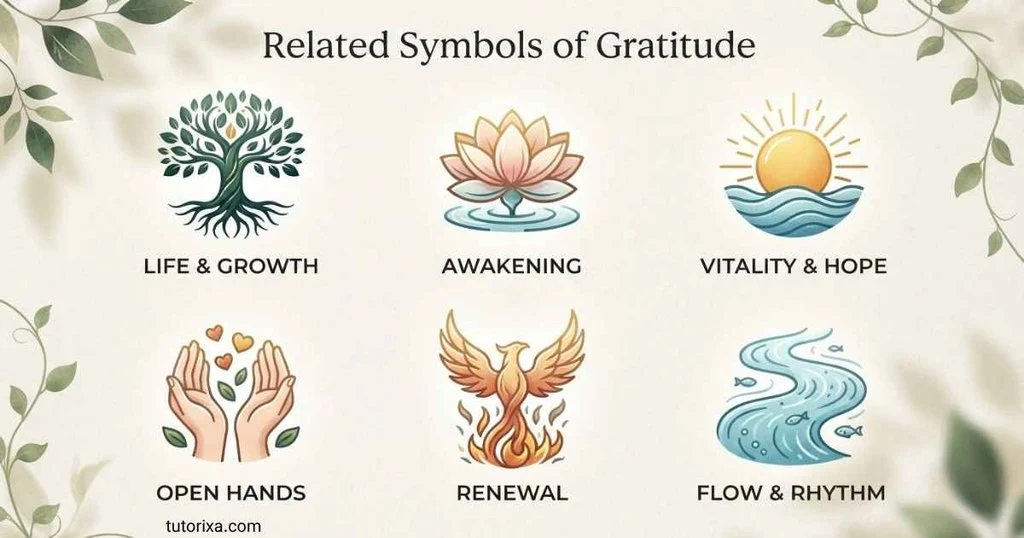
Several symbols are closely connected to gratitude but have slightly different primary meanings:
- Heart: Primarily represents love, affection, and emotional connection.
- Flower: Often represents beauty, appreciation, affection, or remembrance.
- Gift: Represents generosity, giving, appreciation, or celebration.
- Olive branch: Primarily symbolizes peace, reconciliation, and goodwill.
- Laurel wreath: Represents achievement, honor, victory, and recognition.
- Dove: Commonly represents peace and, in Christian contexts, can have additional spiritual associations.
- Open hands: Suggest generosity, giving, receiving, welcome, and openness.
- Candle: Can represent remembrance, hope, devotion, or spiritual reflection.
- Sun: Often symbolizes life, warmth, vitality, blessing, and renewal.
- Offering: May represent devotion, gratitude, reverence, or reciprocity depending on the religious tradition.
The important difference is that gratitude is often an interpretation created by context rather than the only meaning attached to an object.
Frequently Asked Questions
What is the most common symbol of gratitude?
There is no universally recognized single symbol of gratitude. Flowers, hearts, gifts, thank-you cards, and clasped hands are among the most common modern expressions. The best choice depends on the relationship and situation. A handwritten note may communicate personal appreciation more clearly than a decorative symbol alone.
What flower symbolizes gratitude?
Several flowers can be used to express appreciation, but there is no universal flower that means gratitude in every culture. Bouquets are commonly given as thank-you gifts because flowers communicate beauty, affection, and goodwill. The specific flower and color can change the message, so cultural and personal context should be considered.
What color represents gratitude?
There is no universally agreed-upon color for gratitude. In modern symbolism, warm colors such as yellow, pink, red, and gold may be associated with appreciation, affection, warmth, or recognition. Color meanings vary between cultures, so a particular shade should not be treated as having one fixed symbolic meaning.
Does a heart symbolize gratitude?
A heart can symbolize gratitude when it is used to express heartfelt appreciation. Its primary modern meanings are love, affection, care, and emotional connection. When combined with words such as “thank you,” the heart reinforces sincerity and warmth rather than functioning as an exclusive symbol of gratitude.
What does the 🙏 symbol mean?
The 🙏 emoji commonly represents clasped hands and can communicate prayer, gratitude, respect, pleading, or appreciation. Its exact meaning depends on context. Although many people use it as a digital “thank you,” it should not be assumed to have only one interpretation.
What represents gratitude in Christianity?
Christian gratitude is commonly expressed through prayer, thanksgiving, praise, worship, charitable action, and the Eucharist. Specific symbols can include the cross, bread and wine, candles, and other religious imagery, but these objects have broader theological meanings beyond gratitude alone.
Is an olive branch a symbol of gratitude?
An olive branch is more strongly associated with peace, reconciliation, and goodwill than gratitude. It can communicate gratitude when used in a context involving reconciliation or appreciation, but calling it an exclusive symbol of thankfulness would be misleading.
What symbolizes appreciation and respect?
Flowers, gifts, medals, certificates, wreaths, open hands, and formal thank-you messages can symbolize appreciation and respect. The most appropriate choice depends on the context. An award may be suitable for professional recognition, while flowers or a handwritten note may be more appropriate for personal appreciation.
What is a spiritual symbol of gratitude?
Spiritual symbols of gratitude vary among religions. Prayer, offerings, candles, sacred meals, flowers, and gestures of reverence can all express thankfulness in particular traditions. Their meanings should be interpreted within the beliefs and practices of the specific religious community rather than treated as universally spiritual symbols.
Can a personal object become a symbol of gratitude?
Yes. A personal object can become a powerful gratitude symbol through memory and experience. A photograph, piece of jewelry, handwritten letter, or handmade gift may have little universal symbolism but enormous personal meaning because it represents a specific person, kindness, relationship, or important moment.
Key Takeaways
- Symbols of gratitude communicate thankfulness, appreciation, recognition, goodwill, or respect.
- There is no single universal symbol that means gratitude in every culture.
- Flowers, hearts, gifts, clasped hands, and thank-you cards are common modern examples.
- Religious traditions express gratitude through prayers, offerings, worship, charity, and ceremonies.
- Olive branches and laurel wreaths are related symbols but have primary associations with peace and honor rather than gratitude itself.
- Cultural context can significantly change the meaning of a symbol.
- Emoji meanings depend on conversation and cannot always be interpreted literally.
- Personal experiences can give ordinary objects powerful gratitude-related meanings.
- Gratitude symbols frequently connect appreciation with generosity, reciprocity, remembrance, and recognition.
- The meaning of a symbol should always be interpreted in relation to its historical, cultural, religious, or personal context.
Conclusion
Symbols of gratitude give people a visual and tangible way to express appreciation. Flowers, gifts, hearts, clasped hands, offerings, candles, and other symbols can communicate feelings that words sometimes struggle to capture. Their meanings have developed through history, religion, art, social customs, and everyday communication.
The most important lesson is that gratitude symbolism is contextual rather than universal. A symbol may represent love in one situation, respect in another, and thankfulness in a third. Understanding its cultural and historical background makes the message more meaningful and prevents common misunderstandings. Whether expressed through an ancient ceremonial offering, a bouquet of flowers, a handwritten card, or a simple digital emoji, gratitude remains one of the most widely shared forms of human appreciation.

I’m Freddie Beaumont, a British author with a passion for discovering what symbols communicate without words. I write about their history, meanings, and everyday uses in an accessible way. I believe symbols tell fascinating stories about people, cultures, and ideas, and my work helps readers recognise and understand those stories more clearly.
Books:
- Symbols and Their Hidden Meanings
- Understanding Signs and Symbols
 Ellis Montgomery
 Rowan Whitaker