
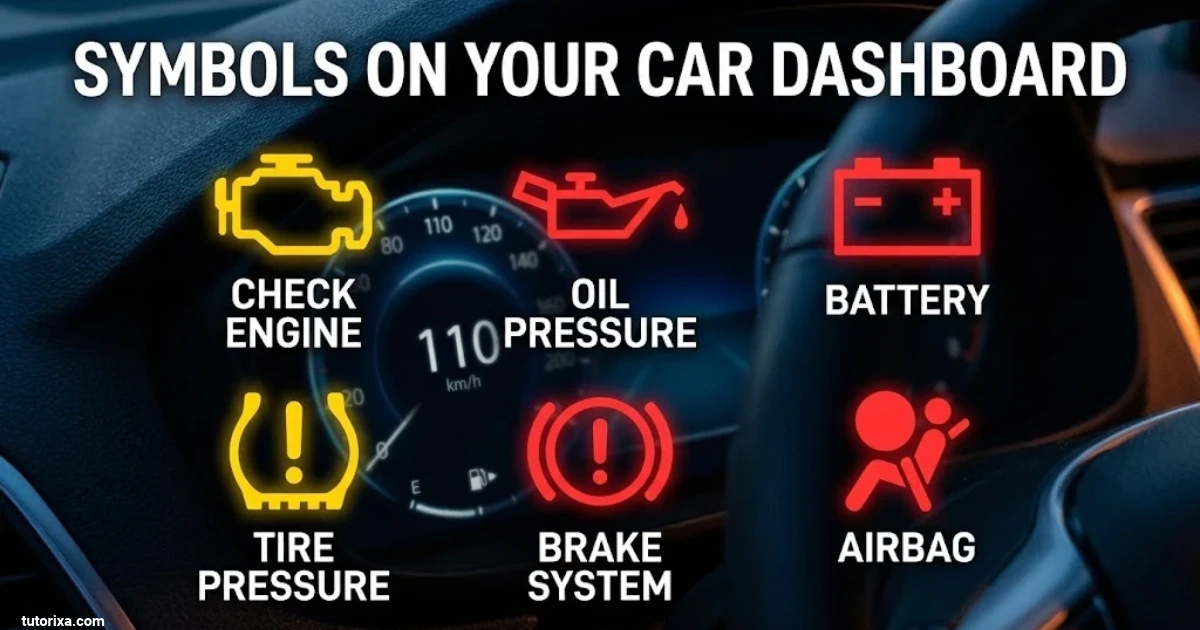
Car dashboard symbols help you understand what is happening inside your vehicle. Some lights tell you that a feature is working, while others warn you about problems with the engine, brakes, battery, tires, or other important systems. Knowing what these symbols mean can help you respond quickly and avoid unnecessary damage.
If you have ever seen a red oil light, a yellow engine symbol, or an unfamiliar warning sign on your dashboard, you may have wondered whether it is safe to keep driving. Each symbol has a different meaning, and its color, flashing pattern, and location can help you understand how serious the warning is.
In this guide, you will find car dashboard symbols with their names, meanings, and visual examples. We will also explain common warning lights, red and yellow indicators, and Toyota dashboard symbols so you can recognize what your vehicle is trying to tell you.
What Do Symbols on Car Dashboards Mean?
Symbols on a car dashboard are visual indicators that communicate information about your vehicle. They show the status of different systems, alert you when something needs attention, and warn you about conditions that may affect your safety.
For example, a fuel pump symbol tells you that your fuel level is low, while an oil can symbol can warn you about low engine oil pressure. A seat belt symbol reminds you to fasten your seat belt, and a battery symbol may indicate a problem with the charging system.
Dashboard symbols generally fall into three main categories:
- Warning lights: Alert you to a problem that may require immediate attention or professional inspection.
- Indicator lights: Show that a vehicle feature or system is switched on or operating.
- Information lights: Provide useful information about the vehicle’s condition or driving settings.
The color of a dashboard light can help you decide what to do next. However, the exact meaning depends on your vehicle’s make, model, and year.
| Dashboard light color | General meaning | What to do |
| Red | Serious warning or safety issue | Stop safely when required and investigate immediately. |
| Yellow or amber | Warning or system fault | Check the issue and arrange inspection if needed. |
| Green | A feature is active | Usually no action is needed. |
| Blue | A specific system is active | Check the indicator, such as high-beam headlights. |
| White | Information or system status | Read the vehicle display for details. |
Important: These colors are general guidelines, not universal rules. Always check your owner’s manual for the exact meaning of an unfamiliar dashboard symbol.
Car Dashboard Symbols With Names and Meanings
Here is a reference table of common car dashboard symbols, their names, and what they usually mean. These are among the indicators you may see in modern cars, SUVs, and pickup trucks.
| Symbol | Name | Meaning |
| 🛢️ | Engine oil pressure light | Indicates low engine oil pressure. |
| 🌡️ | Engine temperature warning | Warns that the engine may be overheating. |
| 🔋 | Battery warning light | Indicates a possible charging system problem. |
| ⚙️ | Check engine light | Signals a problem detected by the engine management system. |
| 🛑 | Brake warning light | May indicate an engaged parking brake or brake system problem. |
| ABS | ABS warning light | Indicates a fault in the anti-lock braking system. |
| 🚗 | Seat belt warning | Reminds occupants to fasten their seat belts. |
| ⛽ | Low fuel warning | Indicates that the fuel level is low. |
| ! | Tire pressure warning (TPMS) | Indicates low tire pressure or a tire monitoring system issue. |
| 🚘 | Traction control light | Shows traction control activity or a system fault. |
| 🚗〰️ | Electronic stability control | Indicates stability control activity or malfunction. |
| 🔑 | Security or immobilizer light | Indicates the vehicle’s anti-theft system status. |
| 💡 | Exterior light indicator | Shows that certain vehicle lights are switched on. |
| 🔵 | High-beam indicator | Shows that high-beam headlights are active. |
| 🌫️ | Fog light indicator | Shows that front or rear fog lights are switched on. |
| 🚪 | Door ajar warning | Indicates that a door may not be properly closed. |
| 🧍 | Airbag warning light | Indicates a possible problem with the airbag system. |
| 🧊 | Low temperature or icy road warning | May warn about low outside temperatures. |
| 🧰 | Service or maintenance reminder | Indicates that scheduled maintenance may be due. |
| 🚙 | Lane departure warning | Alerts you when the vehicle may be leaving its lane. |
Note: The emojis above are illustrative references, not exact reproductions of manufacturer dashboard icons. Actual warning symbols usually use standardized or manufacturer-specific pictograms.
Some symbols have more than one version. For example, the tire pressure light may appear as a horseshoe-shaped outline with an exclamation mark. The engine warning light is usually shaped like an engine, while the brake warning light may display the word BRAKE or an exclamation mark inside a circle.
Always identify the symbol by its actual appearance and consult your vehicle manual before deciding what action to take.
Car Dashboard Symbols And Meanings With Pictures

Seeing a dashboard symbol makes more sense when you can compare its appearance with its name and meaning. The following reference uses simple visual representations to help you recognize common warning lights.
Illustrative symbols: actual shapes, colors, and designs vary by vehicle manufacturer.
| Dashboard symbol | Symbol name | Meaning |
| 🛢️ | Oil pressure warning | Engine oil pressure is too low. |
| 🌡️ | Coolant temperature warning | Engine temperature is too high. |
| 🔋 | Battery charging warning | Charging system needs attention. |
| ⚙️ | Check engine warning | Engine or emissions system fault detected. |
| (!) | Brake system warning | Parking brake may be engaged or the brake system may have a fault. |
| ABS | ABS warning | Anti-lock braking system fault. |
| (!) | Tire pressure warning | One or more tires may have low pressure. |
| 👤 | Airbag warning | Airbag or restraint system may have a problem. |
| 🚘 | Traction control warning | Traction control is active or has a fault. |
| 🚪 | Door open warning | One or more doors are not fully closed. |
| ⛽ | Low fuel warning | Fuel is running low. |
| ↔ | Turn signal indicator | A turn signal is operating. |
| 💡 | Headlight indicator | Exterior lights are switched on. |
| ☀ | High-beam indicator | High-beam headlights are active. |
| 🌫️ | Fog light indicator | Fog lights are switched on. |
Common Dashboard Symbols You Should Recognize
Some dashboard lights need more attention than others. Learn these symbols first because they relate to essential vehicle systems.
- Oil pressure: A red oil-can symbol usually indicates low engine oil pressure. Stop safely and switch off the engine.
- Engine temperature: A thermometer over wavy lines warns about overheating. Pull over safely and allow the engine to cool.
- Battery: A battery-shaped warning indicates a charging system problem, not necessarily just a weak battery.
- Brake: A red brake warning can indicate an engaged parking brake, low brake fluid, or another brake system issue.
- Check engine: An engine-shaped symbol indicates a fault detected by the engine management system. A flashing light can indicate a serious problem.
- Tire pressure: A horseshoe-shaped symbol with an exclamation mark usually indicates low tire pressure or a monitoring system fault.
Remember that dashboard pictures are helpful for recognition, but the owner’s manual is the best source for identifying the exact symbol in your vehicle.
All Symbols on Car Dashboard
Modern vehicles have many dashboard symbols because they contain different electrical, mechanical, safety, and driver-assistance systems. The number of indicators depends on the vehicle’s features.
Below are additional common symbols grouped by their functions.
Engine and Mechanical Symbols
| Symbol or display | Name | Meaning |
| Engine outline | Check engine light | Engine or emissions-related problem. |
| Oil can | Oil pressure warning | Low engine oil pressure. |
| Thermometer over waves | Coolant temperature | Engine overheating. |
| Gear with warning mark | Transmission warning | Possible transmission system fault. |
| Fuel filter with warning | Fuel filter warning | Water or contamination may be detected in the fuel filter. |
| Exhaust with warning | Exhaust system warning | Possible emissions or exhaust-related fault. |
| Coil-shaped symbol | Diesel glow plug | Diesel engine preheating or glow plug issue, depending on its behavior. |
| Wrench | Service reminder | Maintenance or inspection may be required. |
Safety and Braking Symbols
| Symbol or display | Name | Meaning |
| ABS | Anti-lock braking system | ABS fault. |
| Circle with exclamation mark | Brake warning | Brake system or parking brake alert. |
| P inside a circle | Parking brake indicator | Parking brake is applied or its status is being displayed. |
| Person with a circle | Airbag warning | Supplemental restraint system fault. |
| Seat belt figure | Seat belt reminder | Seat belt needs to be fastened. |
| Car with wavy lines | Stability control | Electronic stability control is operating or has detected a fault. |
| Car with collision star | Pre-collision warning | Collision detection or prevention system alert. |
| Car between lane lines | Lane keeping indicator | Lane assistance system is active or needs attention. |
Lighting and Visibility Symbols
| Symbol or display | Name | Meaning |
| Two green arrows | Turn signal | Left or right indicator is active. |
| Blue headlamp | High-beam indicator | High beams are switched on. |
| Green headlamp | Low-beam indicator | Low-beam headlights are active. |
| Lamp with rays | Parking light indicator | Parking or position lights are switched on. |
| Lamp with downward lines | Front fog light | Front fog lights are active. |
| Lamp with wavy lines | Rear fog light | Rear fog lights are active. |
| Windshield with spray | Washer fluid indicator | Washer fluid may be low. |
| Windshield with wiper | Wiper indicator | Windshield wipers or automatic wiper function are active. |
Driving Assistance and Other Symbols
| Symbol or display | Name | Meaning |
| Speedometer with arrow | Cruise control | Cruise control is active or available. |
| Car with distance bars | Adaptive cruise control | Following-distance system status. |
| Steering wheel with warning | Electric power steering | Possible steering assistance fault. |
| Car with skidding lines | Traction control | Traction control is working or has been switched off. |
| Road with lane markings | Lane departure warning | Vehicle may be leaving its lane. |
| Letter A inside a circle | Automatic start-stop | Engine stop-start system status. |
| Snowflake | Low temperature warning | Possible icy road conditions. |
| Key symbol | Immobilizer indicator | Anti-theft or key recognition system status. |
| Triangle with exclamation mark | Master warning | Another warning or message needs attention. |
| ECO | Eco driving indicator | Eco mode or economical driving status. |
| SPORT | Sport mode indicator | Sport driving mode is selected. |
| HOLD | Brake hold indicator | Brake hold function is active. |
Some symbols appear only when your vehicle has the relevant feature. For example, adaptive cruise control, lane assistance, automatic parking, and hybrid-system indicators are not available in every car.
Car Dashboard Warning Lights
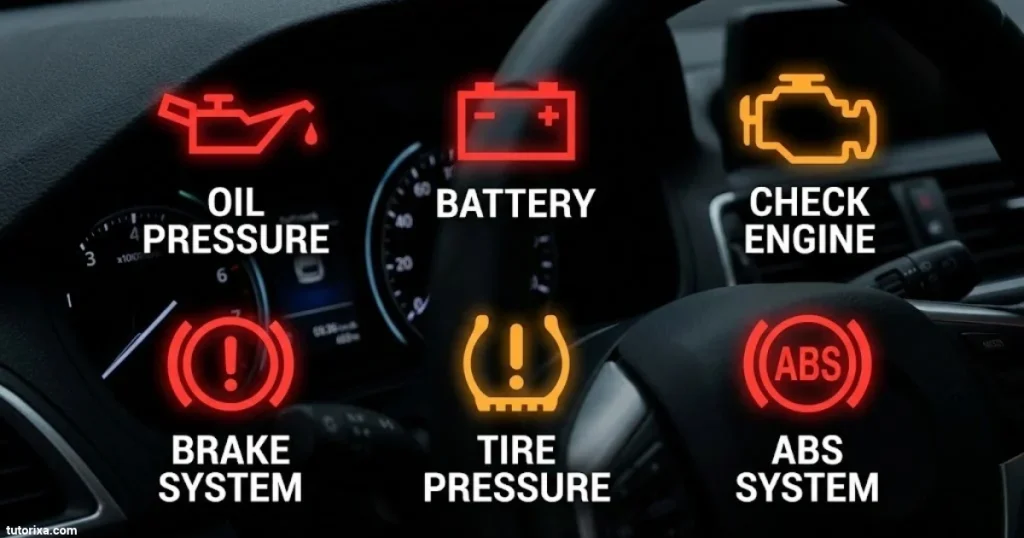
Dashboard warning lights alert you when a vehicle system needs attention. They can help you identify problems before they become more serious.
Some warning lights appear briefly when you start the engine. This is usually part of the vehicle’s system check. They should normally turn off after the engine starts, although the exact behavior depends on the vehicle.
Here are the most common warning lights and the actions they may require.
1. Check Engine Light
Symbol: Engine-shaped outline
The check engine light indicates that the engine management or emissions control system has detected a problem. Possible causes include a loose fuel cap, faulty oxygen sensor, ignition problem, or other engine-related fault.
What to do: If the light stays on, arrange a diagnostic check. If it flashes, reduce engine load and stop driving when safe if the engine runs roughly or loses power. Seek professional assistance promptly.
2. Oil Pressure Warning Light
Symbol: Red oil can
This warning indicates that engine oil pressure may be too low. Insufficient oil pressure can damage engine components quickly.
What to do: Stop in a safe place and switch off the engine. Check the oil level when it is safe to do so. If the warning remains, do not continue driving; arrange professional assistance.
3. Engine Temperature Warning Light
Symbol: Thermometer over wavy lines
This light warns that the engine coolant temperature is too high. Low coolant, a cooling system leak, or a faulty cooling fan may be responsible.
What to do: Pull over safely, turn off the engine, and allow it to cool. Never open a hot radiator cap because pressurized coolant can cause serious burns.
4. Battery Warning Light
Symbol: Battery with positive and negative signs
The battery warning light usually indicates a charging system problem. The alternator, battery connections, wiring, or charging components may need inspection.
What to do: Switch off unnecessary electrical accessories and find a safe place to stop. Arrange assistance because the vehicle may lose electrical power.
5. Brake System Warning Light
Symbol: Exclamation mark inside a circle or BRAKE**This warning may appear when the parking brake is engaged. It can also indicate low brake fluid or a problem with the braking system.What to do: Check that the parking brake is fully released. If the warning remains, especially with unusual brake pedal behavior, stop safely and seek professional assistance.
6. ABS Warning Light
Symbol: ABS inside a circleThe ABS warning indicates a possible problem with the anti-lock braking system. Regular braking may still work, but the anti-lock function may not be available.What to do: Drive cautiously only if the brakes feel normal and arrange an inspection. If the red brake warning also appears, stop safely and seek assistance.
7. Tire Pressure Warning Light
Symbol: Horseshoe-shaped outline with an exclamation markThe tire pressure monitoring system (TPMS) warns when one or more tires may have low air pressure. Some vehicles also use this warning for a monitoring system malfunction.What to do: Check all tire pressures with a reliable gauge and inflate them to the recommended cold pressure shown on the vehicle’s tire information label.
8. Airbag Warning Light
Symbol: Seated person with an airbagThe airbag warning light indicates a possible fault in the supplemental restraint system. The problem may affect airbags, seat belt pretensioners, or related components.What to do: Arrange a professional inspection promptly because some safety features may not work correctly in a collision.
9. Power Steering Warning Light
Symbol: Steering wheel with an exclamation markThis light indicates a possible issue with the electric or hydraulic power steering system.What to do: If steering becomes unusually heavy or difficult, stop safely and arrange assistance. Avoid continuing if you cannot steer the vehicle safely.
10. Traction Control Warning Light
Symbol: Car with wavy lines**This light may flash when the traction control system is helping the tires maintain grip. If it stays illuminated, the system may be disabled or have a fault.What to do: Reduce speed on slippery roads. Check whether traction control has been switched off and consult your owner’s manual if the light stays on.
11. Low Fuel Warning Light
Symbol: Fuel pump**The low fuel warning indicates that the remaining fuel has reached a reserve level. The exact amount depends on the vehicle.What to do: Refuel as soon as practical. Avoid relying on the remaining driving range because fuel consumption and road conditions can change it.
12. Seat Belt Warning Light
Symbol: Person wearing a seat beltThis light reminds the driver or passenger to fasten their seat belt. Some vehicles also use seat sensors and warning sounds.What to do: Make sure everyone is wearing a seat belt correctly before driving.A flashing warning light, an accompanying buzzer, or a message on the instrument display can change how urgently you need to respond. Never ignore a serious warning simply because the vehicle still seems to drive normally.
Light Symbols on Car Dashboard
Light symbols on a car dashboard indicate the status of the vehicle’s lighting and visibility systems. They help drivers identify which lights are switched on and whether an automatic lighting feature is operating.Here are the common headlight, fog light, and exterior lighting indicators.
| Symbol | Light name | Meaning |
| Green headlamp with downward rays | Low-beam headlights | Regular headlights are on. |
| Blue headlamp with straight rays | High-beam headlights | High beams are active. |
| Green lamp with side rays | Parking lights | Parking or position lights are on. |
| Green lamp with slanted rays | Front fog lights | Front fog lights are active. |
| Amber or yellow rear fog symbol | Rear fog lights | Rear fog light is switched on. |
| Green arrows pointing both ways | Hazard lights | Both turn signals are flashing. |
| Green left arrow | Left turn signal | Left indicator is active. |
| Green right arrow | Right turn signal | Right indicator is active. |
| Headlamp with an A | Automatic headlights | Automatic lighting function is enabled. |
| Headlamp with an A and rays | Automatic high beams | Automatic high-beam system is enabled. |
High-Beam and Low-Beam Symbols
High-beam indicatorUsually blue. Shows that high-beam headlights are active.
Low-beam indicatorUsually green. Shows that regular headlights are on.
High beams provide stronger illumination for dark roads, but you should switch to low beams when approaching other vehicles to avoid dazzling their drivers.
Front and Rear Fog Light Symbols
Front fog lightUsually green, with light rays pointing downward and a vertical wavy line.
Rear fog lightUsually amber, with a different ray direction and symbol arrangement.
Fog lights help improve visibility in certain poor-weather conditions. Rear fog lights are particularly bright, so use them only when visibility is seriously reduced and switch them off when conditions improve.
Red Symbols on Car Dashboard

Red dashboard symbols generally indicate a serious warning, a safety-related issue, or a condition requiring immediate attention. Some red lights are simple reminders, such as an open door or an applied parking brake, while others can signal a problem that makes continued driving dangerous.The following red symbols deserve attention.
| Symbol or appearance | Red warning name | What it means |
| Oil can | Oil pressure warning | Engine oil pressure is too low. |
| Thermometer over waves | Coolant temperature warning | Engine may be overheating. |
| Battery | Charging system warning | Charging system may have failed. |
| BRAKE or (!) | Brake system warning | Parking brake, fluid, or brake system issue. |
| Person with airbag | Airbag warning | Possible restraint system fault. |
| Seat belt figure | Seat belt warning | Seat belt is not fastened. |
| Door outline | Door open warning | A door is not fully closed. |
| Steering wheel with (!) | Power steering warning | Steering assistance may be faulty. |
| Master warning symbol | Master warning light | Another serious alert requires attention. |
| Temperature warning | Transmission temperature | Transmission may be overheating. |
What Should You Do When a Red Light Appears?
Your response depends on the warning. Follow these basic steps:
- Stay calm and avoid sudden braking or steering.
- Look for a message on the instrument display.
- If the warning indicates low oil pressure, overheating, or a brake problem, stop in a safe place.
- Switch off the engine when instructed by the vehicle manual.
- Do not remove hot radiator caps or touch hot engine components.
- Contact a qualified mechanic or roadside assistance if the problem cannot be safely resolved.
Never assume every red light means the same thing. A red seat belt reminder requires fastening the belt, while a red oil pressure warning requires stopping the engine as soon as it is safe.
Yellow Symbols on Car Dashboard
Yellow or amber dashboard symbols usually indicate that a vehicle system needs attention. They may warn about a developing problem, a disabled feature, or a condition that requires checking.Unlike some red warnings, an illuminated yellow light does not always mean you must stop immediately. However, you should not ignore it.
| Symbol or appearance | Yellow warning name | Meaning |
| Engine outline | Check engine light | Engine or emissions fault. |
| ABS | ABS warning | Anti-lock braking system fault. |
| Tire with (!) | Tire pressure warning | Low tire pressure or TPMS issue. |
| Car with wavy lines | Traction control | System activity or malfunction. |
| Steering wheel with (!) | Electric power steering | Steering assistance fault. |
| Coil-shaped symbol | Glow plug warning | Diesel preheating system status or fault. |
| Fuel filter warning | Fuel filter indicator | Possible water or filter issue. |
| Triangle with (!) | Master warning | Another vehicle warning needs attention. |
| Wrench | Maintenance reminder | Scheduled service may be due. |
| Lane markings | Lane assistance warning | Lane assistance system status or fault. |
| Collision symbol | Pre-collision warning | Possible collision or safety system issue. |
| Snowflake | Low temperature warning | Possible icy road conditions. |
Can You Drive With a Yellow Dashboard Light?
In some cases, yes. However, it depends on which warning appears and how the vehicle behaves.
- Steady check engine light: A diagnostic check is needed. If the engine runs normally, you may be able to drive cautiously to a repair facility.
- Flashing check engine light: Reduce engine load and stop safely if it continues or the engine runs roughly. Arrange urgent assistance.
- ABS light: The anti-lock function may not work, even if regular braking remains available.
- Tire pressure light: Check tire pressure as soon as possible and inspect for damage.
- Traction control light: If flashing briefly on a slippery road, the system may simply be working.
- Maintenance reminder: Follow the recommended service schedule.
A yellow light can become more serious when accompanied by unusual noise, smoke, loss of power, overheating, or poor braking. In these situations, stop safely rather than relying on the light’s color alone.
Toyota Car Dashboard Symbols And Meanings

Toyota vehicles use different dashboard indicators to communicate the condition of their engine, braking system, battery, safety features, and driving assistance systems.The exact symbols depend on the Toyota model, manufacturing year, engine type, and available features. A Toyota Corolla, Camry, Prius, RAV4, and Hilux may not display exactly the same warning lights.Here are some common Toyota dashboard symbols and their meanings.
| Toyota dashboard symbol | Name | Meaning |
| Oil can | Low engine oil pressure | Engine oil pressure is too low. |
| Thermometer over waves | High coolant temperature | Engine coolant temperature is too high. |
| Battery | Charging system warning | Charging system malfunction. |
| Engine outline | Malfunction indicator lamp | Engine or emissions system fault. |
| ABS | ABS warning light | Anti-lock braking system malfunction. |
| Circle with ! | Brake system warning | Brake system issue or parking brake status. |
| Tire with ! | Tire pressure warning | Low tire pressure or TPMS malfunction. |
| Person with airbag | SRS airbag warning | Possible airbag or seat belt pretensioner fault. |
| Steering wheel with ! | Electric power steering warning | Power steering system malfunction. |
| Car with wavy lines | Slip indicator | Vehicle stability or traction control is operating. |
| TRAC OFF | Traction control off | Traction control has been switched off. |
| VSC OFF | Vehicle stability control off | Stability control has been disabled. |
| Fuel pump | Low fuel warning | The fuel level is low. |
| Seat belt figure | Seat belt reminder | The driver or passenger needs to fasten a seat belt. |
| Key or security symbol | Security indicator | Immobilizer or anti-theft system status. |
| Wrench | Maintenance required | Scheduled maintenance is due. |
| Windshield with spray | Low washer fluid | Windshield washer fluid needs attention. |
| Cruise control symbol | Cruise control indicator | Cruise control is activated or available. |
| Blue headlamp | High-beam indicator | High-beam headlights are on. |
| Green arrows | Turn signal indicator | The turn signal is operating. |
Toyota Check Engine Light
The Toyota check engine light usually appears as an amber engine-shaped symbol. It indicates that the vehicle’s engine management or emissions system has detected a problem.Possible causes include:
- Faulty oxygen sensor.
- Loose or damaged fuel cap.
- Ignition system problem.
- Faulty mass airflow sensor.
- Emissions control system malfunction.
If the light stays on, arrange a diagnostic inspection. If it flashes, treat the situation as more urgent and avoid putting unnecessary load on the engine.
Toyota Oil Pressure Warning Light
This red warning indicates that engine oil pressure is too low. It is one of the most serious dashboard warnings because insufficient oil pressure can cause severe engine damage.Action: Stop safely and switch off the engine. Do not continue driving while the warning remains illuminated.
Toyota Battery Warning Light
The battery-shaped warning light indicates a possible charging system malfunction. The alternator, battery connections, or electrical charging components may need inspection.If this light appears while driving, find a safe place to stop and arrange assistance.
Toyota ABS Warning Light
The ABS warning light indicates a possible malfunction in the anti-lock braking system or brake assist system.Your regular brakes may still work, but the ABS function may not be available. Have the vehicle inspected promptly, and stop safely if a red brake warning appears as well.
Toyota Tire Pressure Warning Light
Toyota’s tire pressure warning light usually looks like a tire-shaped outline with an exclamation mark inside it.It may indicate that one or more tires have low inflation pressure. Some vehicles also illuminate it when the tire pressure monitoring system has a fault.Check all tire pressures and inflate them according to the recommended values on the vehicle’s tire information label. If the light flashes for about a minute and then remains on, consult the owner’s manual because this can indicate a monitoring system malfunction on some Toyota models.
Toyota Slip Indicator
The slip indicator shows that the Vehicle Stability Control (VSC) or Traction Control (TRAC) system is operating.If the light flashes briefly while driving on a slippery surface, the system may be helping maintain traction. If it remains illuminated, the system may have a fault or may have been disabled.
Toyota Maintenance Required Light
This indicator reminds you that scheduled vehicle maintenance is due. Depending on the model, it may be based on a maintenance interval rather than a detected mechanical fault.Check your maintenance schedule and arrange the required service.
How to Identify the Correct Toyota Dashboard Symbol

If you cannot identify a warning light, use these steps:
- Identify your Toyota model, such as Corolla, Camry, Prius, RAV4, or Hilux.
- Check the vehicle’s manufacturing year.
- Compare the warning symbol with the illustrations in your owner’s manual.
- Read any message displayed on the instrument cluster.
- Contact a Toyota service center if the warning remains or its meaning is unclear.
For an official reference, visit the Toyota Dashboard Warning Lights Guide. It explains common Toyota indicators and their meanings. You can also use the Toyota Owners Manual Library to find information for your particular vehicle.
MyToyota+2
Frequently Asked Questions
What Is the Most Serious Warning Light on a Car Dashboard?
The oil pressure warning, engine overheating warning, and brake system warning are among the most serious. They can indicate problems that make continued driving dangerous. Stop safely and follow your vehicle’s instructions.
What Does a Yellow Engine Symbol Mean on a Dashboard?
A yellow engine symbol usually indicates that the engine management or emissions system has detected a fault. It is commonly called the check engine light. A steady light needs diagnosis, while a flashing light requires more urgent attention.
Can I Drive My Car With a Red Dashboard Warning Light?
It depends on the warning. Some red lights are reminders, but others indicate serious problems with the engine, brakes, or charging system. If the warning indicates a serious fault, stop in a safe place and seek assistance.
Why Do Dashboard Lights Turn On When I Start My Car?
Most vehicles illuminate several dashboard lights when you turn on the ignition. This is a normal system check that confirms the warning indicators are working. They should usually turn off after the engine starts if no fault is detected.
Are Dashboard Symbols the Same in Every Car?
No. Many manufacturers use similar symbols for common systems, but their appearance, colors, and meanings can differ. Features also vary between models and years. Always check the owner’s manual for accurate information about your vehicle.
Conclusion
Understanding symbols on your car dashboard makes it easier to recognize warning lights, identify vehicle problems, and respond appropriately. From the check engine light and battery warning to tire pressure and brake indicators, every symbol provides useful information about your vehicle’s condition.Red and yellow dashboard lights deserve particular attention because they can indicate problems that affect vehicle safety or performance.
Green and blue indicators generally show that specific features, such as headlights or turn signals, are operating. However, always consider the exact symbol and your vehicle’s instructions rather than relying on color alone. Keep this car dashboard symbols guide available whenever you need to identify an unfamiliar warning.
If a warning light appears and you are unsure what it means, check your owner’s manual or contact a qualified mechanic. Responding to warnings promptly can help protect your vehicle and keep you safer on the road.

I’m Ellis Montgomery, a British writer interested in the powerful language of symbols. I explore everything from traditional emblems and cultural signs to contemporary symbols found in modern life. My aim is to explain their meanings clearly while revealing the stories and ideas behind them, making symbolism fascinating and accessible to everyone.
Books:
- The Complete Book of Symbols
- Hidden Messages in Everyday Symbols
 Rowan Whitaker
 Freddie Beaumont