
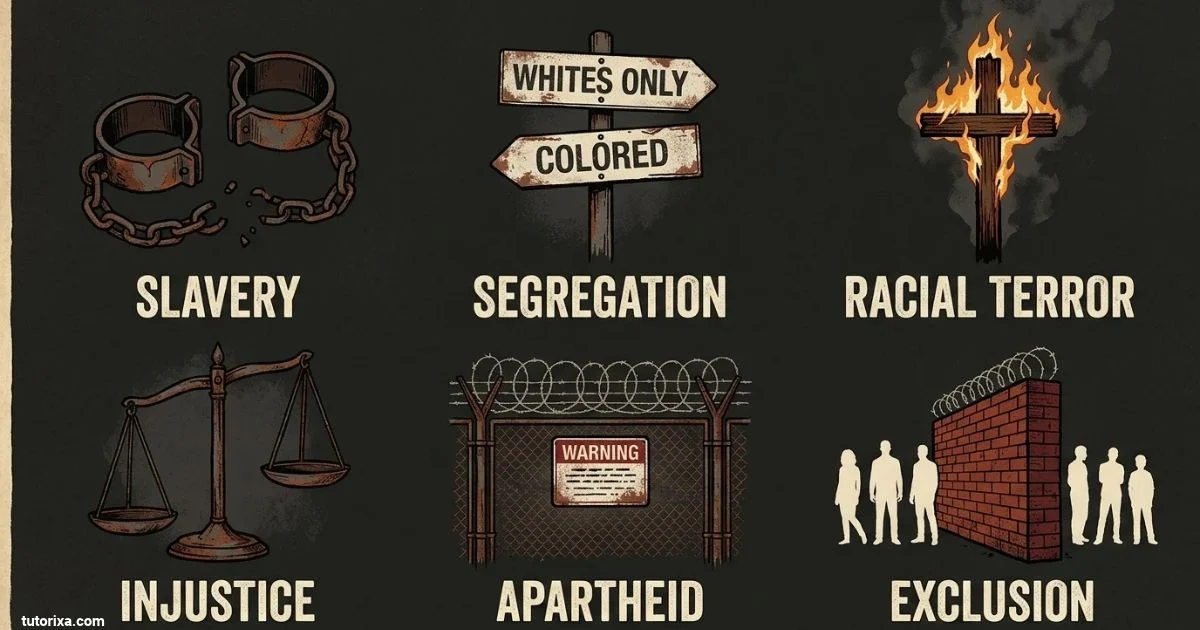
Symbols can communicate powerful messages, but not all of them represent positive ideas. Some have been used throughout history to spread racism, promote hatred, and intimidate entire communities. Understanding their meanings helps us recognize the harmful messages behind them.
Have you ever wondered why certain symbols carry such painful histories or why they still cause controversy today? I believe understanding their origins is an important step toward recognizing prejudice and challenging discrimination.
In this guide, you’ll explore different racism symbols, their historical backgrounds, and the hateful ideologies associated with them. I’ll explain their meanings in simple language so you can recognize these symbols and understand their impact on society.
Anti Racism Symbols
Anti-racism symbols are visual signs, images, and designs that represent opposition to racial discrimination. They communicate equality, freedom, unity, respect, and the belief that everyone deserves fair treatment regardless of their skin color or background.
There is no single universal symbol for anti-racism. Different organizations, communities, and movements use different images to express their message. Some have historical connections to civil rights campaigns, while others are modern designs created for awareness events and social media.
Popular Anti-Racism Symbols And Their Meanings
Here are some recognizable symbols commonly used to express opposition to racism:
| Symbol or image | Meaning |
| ✊ Raised fist | Solidarity, resistance, and collective strength |
| 🤝 Handshake | Mutual respect, cooperation, and understanding |
| 🫶 Heart hands | Care, compassion, and support |
| 🌍 Globe | Human unity and equality across the world |
| ♾️ Infinity symbol | Can represent ongoing solidarity and inclusion when used with an anti-racism message |
| Crossed-out racist imagery | Direct opposition to racist language, signs, or behavior |
| Joined hands of different skin tones | Diversity, friendship, and unity |
These images do not all have official anti-racism meanings. Their message depends on the design and the context in which they appear.
Why Are Anti-Racism Symbols Important?
Visual symbols can make complicated social messages easier to understand. A simple image of different hands coming together, for example, can communicate unity without requiring a long explanation.
People use these symbols to:
- Support racial equality and human rights.
- Raise awareness about discrimination.
- Promote diversity in schools and workplaces.
- Show solidarity with communities affected by racism.
- Create educational posters and awareness campaigns.
- Share messages of inclusion on social media.
The most effective anti-racism symbols focus on respect, equality, and positive change rather than spreading hateful imagery.
Stop Racism Symbols

Stop racism symbols are visual designs that send a clear message against racial hatred, unfair treatment, and discrimination. They are commonly used in awareness campaigns, school projects, protest signs, community events, and online posts.
Unlike general equality symbols, stop racism signs usually communicate a direct message: racism must end, and everyone deserves equal rights.
Stop Racism Symbols You Can Copy And Use
These text symbols and visual elements can help you create your own anti-racism message:
| Symbol or text | Message |
| ✊ | Stand together against discrimination |
| ✊🏿 | Black solidarity and resistance |
| ✊🏾 | Solidarity and support |
| ✊🏻 | Unity across racial backgrounds |
| ♡ | Love and acceptance |
| 🤝 | Cooperation and mutual respect |
| 🌍 | Equality for everyone worldwide |
| 🚫 | A sign of rejection or prohibition |
| NO RACISM | A direct message against racial discrimination |
| STOP RACISM | A clear call to end racism |
| #StopRacism | An awareness hashtag |
The fist emoji variations have different skin-tone presentations. They can express solidarity, but they are not official universal anti-racism signs.
Common Messages Used With Stop Racism Signs
You can combine simple graphics with short statements to create meaningful awareness designs.
- Stop racism. Start respecting everyone.
- Different colors, equal rights.
- United against racial discrimination.
- No hate, no racism, just equality.
- Respect every race and culture.
- Our differences make us stronger.
- Say no to racism and yes to humanity.
- Equality has no color.
- Stand together against hate.
- Everyone deserves dignity and respect.
Where Can You Use Stop Racism Symbols?
You can use these designs in different places to spread awareness:
- Social media: Share anti-racism graphics on Instagram, Facebook, and X.
- School projects: Create posters explaining racial equality and respect.
- Sports events: Display messages supporting fair play and inclusion.
- Community campaigns: Use signs during educational events and peaceful demonstrations.
- Digital artwork: Add equality messages to presentations, banners, and awareness graphics.
Choose clear images and positive messages. Avoid copying hateful symbols or offensive imagery simply to make a design more noticeable.
Racism Symbol Drawing
A racism symbol drawing is a visual representation of opposition to racial discrimination. You do not need advanced drawing skills to create one. Simple shapes, hands, hearts, and short messages can communicate powerful ideas about equality.
The best drawings focus on unity and respect. They should be easy to understand, visually clear, and suitable for the audience.
Easy Anti-Racism Drawing Ideas
Here are some simple ideas you can use for school assignments, posters, or personal artwork.
1. Different Hands Holding Together
Draw several hands with different skin tones joined in a circle. Add the words “United Against Racism” underneath.
2. Stop Sign Against Racism
Draw a large red stop sign with the words “STOP RACISM” inside. Add smaller text underneath saying “Respect Everyone.”
3. Different People Standing Together
Draw people with different skin tones standing side by side. Add a banner that reads “Different Colors, One Humanity.”
4. A Heart With Different Colors
Draw a large heart divided into several sections using different skin-tone colors. Write “Love Has No Color” below it.
5. Crossed-Out Racism Message
Write the word “RACISM” in bold letters and draw a prohibition circle with a diagonal line over it. Place “Say No to Hate” underneath.
How To Draw A Stop Racism Poster Step By Step
If you want a simple design for a classroom project, follow these steps:
- Take a clean sheet of paper or open a drawing application.
- Draw a large circle, heart, or stop sign in the center.
- Add hands or people representing different skin tones.
- Write “STOP RACISM” in large, readable letters.
- Add a short message such as “Everyone Is Equal.”
- Use a balanced combination of colors.
- Keep the background simple so the main message stands out.
Best Colors For Anti-Racism Drawings
Colors can make your message more noticeable, although their meanings depend on the design and cultural context.
| Color | Possible message |
| Red | Urgency, action, and courage |
| Black | Strength and solidarity |
| White | Peace and equality |
| Blue | Trust and unity |
| Green | Hope and growth |
| Multiple skin tones | Human diversity and inclusion |
A good anti-racism drawing does not need complicated artwork. A simple image with a clear message can be more effective than a crowded design.
Racism Symbol in Football

Football is one of the most widely followed sports in the world, bringing together players and supporters from different countries, cultures, and racial backgrounds. Unfortunately, racism has also affected the sport through racial abuse, discriminatory chants, offensive gestures, and hateful messages.
Racism symbols in football usually represent opposition to this behavior. They appear on stadium banners, players’ shirts, captain’s armbands, campaign graphics, and pitchside advertising boards.
Common Anti-Racism Symbols In Football
Some commonly seen visual messages include:
| Symbol or design | Meaning in football |
| ✊ Raised fist | Solidarity with people experiencing racial discrimination |
| Crossed arms at the wrists | FIFA’s official gesture for reporting racist abuse |
| NO TO RACISM | Opposition to racial discrimination |
| Different hands joined together | Unity among players and supporters |
| #NoToRacism | Awareness and campaign messaging |
| Multicolored player silhouettes | Diversity and inclusion in football |
One important distinction is that not every anti-racism symbol used by a football club is an official FIFA symbol. Clubs, leagues, and organizations may develop their own campaign designs.
FIFA’s No Racism Gesture
FIFA introduced a global No Racism Gesture as part of its anti-racism measures following approval at its 74th Congress on May 17, 2024.
The gesture involves crossing both arms at the wrists. A player can use it to alert the referee, captain, or team official that racist abuse is taking place. It is designed to help officials recognize an incident and respond through FIFA’s three-step procedure.
The gesture is particularly useful because it gives players a recognizable way to report abuse during a match without relying only on verbal communication.
Why Anti-Racism Symbols Matter In Football
Anti-racism symbols help make football a more welcoming environment for everyone. Their purpose goes beyond displaying a slogan or wearing a campaign badge.
They can:
- Encourage players to report racist abuse.
- Remind supporters that discrimination is unacceptable.
- Promote respect between rival teams and fans.
- Support players who experience racial harassment.
- Help football organizations communicate their anti-discrimination policies.
- Encourage young players to value diversity.
Football campaigns can spread these messages to millions of people, making the sport an important platform for promoting equality.
Anti Racism Sign FIFA
FIFA uses anti-racism signs, campaign messages, and official gestures to communicate its position against discrimination in football. These signs are displayed through tournament campaigns, stadium screens, advertising boards, educational materials, and other communication channels.
One of FIFA’s central messages is that football should be open to everyone, regardless of race, nationality, ethnicity, or background.
What Does The FIFA Anti-Racism Sign Mean?
FIFA’s anti-racism campaign uses direct messages such as “No Racism” and “No Discrimination” to make its position clear.
The signs communicate several important ideas:
- Equality: Every player deserves equal treatment.
- Respect: Racist abuse has no place in football.
- Solidarity: Players, officials, and supporters should stand together.
- Accountability: Discriminatory behavior must have consequences.
- Inclusion: Football should be welcoming to people from every background.
FIFA also supports awareness and education initiatives to help prevent discriminatory behavior.
FIFA’s Official No Racism Gesture
The crossed-arms gesture is particularly important because it is part of FIFA’s formal response system.
Here is how the gesture connects to FIFA’s three-step procedure:
| Step | Action | Purpose |
| Step 1 | Stop the match | The referee stops play when appropriate and an announcement explains the incident. |
| Step 2 | Suspend the match | If the abuse continues after play restarts, the referee suspends the match. |
| Step 3 | Abandon the match | If the abuse continues again, the referee can abandon the match following the required consultation. |
The procedure is designed to address racist abuse rather than allow the game to continue as if nothing happened.
FIFA’s Global Stand Against Racism
In May 2024, FIFA’s 211 member associations unanimously approved the Global Stand Against Racism initiative.
Its main areas of action include:
- Stronger rules and disciplinary sanctions.
- Action on the field, including the No Racism Gesture.
- Support for criminal prosecution of racism.
- Education to prevent discrimination.
- A Players’ Voice Panel to advise and monitor anti-racism efforts.
These measures show that FIFA’s approach involves more than displaying an anti-racism sign. It also includes reporting procedures, education, and accountability.
No Room For Racism Logo

The No Room For Racism logo is associated with an anti-racism campaign led by the English Premier League. The campaign aims to challenge racial discrimination and encourage people across football to stand against racism.
Its central message is simple: racism should have no place in football or society. The campaign encourages players, clubs, staff, and supporters to help create an environment where everyone is treated fairly.
What Does The No Room For Racism Logo Represent?
The logo and campaign identity represent opposition to racial discrimination. They help communicate the idea that racism must be challenged rather than ignored.
Its main messages include:
- Equality: People should receive fair treatment regardless of race.
- Respect: Players and supporters should respect one another.
- Unity: Football brings different communities together.
- Responsibility: Everyone has a role in challenging discrimination.
- Inclusion: Every person should feel welcome in football.
How Is The Logo Used?
The campaign identity has appeared in different football-related settings, including:
- Premier League anti-racism awareness campaigns.
- Club and stadium promotional materials.
- Social media graphics and awareness posts.
- Football community and educational activities.
- Campaign-related clothing and other promotional materials.
The campaign message is often displayed alongside the words “No Room For Racism” to make its purpose immediately clear.
No Room For Racism Logo And FIFA No Racism Symbol: What’s The Difference?
These two anti-racism identities share a similar purpose, but they are not the same campaign.
| Feature | No Room For Racism | FIFA No Racism |
| Organization | Premier League | FIFA |
| Main focus | Challenging racism in English football and beyond | Combating racism across international football |
| Visual identity | Campaign logo and promotional designs | Campaign graphics and official crossed-arms gesture |
| Main message | There is no room for racism | Football must stand against racism |
Do not confuse the Premier League’s No Room For Racism logo with FIFA’s official No Racism Gesture. One is a campaign identity, while the other is a recognized reporting gesture used in football.
To Kill a Mockingbird Racism Symbols
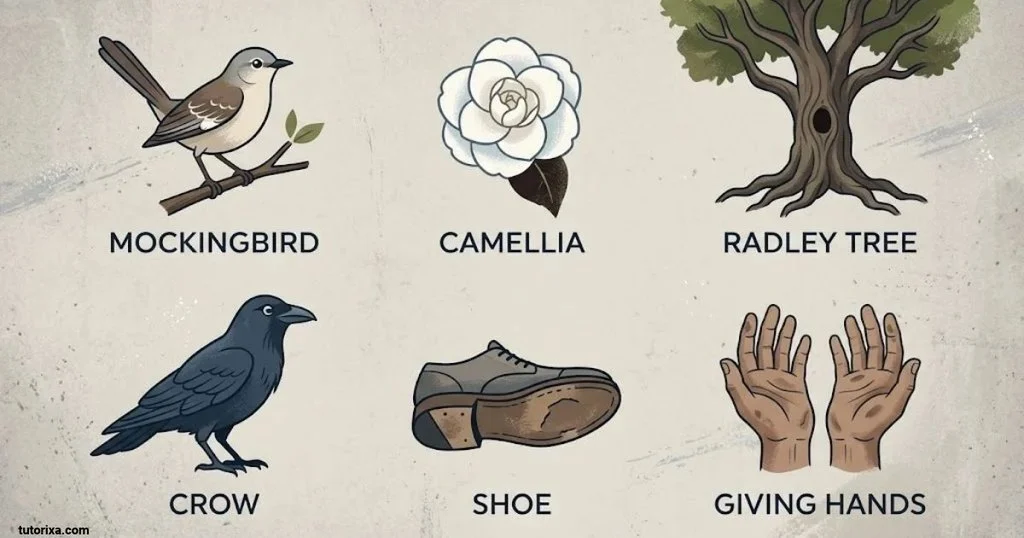
To Kill a Mockingbird by Harper Lee explores racial prejudice, injustice, inequality, innocence, and morality in the fictional town of Maycomb, Alabama.
The novel is set during the 1930s and follows Scout Finch as she observes the discrimination and unfair treatment faced by Black people in her community. The trial of Tom Robinson, a Black man falsely accused of assaulting a white woman, reveals how deeply racism influences the town’s legal and social systems.
Lee uses several symbols to develop these themes. Some represent innocent people harmed by prejudice, while others reflect the deep roots of discrimination in society.
1. The Mockingbird Symbol
The mockingbird is the novel’s most important symbol. It represents innocence, kindness, and harmless people who suffer because of other people’s cruelty.
Atticus Finch teaches Scout and Jem that killing a mockingbird is wrong because the bird does not destroy anything or cause harm. It simply makes music.
This idea connects directly to Tom Robinson and Boo Radley.
- Tom Robinson: He is an innocent Black man who suffers because of racial prejudice and an unfair legal system.
- Boo Radley: He is misunderstood by the community but eventually reveals his kindness and humanity.
The mockingbird symbol shows how prejudice can hurt innocent people who have done nothing wrong.
yorknotes.com+1
2. The Mad Dog Symbol
The mad dog, Tim Johnson, represents the dangerous presence of racism and prejudice in Maycomb.
When the dog appears in the neighborhood, Atticus is asked to shoot it because it threatens the community. The incident can be understood as a symbolic reflection of the town’s deeper social problem.
Just as the mad dog is a danger that must be confronted, racism is a destructive force that cannot simply be ignored.
Atticus’s decision to face the danger also reflects his willingness to confront injustice, even when doing so is difficult.
SQA National 5+1
3. Mrs. Dubose’s Camellia Flowers
Mrs. Dubose’s camellia flowers are connected to courage, conflict, and the complicated nature of human behavior.
Jem becomes angry after Mrs. Dubose insults Atticus for defending Tom Robinson. In his anger, he destroys her camellia bushes.
The flowers later become part of a lesson about courage and personal struggle. Mrs. Dubose is deeply prejudiced, but Atticus also wants Jem to recognize her determination to overcome her morphine addiction.
The damaged flowers can also be interpreted as a reminder that removing the visible signs of racism does not automatically remove the prejudice that exists beneath the surface.
SQA National 5+1
4. The Courthouse Symbol
The Maycomb courthouse represents the legal system and the expectation of justice.
A courthouse should be a place where evidence and fairness determine the outcome of a case. However, Tom Robinson’s trial reveals how racial prejudice can influence the people responsible for delivering justice.
Despite Atticus presenting strong arguments in Tom’s defense, the jury finds him guilty.
The courthouse therefore represents the failure of an institution that should protect everyone equally. It highlights how racism can become part of social and legal structures rather than remaining limited to individual attitudes.
Save My Exams+1
5. The Radley House And The Cemented Tree Hole
The Radley house represents fear, isolation, and the way people judge others without understanding them.
At first, Scout and Jem believe frightening stories about Boo Radley. However, their understanding changes as they discover his kindness.
The knothole in the tree is another meaningful image. Boo uses it to leave small gifts for the children, creating a connection with them.
When Nathan Radley fills the hole with cement, that connection is cut off.
The incident can be interpreted as a symbol of prejudice and exclusion because it shows how fear and misunderstanding can prevent people from building meaningful relationships.
SparkNotes+1
Quick Reference: Racism Symbols In To Kill a Mockingbird
| Symbol | Main meaning | Connection to racism |
| Mockingbird | Innocence and kindness | Tom Robinson suffers because of racial prejudice |
| Mad dog | Dangerous social problems | Reflects the destructive nature of racism |
| Camellia flowers | Conflict and courage | Can represent the deep roots of prejudice |
| Courthouse | Law and justice | Shows institutional injustice |
| Radley house | Fear and isolation | Reflects judgment and misunderstanding |
| Cemented tree hole | Broken communication | Represents exclusion and lost connections |
The novel uses these symbols to show that racism affects more than individual relationships. It can influence communities, institutions, and the way people judge one another.
Frequently Asked Questions
What Is The Most Recognized Anti-Racism Symbol?
The raised fist ✊ is one of the most recognizable symbols of solidarity and resistance. It has been used in different social justice movements to represent strength, unity, and opposition to discrimination.
Is There An Official Symbol For Stop Racism?
There is no single universal Unicode character officially designated as the stop racism symbol. Organizations use different campaign logos, crossed-out designs, raised fists, and equality graphics to communicate opposition to racial discrimination.
What Does The Crossed-Arms Symbol Mean In FIFA?
FIFA’s crossed-arms gesture, made by crossing both hands at the wrists, allows players and officials to report racist abuse during football matches. It can trigger FIFA’s three-step procedure for addressing such incidents.
What Does The No Room For Racism Logo Mean?
The No Room For Racism logo represents the Premier League’s campaign against racial discrimination. It promotes equality, respect, inclusion, and the message that racism should have no place in football or society.
What Does The Mockingbird Symbolize In Relation To Racism?
In To Kill a Mockingbird, the mockingbird represents innocence and harmless people who suffer because of prejudice. Tom Robinson is a major example because he becomes a victim of racial discrimination and an unfair justice system.
Conclusion
Racism symbols communicate important messages about equality, respect, solidarity, and the need to challenge discrimination. From raised fists and stop racism signs to football campaign logos, these visual designs help people express their support for a society free from racial prejudice.
FIFA’s No Racism Gesture and the Premier League’s No Room For Racism campaign show how sports organizations use recognizable messages to address discrimination. Similarly, To Kill a Mockingbird uses literary symbols such as the mockingbird, mad dog, and courthouse to explore the harmful effects of racism and injustice.
When creating or sharing anti-racism symbols, choose meaningful designs that promote understanding rather than division. A simple drawing, awareness poster, or social media message can help spread the message that everyone deserves dignity, fairness, and respect.

I’m Rowan Whitaker, a British writer fascinated by the symbols surrounding us every day. I explore their meanings, origins, cultural significance, and changing interpretations. From ancient marks to modern signs, I enjoy making symbolism easier to understand. My writing helps curious readers discover the hidden messages behind familiar shapes, images, and signs.
Books:
- The Meaning Behind Symbols
- A Modern Guide to Symbolism
 Freddie Beaumont
 Ellis Montgomery